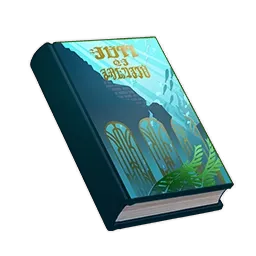
The History of the Decline and Fall of Remuria is a 3-volume Fontaine Book Collection released in Version 4.0, the founding patch of the Fontaine region, and gathered as free in-world pickups across two locations (Vols. 1 and 3 at Hubel's location; Vol. 2 elsewhere in the region). Every volume opens with the same standing description, "It is said that the great scholar Pulteney wrote this epic historical work concerning the ancient Remurian civilization in the early years of the founding of Fontaine," and closes with the same aphorism, "Oceans will rise, empires will fall, and the only constant is change." The title references Edward Gibbon's The History of the Decline and Fall of the Roman Empire (1776–1789), and Pulteney is named after the English politician William Pulteney. [1] [2]
The book matters for two reasons that pull against each other. It is Fontaine's own history of Remuria, the only in-game book that walks through the institutions of Pax Remuria (Capitolium, Domus Aurea, Machimos, the Four Harmosts, the royal fairways, the Ocean Pillars) as a continuous chronicle rather than as fragments in artefact sets or poetic cycles. It is also unreliable. Vol. 3 dismisses, as folkloric distortion, the same ascension through Remurian golems and Golden Ichor that the V4.6 World Quest Canticles of Harmony later establishes as historical fact. Both readings shape how the Remuria page treats this book: as the account of a scholar in early Fontaine, under Egeria's settlement, writing a hundred years after the fall, who catches the facts about institutions and misses the cosmological ones. [1] [3] [4]
Vol. 1 - the first era, Gurabad, Remus, and the symphony
Vol. 1 opens in deep time: "the earliest peoples were self-supporting in their virtue, needing no laws or authorities. The envoys of the heavenly city walked the earth, and with their guidance, the people enjoyed enduring peace, prosperity, and abundance from the ancient days." That eternity wore them down. They "grew tired of [its] inscrutable [pattern," ceased listening to the oracles, and "desired things never promised to them by the divine, trying to break free from their fate". Heaven then sent "gigantic waves to smash the settlers' cities," followed by "a hundred days of rain" that "drowned all sin and arrogation." Survivors "lived amidst the forests and rivers, shorn of all knowledge and wisdom," through an unnumbered intermediate era during which "the throne of Gurabad was established and overturned in the far south, and the noble kindred of the east once reached the rim of the high waters" without breaching it. [1]
Civilisation then "finally [returns] to the land named Fontaine the day the great king Remus descended upon Meropis in his golden Fortuna." He teaches farming, builds "temples and cities with giant rocks to house the people," and most importantly spreads "the beauty of music and art, which differentiated humans from other living things, causing them to see themselves as masters of all things." With his immortal fleet he conquers "all the islands on the high waters", and "even the great dragon beneath the abyssal depths submitted to his power." When "the seers prophesied discord - 'The greatest empire will face the most utter destruction, and this is Fortuna'", the God King "derived the primordial plan from the seven-day rotation and the flowing winds of sea and land, and composed a harmonious symphony of prosperity" he believed would let the empire "escape the judgment of fate." The volume closes on the aphorism: "Oceans will rise, empires will fall, and the only constant is change." [1]
Vol. 2 - Pax Remuria and the Four Harmosts
Vol. 2 catalogues the empire at its height. From the Ocean Pillars along the royal fairway you reach "the giant port playing host to Fortuna the imperial ship"; beyond it stands the tower of Remuria, "not built to receive heavenly oracles, but to guide ships travelling between islands in the high waters … at the border of reality and dreams" against siren-song. The royal fairway then runs through Machimos, "where the brave Remurian warriors lived," its "grand temples and arenas … built with giant carved rocks to commemorate the city's glory and victory," its "solid and towering walls decorated with glaze and gold," its land "arrayed" with bronze and marble statues. Through Machimos lies Capitolium, "the center of Remuria, overflowing with delightful aromas and beautiful melodies". It was "a paradise for artists, where only the most outstanding intellectuals and musicians were allowed," and even among them "only a small fraction enjoyed the privilege of serving the God King." At its heart is "a golden palace of towering copper pillars," from which the King "listened closely to every melody and every note coming from every corner of the empire" and "upon hearing any discord … would correct it immediately with a pluck of his strings." [1]
Vol. 2 is also the primary text for the Four Harmosts: "To keep all the people upon the high water from destroying the symphony of universal harmony, King Remus promoted four humans of great capability to high post. He shared his power and authority with them, making them his partners in governance, the Harmosts for all cities, to eliminate all discordant sounds." The book itself does not name the four. The individual names (Boethius, Cassiodor, Aurelius, and Euergetia) come from the Canticles of Harmony chain and the artefact-set lore gathered on the Remuria page, not from the book, which leaves them as four officers without names. [1] [3]
Pulteney's verdict on the collapse comes at the close of Vol. 2, and it reads as myth rather than mechanism: "Amongst the God King's sins, the most terrible was the attempt to pass power that should have been reserved for the godly domain to humans. Thus, this power and status led to corruption and decadence, leading to violence and revolts. Such is fate's cunning that it uses the very powers that rebel against it to its own ends." In this reading the empire falls because Remus over-delegates divine authority. It is consistent with the Canticles of Harmony account, where Phobos's corruption works by mirroring the ascended Remurians' worst desires back at them, but it never names Phobos, never names the Symphony's corruption mechanism, and never names the ascension through Golden Ichor and stone golems that the Canticles chain establishes as Remus's actual technical programme. [1] [4]
Vol. 3 - the collapse, the post-Egeria settlement, and Pulteney's dismissal
Vol. 3 stages the catastrophe in three beats. First the collapse: "the earth collapsed all at once, the tall tower was uprooted, and drowned in the titanic waves alongside the great hall of pillars … the city, along with its residents, warriors, intellectuals, nobles, and even the golden palace, as glamorous as the shining sun, fell into a chasm of eternal darkness." Then the settlement after Remuria, addressed to a "Noble Navigator, the Ruler of Rivers and Seas, and the Queen of All Waters" whom the volume invokes for her continuing reign: "When the royal city collapsed, the great power shattered, and the people above the high water were perched on the precipice of barbarism and annihilation, it was our noble Queen who settled the conflicts between the tribes. Around the flowing springs we established cities new, and started a world guided by laws that has endured to this day." That passage is the primary text, among the books, for a claim the wider wiki treats as settled. Egeria, not Focalors and not Remus, partitioned post-Remuria Fontaine into its modern form, and she did so after Remuria's fall. The Egeria deep-dive grounds the point. The book itself never names Egeria, keeping only the Noble Navigator / Ruler of Rivers and Seas / Queen of All Waters titles. [1] [7]
Then comes Pulteney's own stance as a historian, which fixes the point in time from which the whole book is written: "The tragedy of Remuria occurred merely a century ago, but its history has already become concealed in legends and superstitions." He blames two causes. The first is "the fatal catastrophe … so ruthless and swift … all the researchers and literature capable of passing down said knowledge now sleep beneath the waters with the Eternal City." The second is "the purposeful distortions created by the mysterious researchers who claimed to be descendants of Remuria" (the Golden Troupe, the remnant of Remuria led by Boethius that survived the fall, and an earlier source for the ideas on surviving the apocalypse that the Narzissenkreuz Ordo later drew on after Egeria's time). He then announces his mission: "to extract and reproduce the true, essential shape of this magnificent ancient civilization with the universal rationality of history." [1] [3] [6]
And then, on the cusp of his mission statement, Vol. 3 commits the historiographic inversion that makes the book unreliable. Folklore, Pulteney complains, paints "even the greatest of ancient scholars … as soul-stealing magisters who entrapped mortal spirits within specially-made magical golems, binding them into service." He concedes the artefacts ("To be sure, the Remurians did make such terrifying golems, which to this day may be found, ruined, out in the wild") and then rejects the soul-binding reading: "this may only be blamed upon the moral degeneration that came upon them in Remuria's latter days. Its people had forsaken their noble duties and embraced hedonism and debauchery, accepting the violence they inflicted on others - and thus were they also violently destroyed." The Canticles of Harmony chain establishes the ascension that bound souls into stone golems with Ichor for blood as Remus's original programme, not a late, decadent perversion of an originally clean civilisation. It was built from the Primordial Sea power of the imprisoned Egeria, to let Remurians survive the flood Celestia had prophesied. Pulteney has the sequence backwards. He treats the empire's cosmological foundation as if it were decadence. [1] [4]
What the book gets right, and what it leaves unnamed
The reliable part of this book is its map of the institutions of Pax Remuria (Ocean Pillars, royal fairway, Machimos, Capitolium, the golden palace of copper pillars, the four Harmosts without names), the passage on Egeria's settlement after Remuria, and the warning that Vol. 3's dismissal of the golems sends to any reader who already knows the V4.6 Canticles of Harmony story. In its own terms, the book leaves a long list of identifications unnamed: any specific Harmost, Phobos as the Symphony, Sybilla as the envoy whose wisdom built it, Egeria as the post-Remuria Queen, Scylla as the great dragon beneath the abyssal depths, and the Golden Troupe as the mysterious researchers. Those are inferences checked against the Canticles chain and the wider source material on those gods, harmosts, and vishap princes, not disclosures the book itself makes. The companion poetic cycle The Fall of the Faded Castle, released two patches later in V4.2, sits in the same canon-safe space, working as poetry where this book works as history. [1] [3] [9]
Pulteney, a scholar of early Fontaine, wrote this three-volume chronicle about a century after Remuria's fall. It walks through the institutions of Pax Remuria at length and records Egeria's settlement after the collapse, while dismissing the Remurian golem programme that the game's later V4.6 World Quest reveals to be the empire's cosmological foundation rather than a late, decadent perversion.