Cosmology
 Arkhe
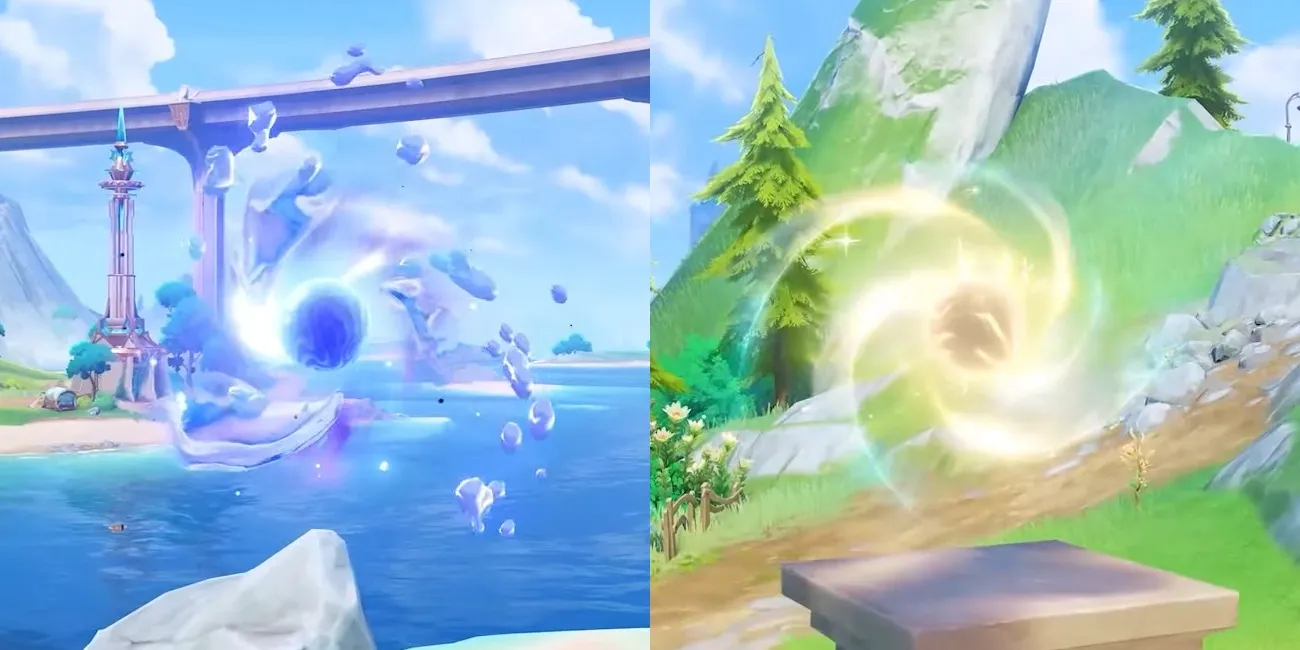
Fontaine's native energy dualism.
 Celestia
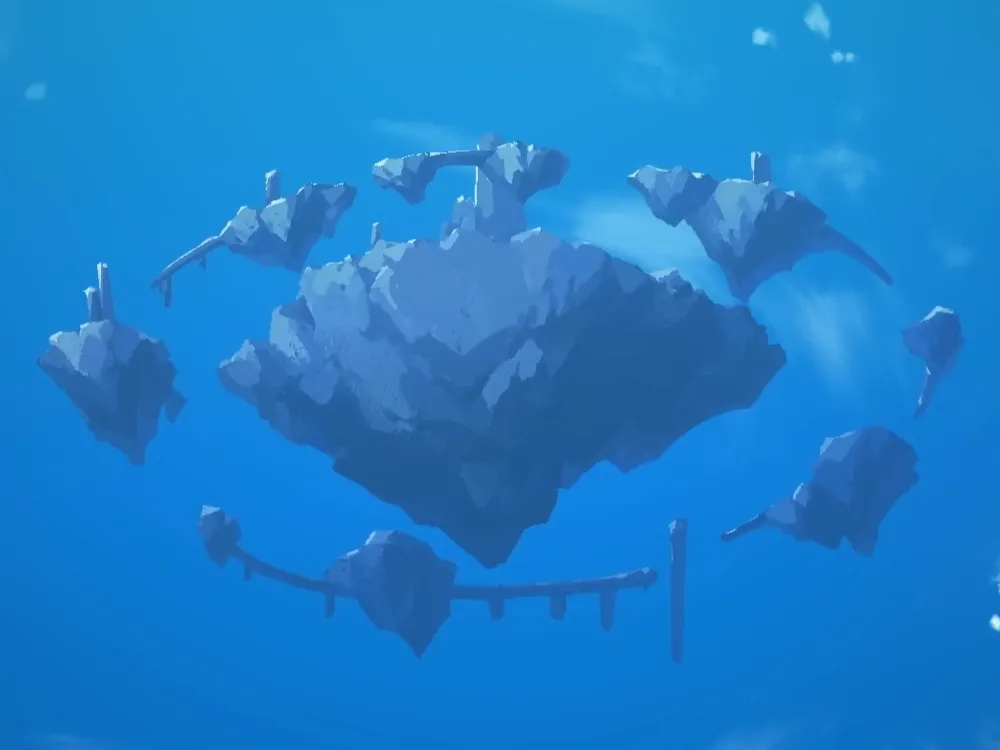
The floating realm above Teyvat where the Heavenly Principles are said to reside, and the source from which Visions and Gnoses descend.
 Erosion
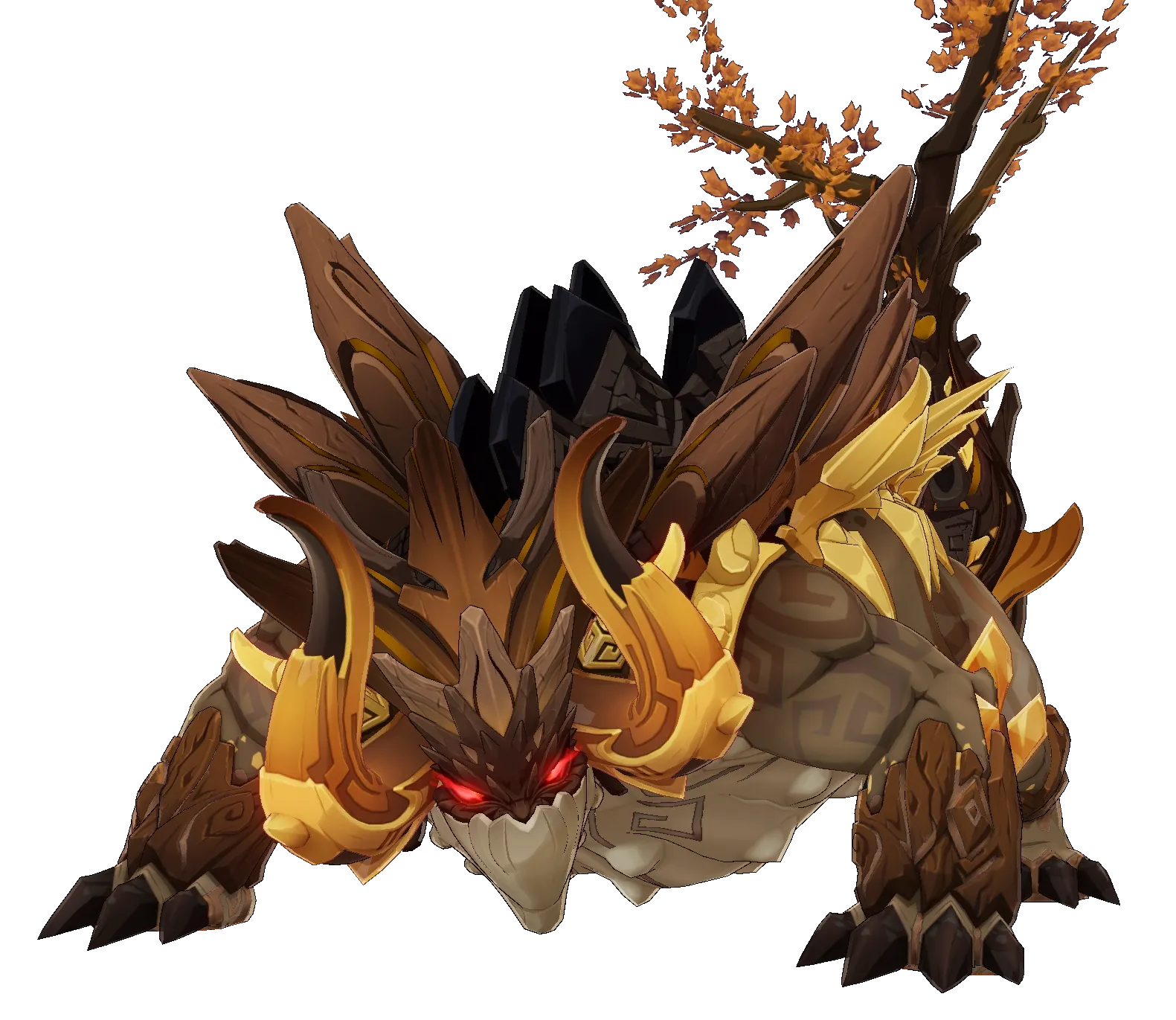
The long, slow wear that grinds down even powerful long-lived beings over time, also called the curse of time.
 Forbidden Knowledge
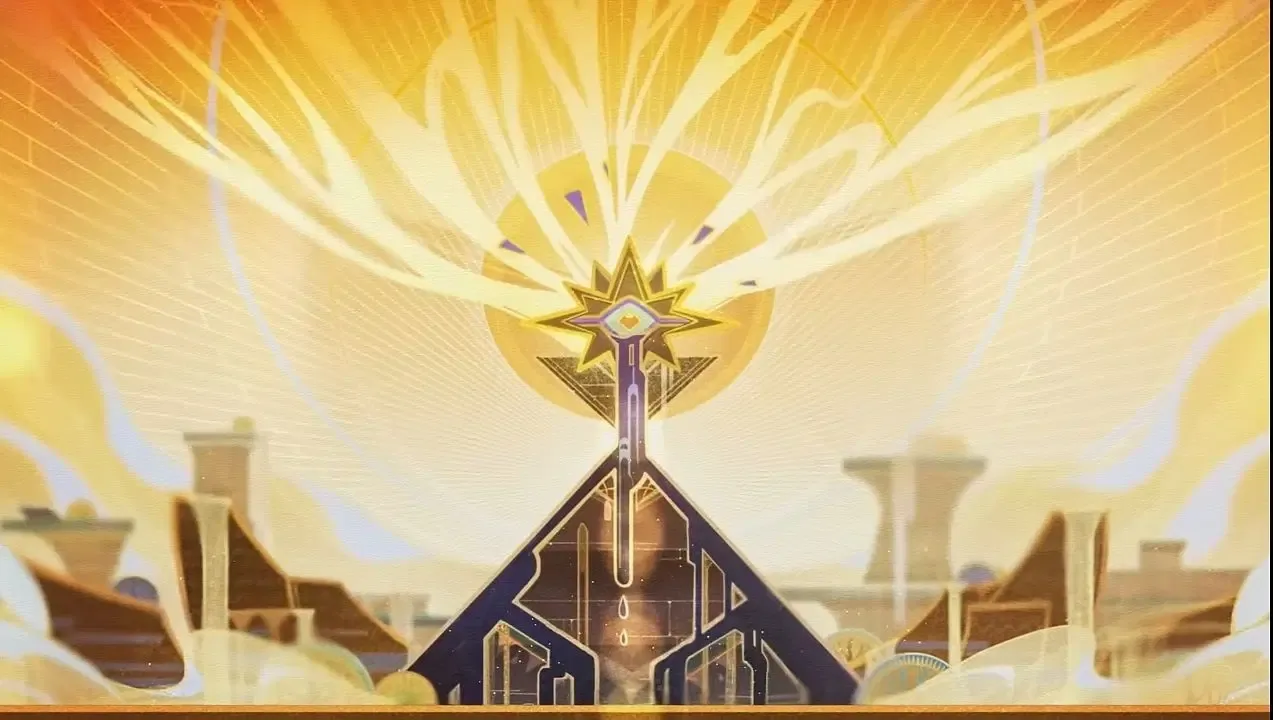
The "apocalypse" substance: a kind of information from the depths of the Abyss that is alien to Teyvat, a "truth" the world's residents cannot comprehend and so constantly reject, with degrading and maddening effects on whatever it touches.
 Foul Legacy
Childe's Abyssal combat transformation, taught to him by Skirk during the three Abyss-months he trained with her after falling into the Abyss at fourteen, and named for Skirk's own master Surtalogi, "The Foul."
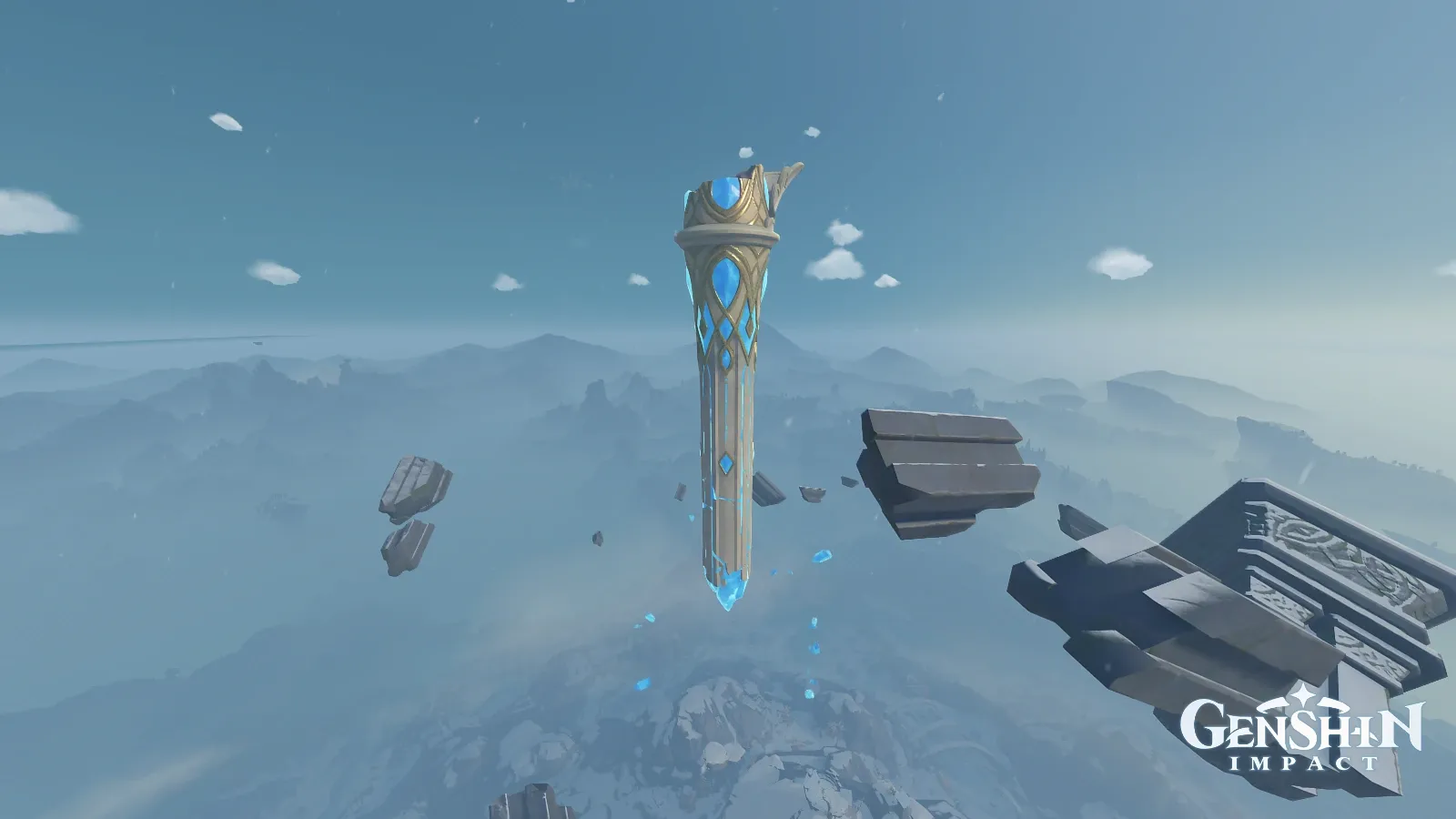 Heavenly Nail
The Heavenly Principles' cleansing weapon: enormous crystalline spear-pillars (also called Celestial Nails, and in Chapter VII Nails of Retribution) cast down from Celestia after the war against the Seven Sovereigns, sent to mend the land and purge the "dark poison" the invaders had brought.
 Heavenly Principles
Teyvat's original creator-god, who arrived from the stars, defeated the Seven Sovereigns and reshaped the world for humans.
- HHoly Soil
Holy Soil is land that has turned barren and hostile to human life.
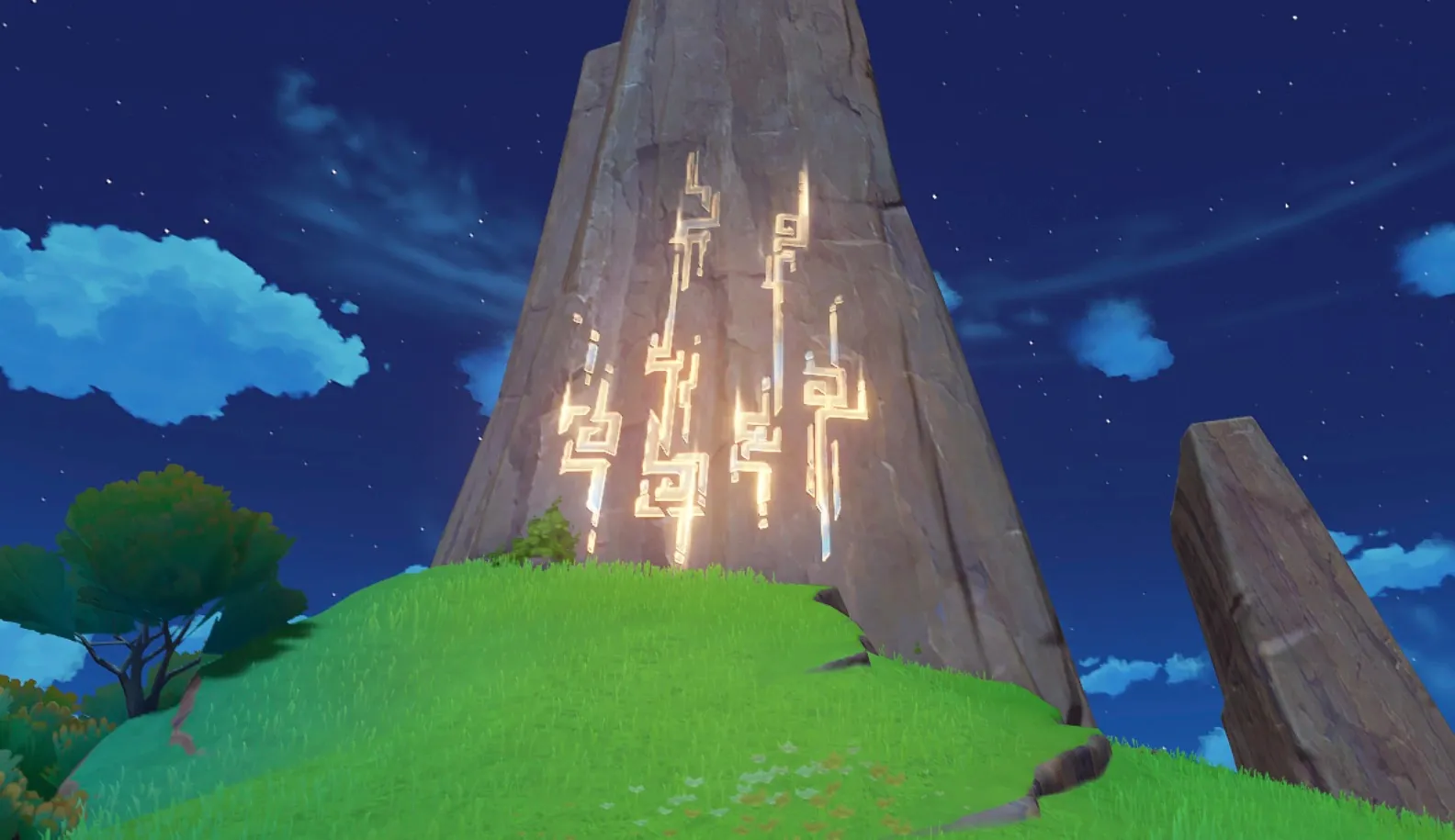 Iridescent Inscription
The Iridescent Inscription is the language of the ancient dragons of Natlan, a programming-like symbol system they used to wield Phlogiston, Teyvat's primordial energy.
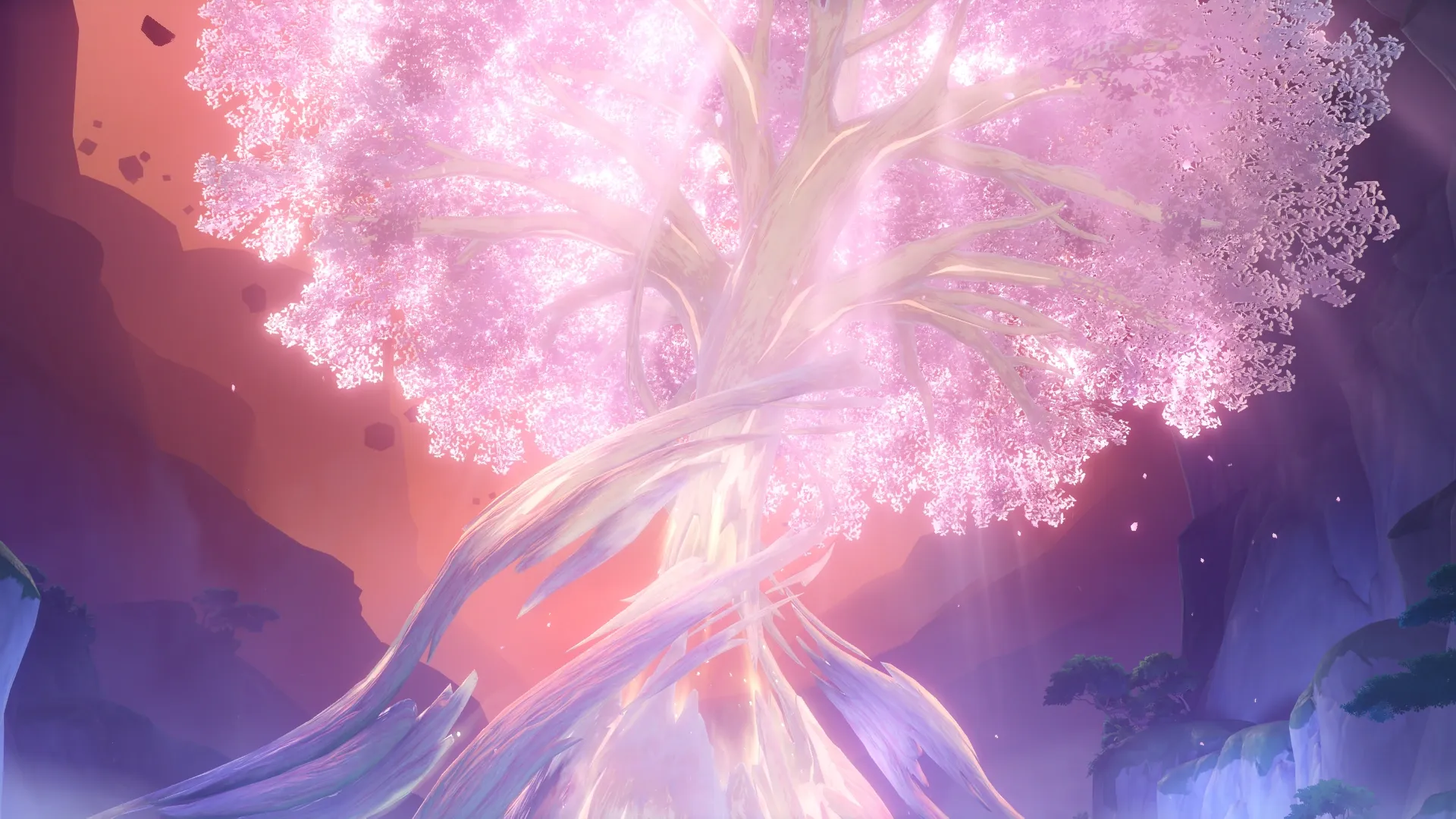 Irminsul
Teyvat's world-tree: a primordial silver-white tree that grows downward from a cavern deep underground, with the Ley Lines as its roots reaching all the way to the surface.
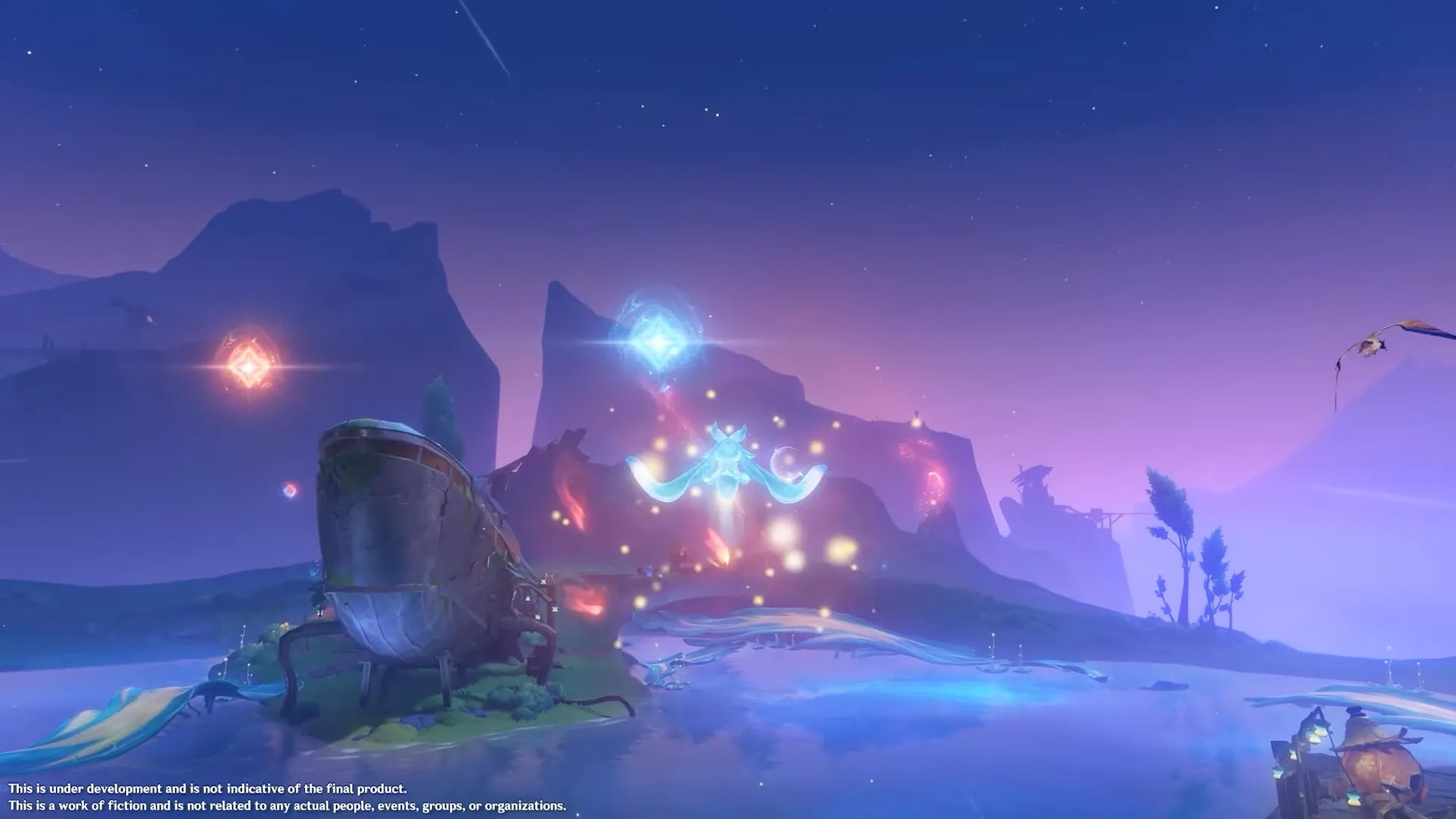 Kuuvahki
 is Nod-Krai's exclusive pre-elemental energy, "moon power" in Finnish (kuu + väki).
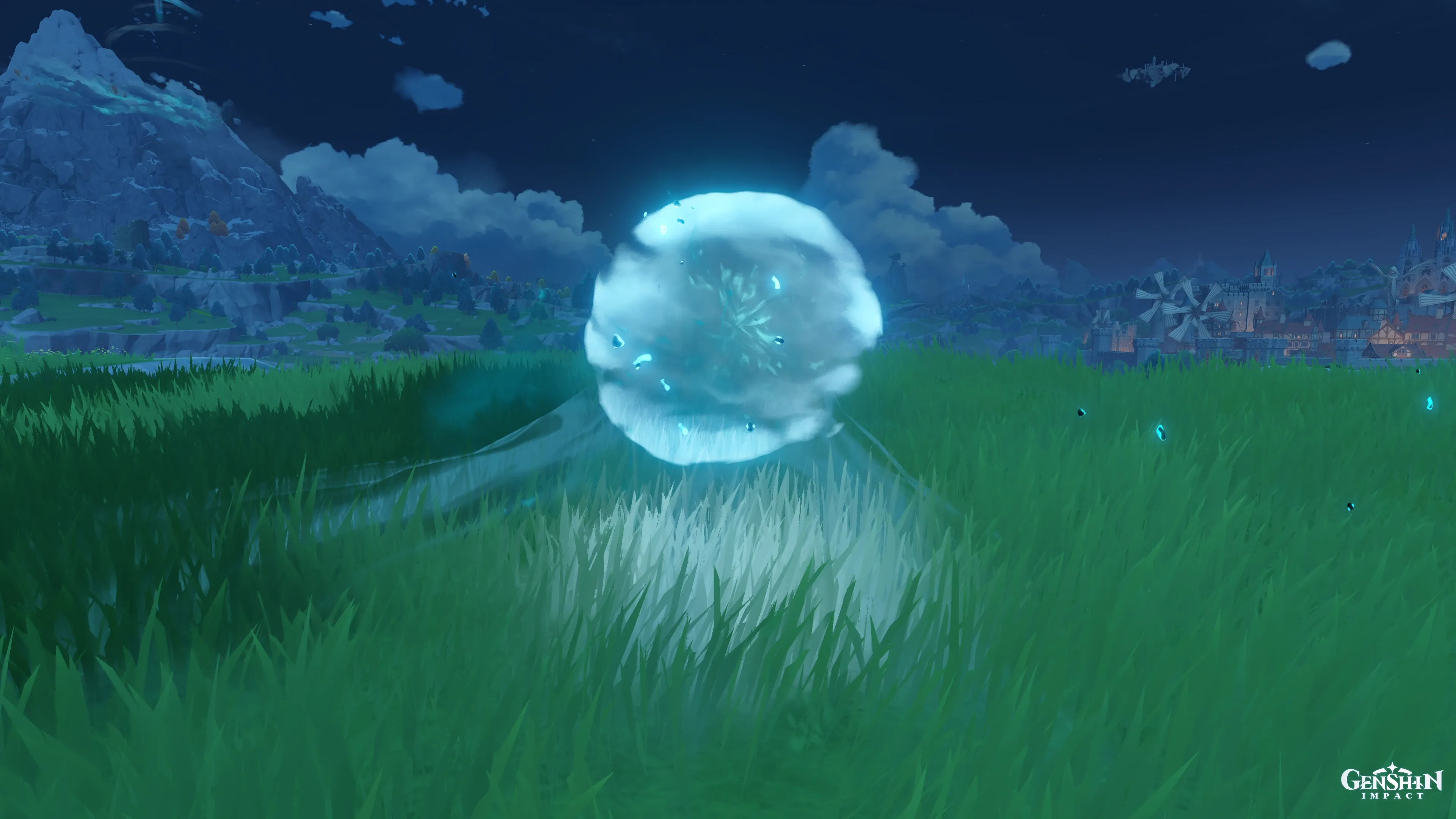 Ley Lines
Teyvat's worldnet: a planet-spanning underground network through which the elements flow and the memories of everything that has ever lived are recorded, surface and Abyss alike.
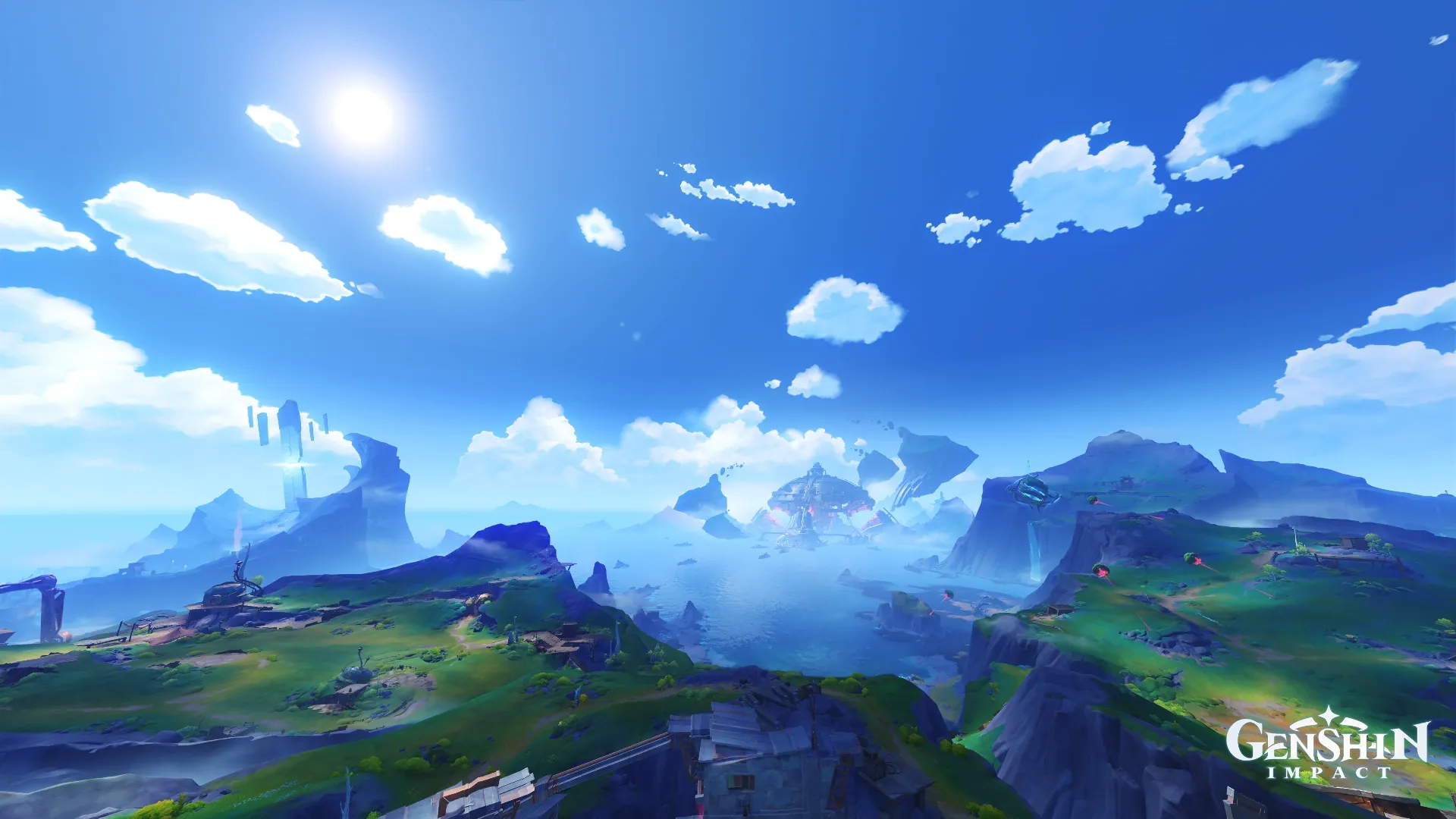 Nephilheim
 is the pre-Snezhnayan name of the region now called Nod-Krai.
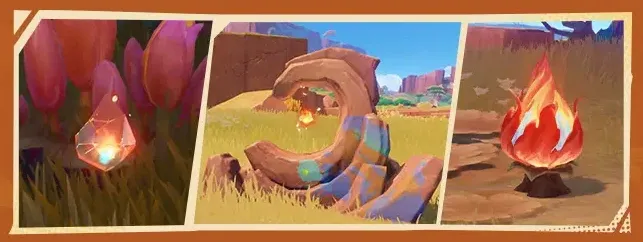 Phlogiston
 is Natlan's primordial "primal flame", the form of energy that, by Yohualtecuhtin's account, the Heavenly Principles used as a basis for elemental energy.
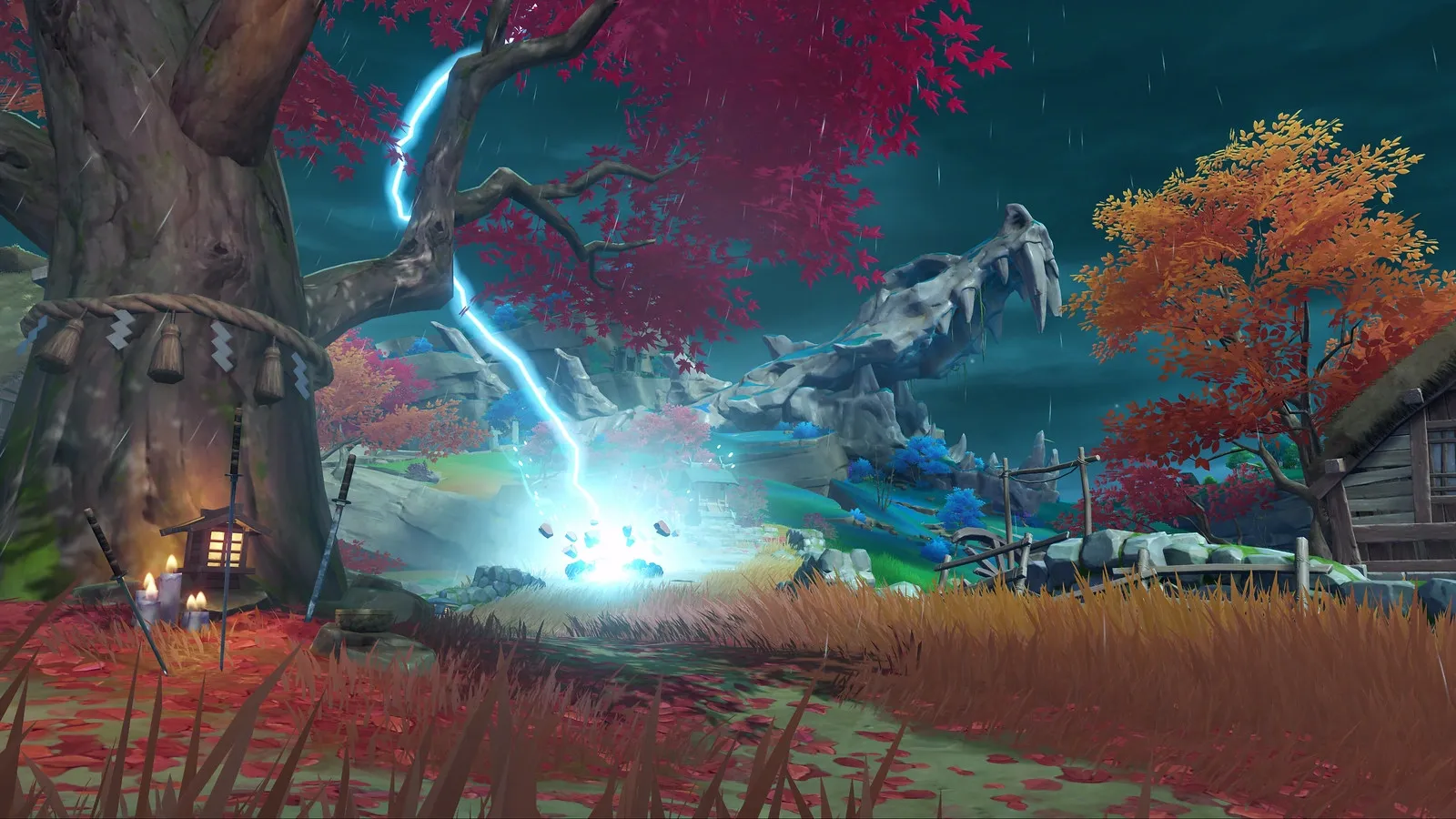 Tatarigami
The "Curse God" (祟り神) of Yashiori Island, a curse formed from the lingering will and power of the slain serpent god Orobashi after Ei cut him down at the end of the Archon War.
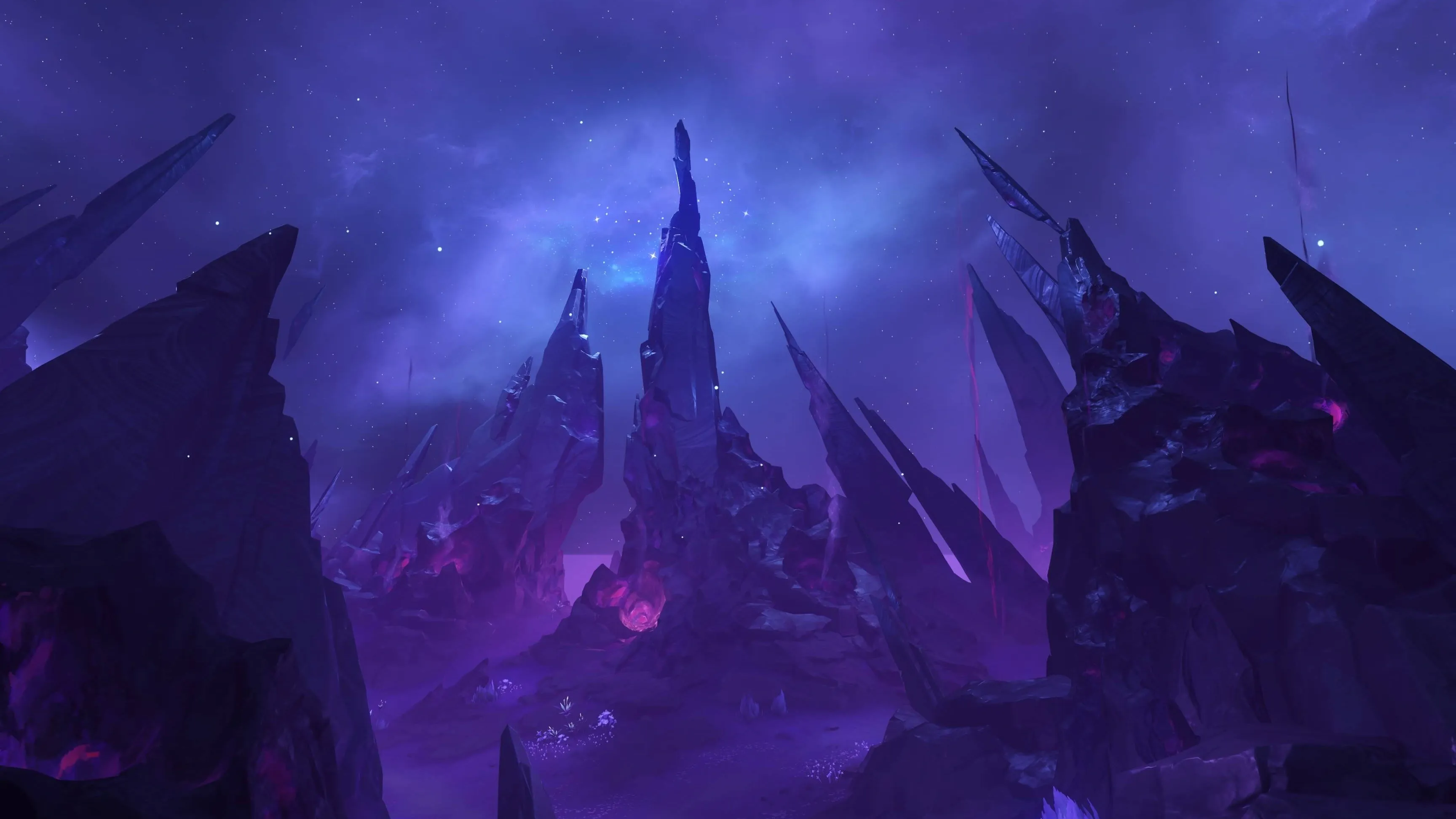 The Abyss
A dark and ancient realm, older than the current Teyvat in some readings and beneath it in others, that floods into the world wherever the Heavenly Principles' authority is thin.
 The Loom of Fate
A deliberately ambiguous Khaenri'ah and Abyss Order term that points to three separate things in current canon and theory.
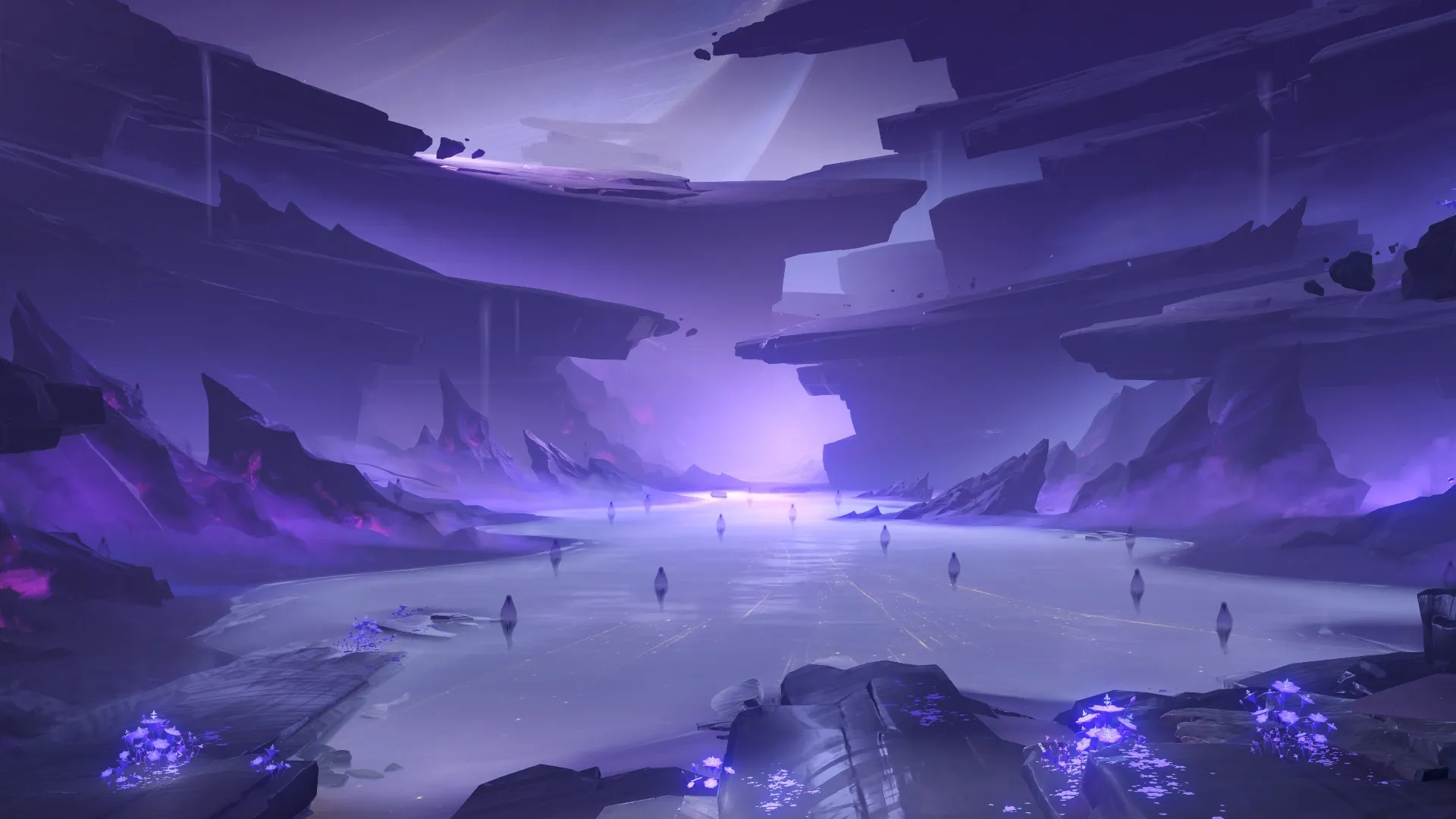 The Night Kingdom
 is Natlan's underworld and Ley-Line substitute, the realm of the Wayob and the kingdom of Yohualtecuhtin, the Lord of the Night, where Natlan's dead reside.
 The Seven Elements
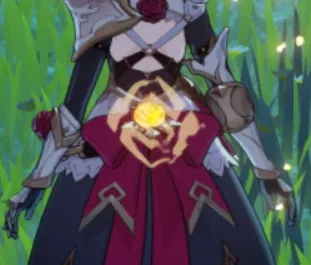
Teyvat's seven elements, Anemo, Geo, Electro, Dendro, Hydro, Pyro, and Cryo, each correspond to an Archon and the nation that worships them.
 The Three Moons
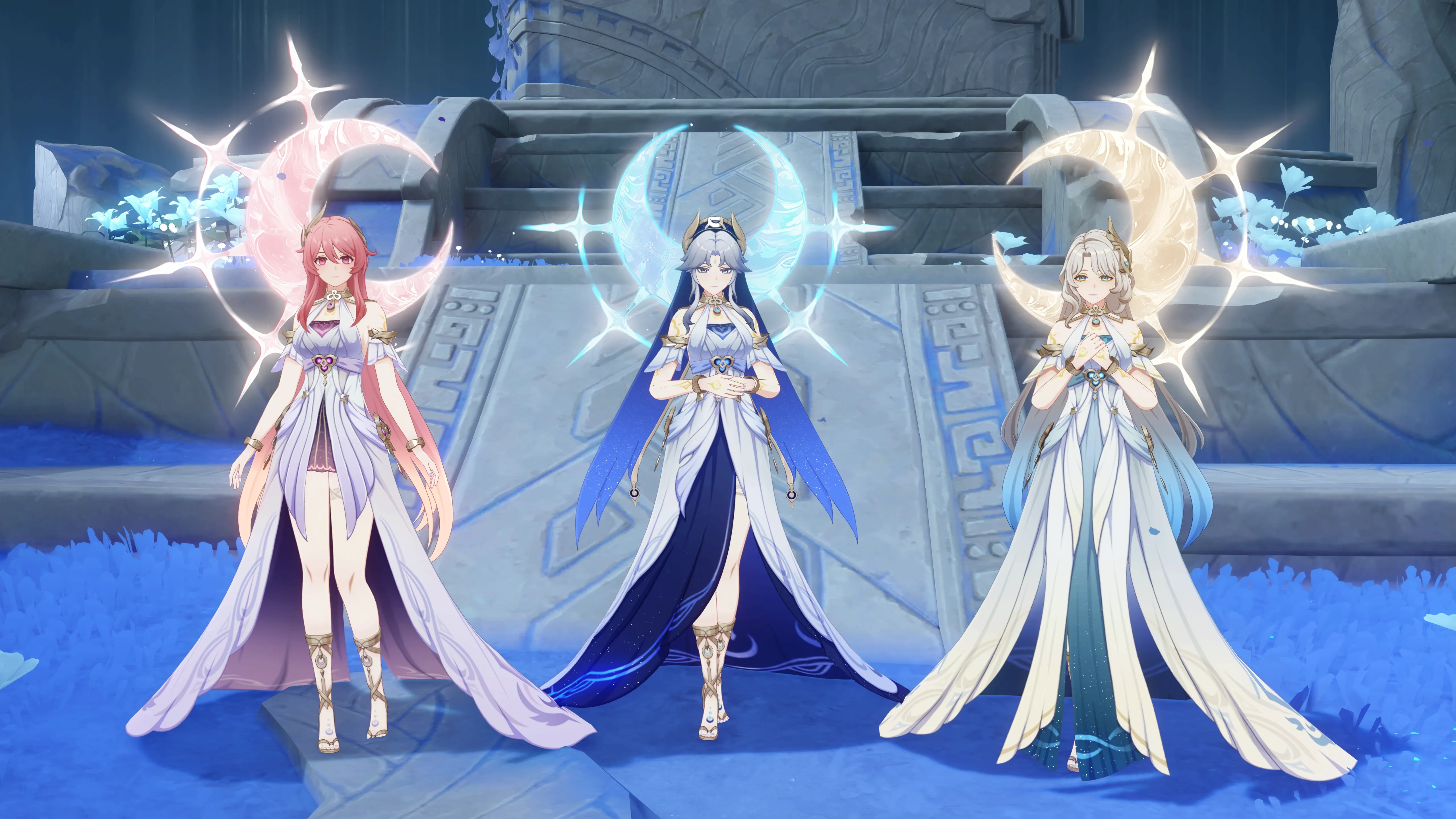
Pre-Cataclysm Teyvat had three moons and three goddesses raised by Nibelung: Sonnet of the Iridescent Moon, Canon of the Frost Moon, and Aria of the Eternal Moon.
 The Withering
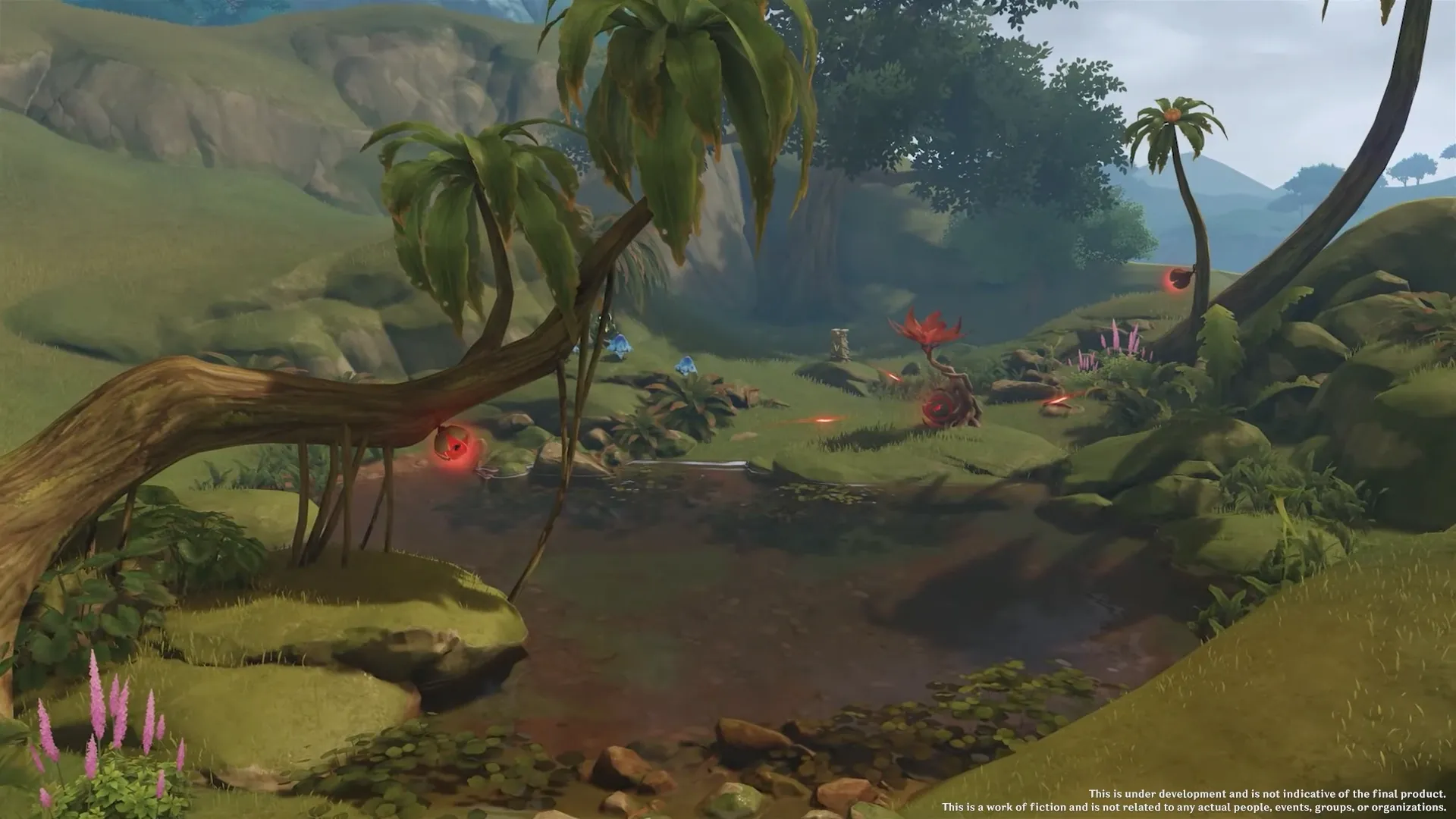
The Sumeru face of forbidden knowledge: a creeping climate of Decay (死域, "Death Zone") that corrodes the Dharma Forest, harms anyone who lingers in it, and turns forest into desert.
Gods & cosmic figures
 Descenders
Beings from beyond Teyvat whose wills can rival a world and influence its fate.
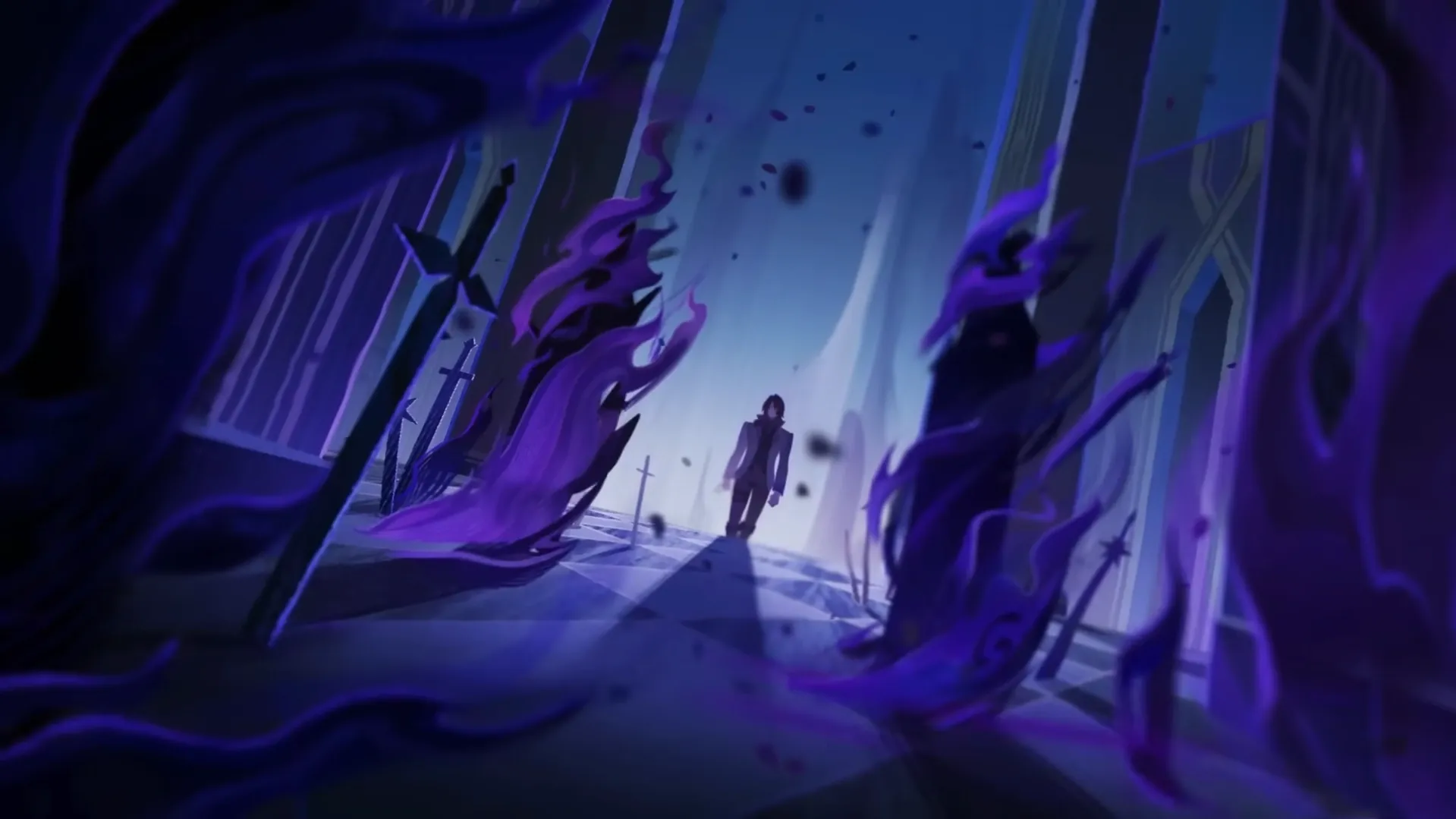 Five Sinners of Khaenri'ah
The five pre-Cataclysm Khaenri'ahns, Rhinedottir, Vedrfolnir, Surtalogi, Hroptatyr, and Rerir, who divided among themselves the world-shattering Abyssal power King Irmin had the Traveler's Sibling absorb, on the night Dainsleif led a raid to free his imprisoned brother Vedrfolnir.
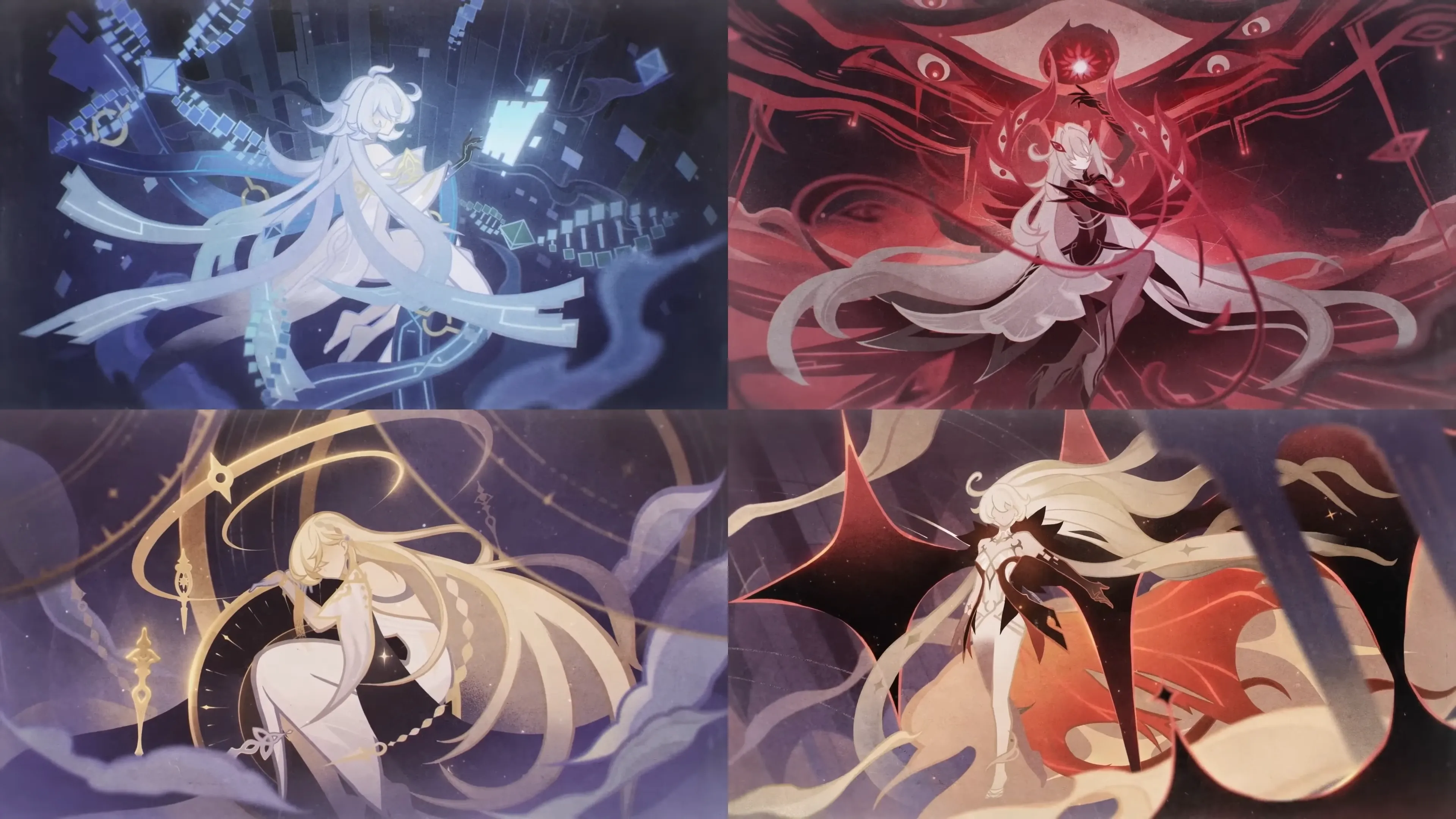 Four Shades
The four servant gods the Heavenly Principles created in their first forty years on Teyvat, made to fight the Seven Sovereigns and then govern the world's laws while their master sleeps: Naberius (Life), Ronova (Death), Istaroth (Time), and Asmoday (Space).
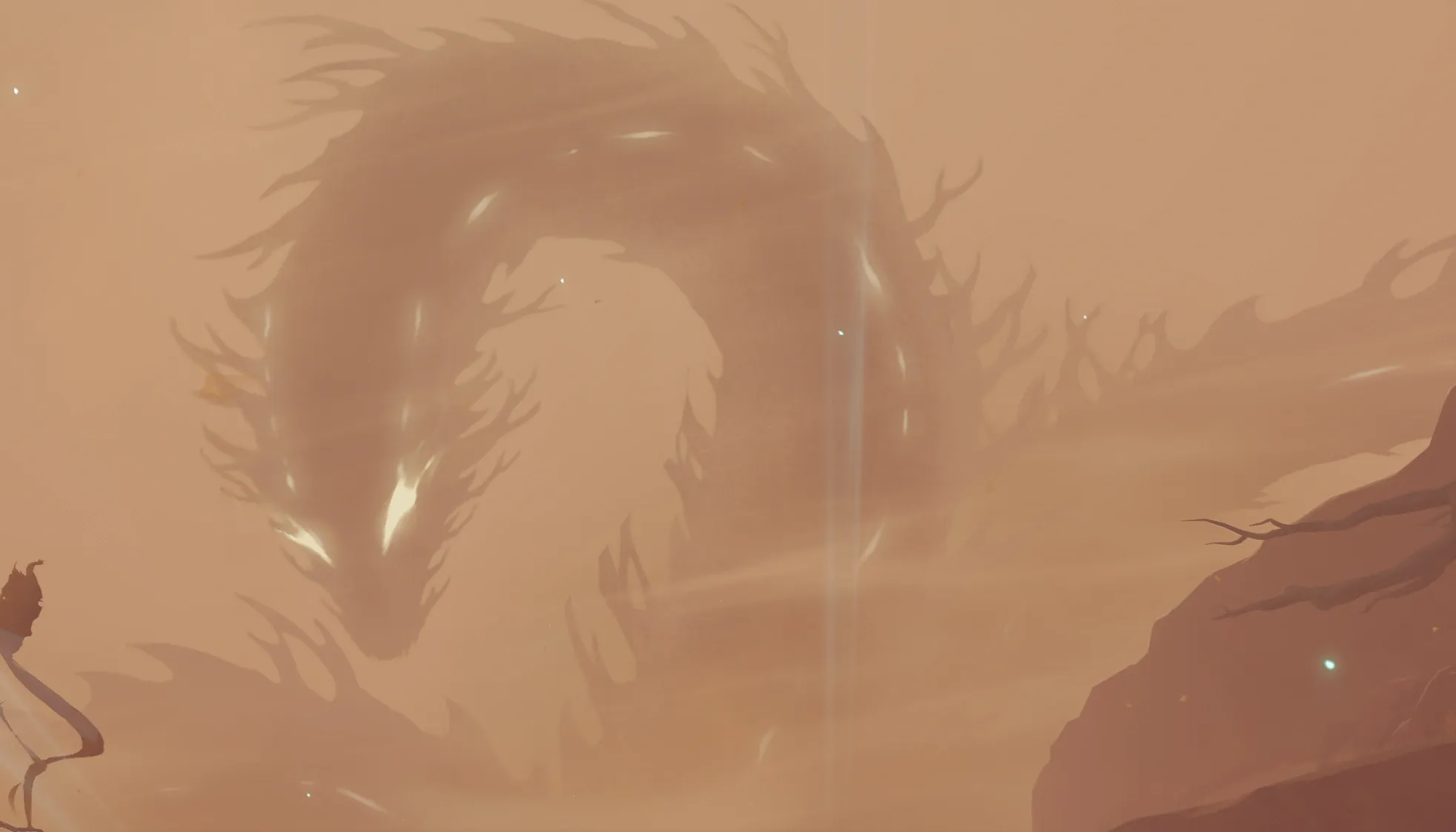 Seven Sovereigns
The original draconic rulers of Teyvat's seven elements, from the world that existed before the Primordial One arrived.
 The Seven Archons
The seven gods or succession lines that preside over Teyvat's mortal nations, established through the Archon War.
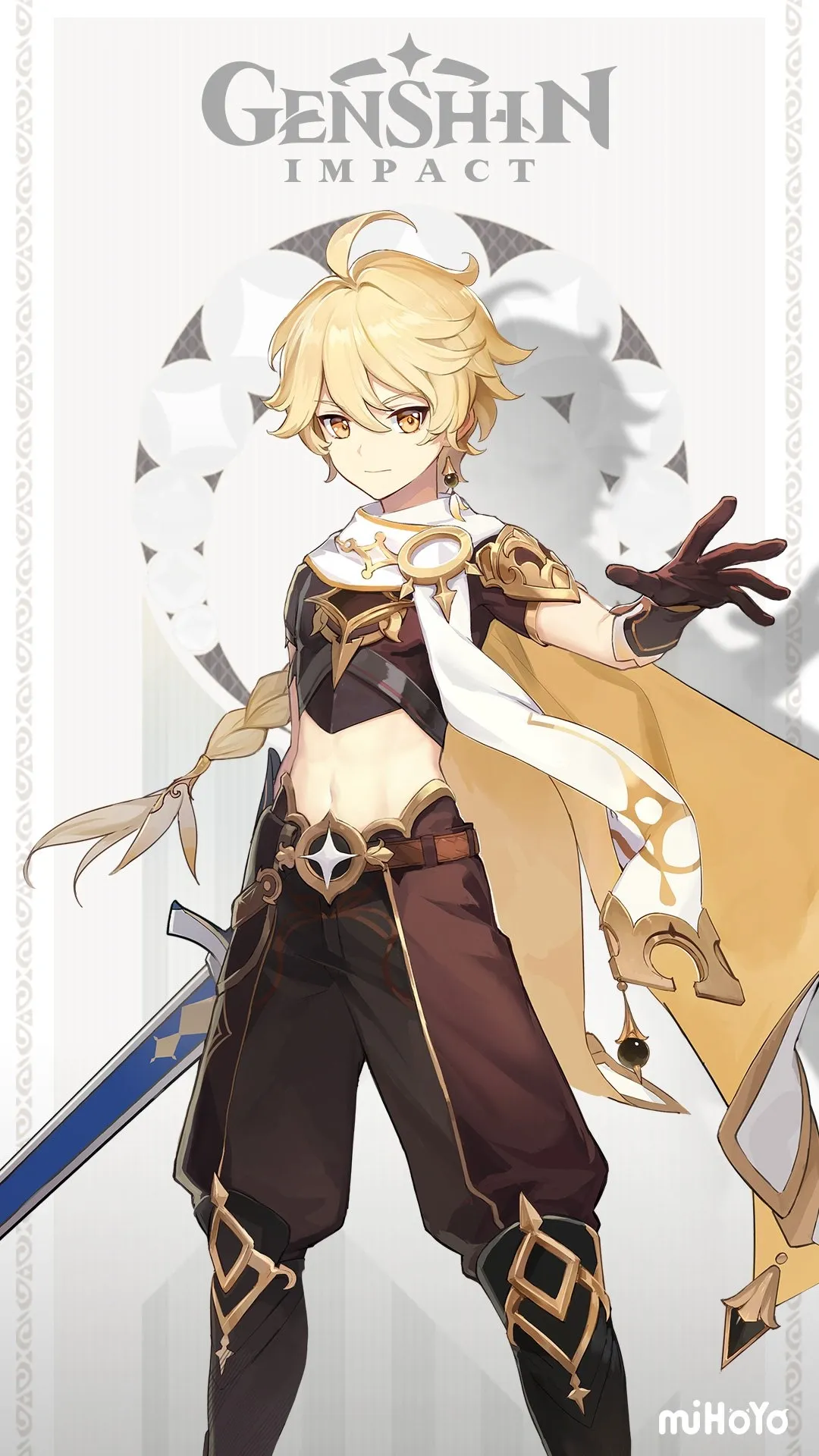 The Traveler
A guide to the Traveler's identity as an outsider from beyond Teyvat, the Fourth Descender, and the unusual ways the world's systems respond to them.
Powers & authority
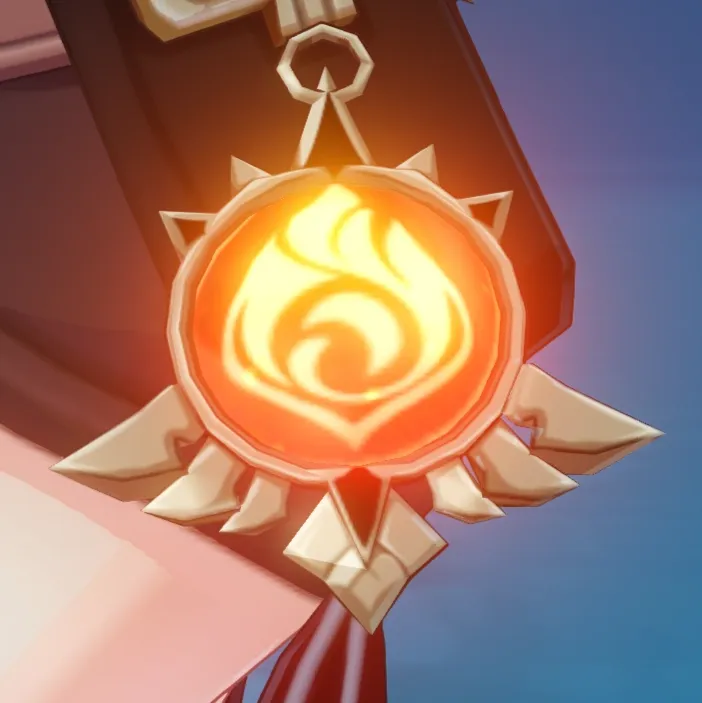 Allogenes
The Teyvat word for a Vision-bearer.
- AAncient Names
Natlan's inherited hero titles, which decide who fights in its war against the Abyss and who the Ode of Resurrection can bring back.
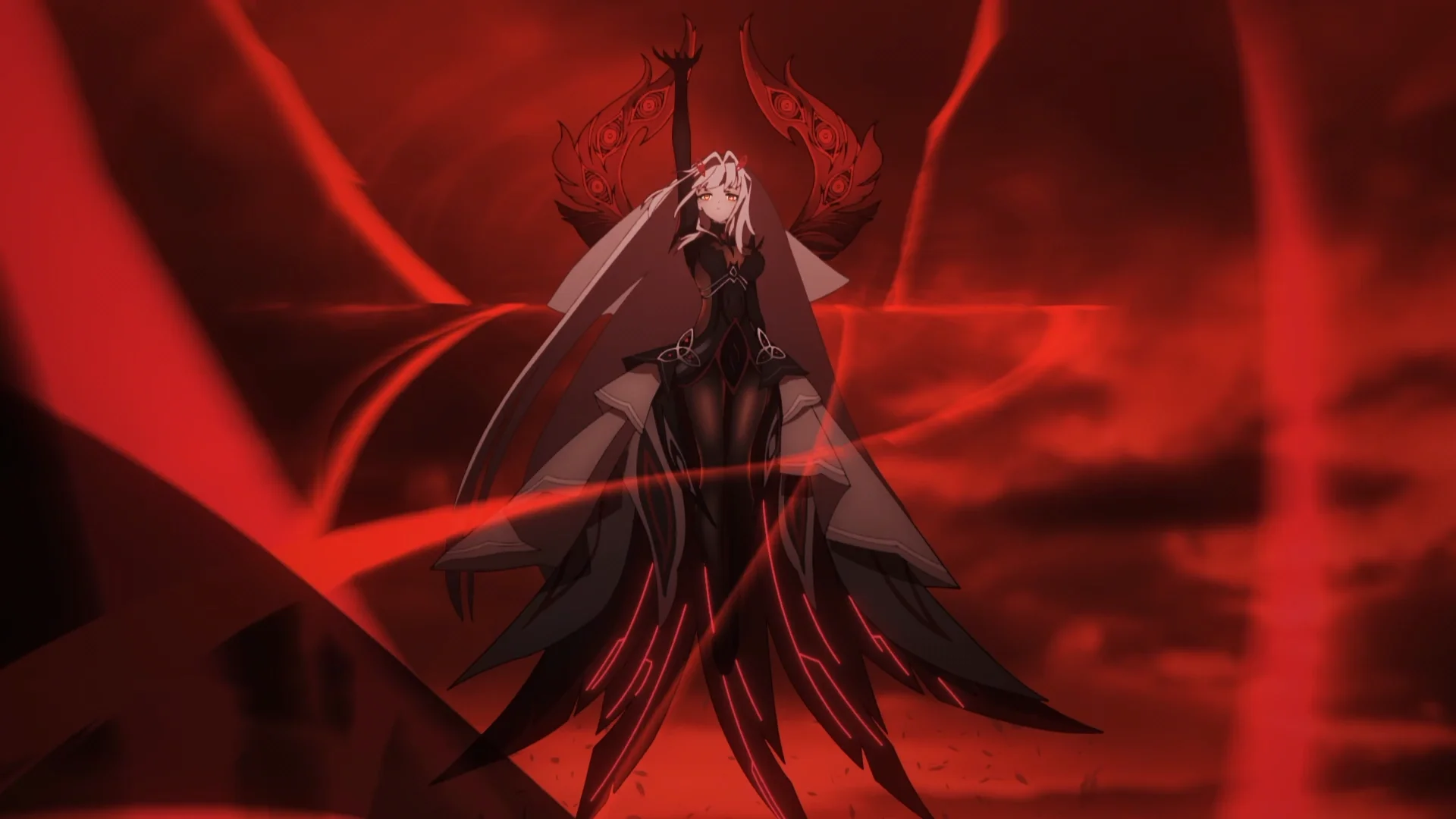 Authority of Death
The authority over death held by Ronova, the Ruler of Death among the Four Shades.
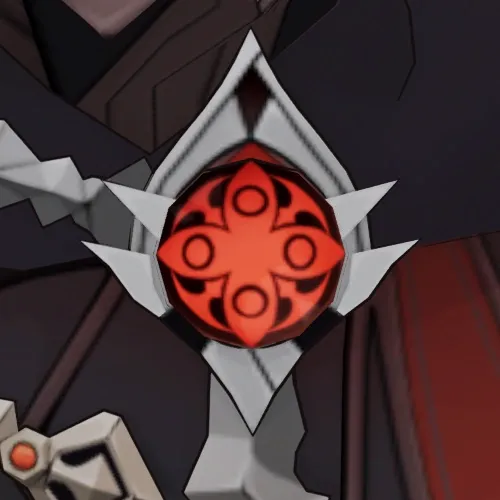 Delusions
A Delusion is the Fatui's manufactured replica of a Vision: an elemental artifact distributed by Snezhnaya that lets anyone command one of the seven elements without Celestia's approval.
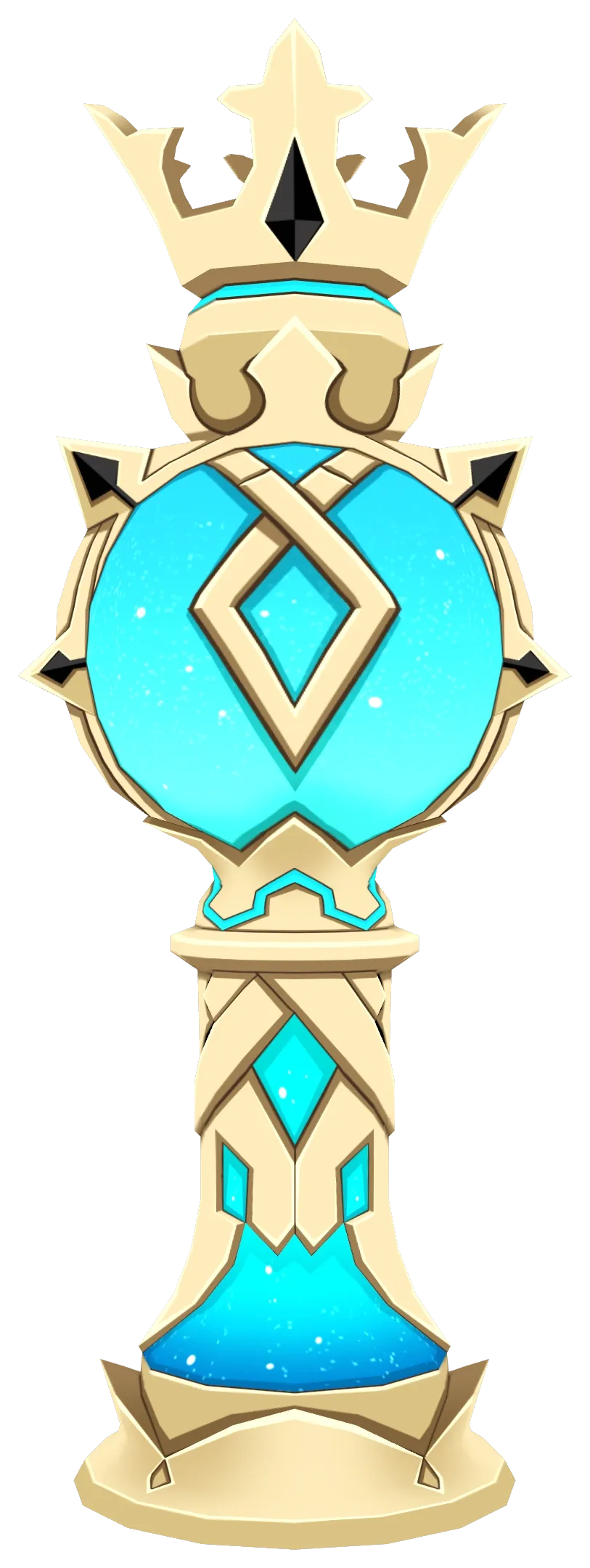 Gnoses
The seven divine artifacts of the Archons, one per element and one per Archon.
- AThe Akasha
Sumeru's knowledge network, used through a leaf-shaped earpiece, which answers its people's questions and sits at the centre of the Sumeru Archon Quest.
- Visions
The seven-elemental gemstones that let mortals wield magic.
Civilizations
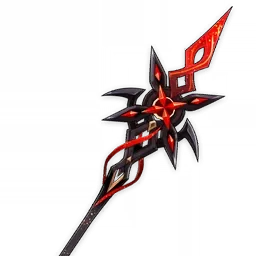 Crimson Moon Dynasty
The older of Khaenri'ah's two ruling dynasties, the line under which a crimson moon shone over the underground kingdom before the Eclipse Dynasty supplanted it during the Archon War.
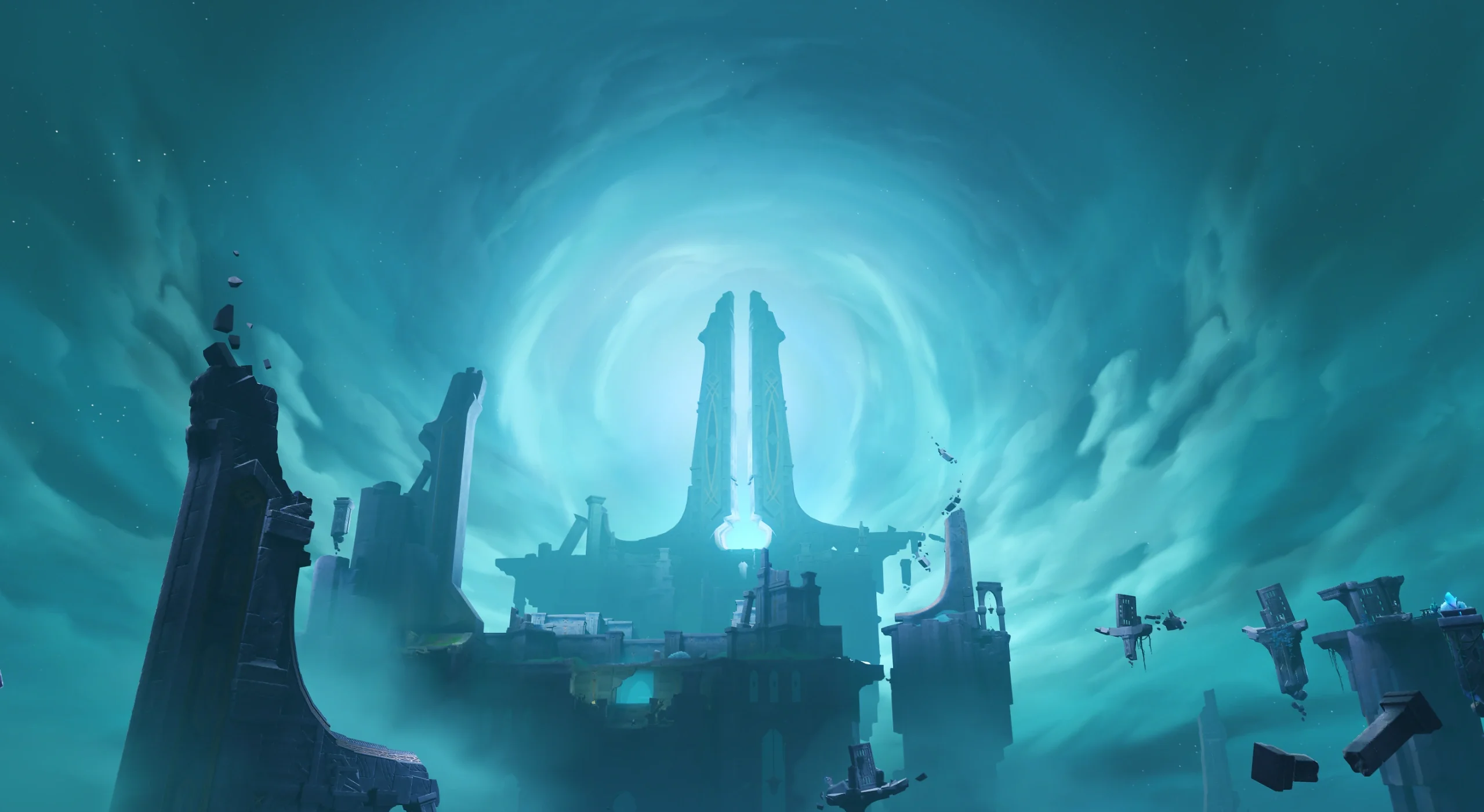 Hyperborea
An ancient civilization of the far north, remembered as the golden realm, whose survivors' descendants include the Frostmoon Scions of Nod-Krai.
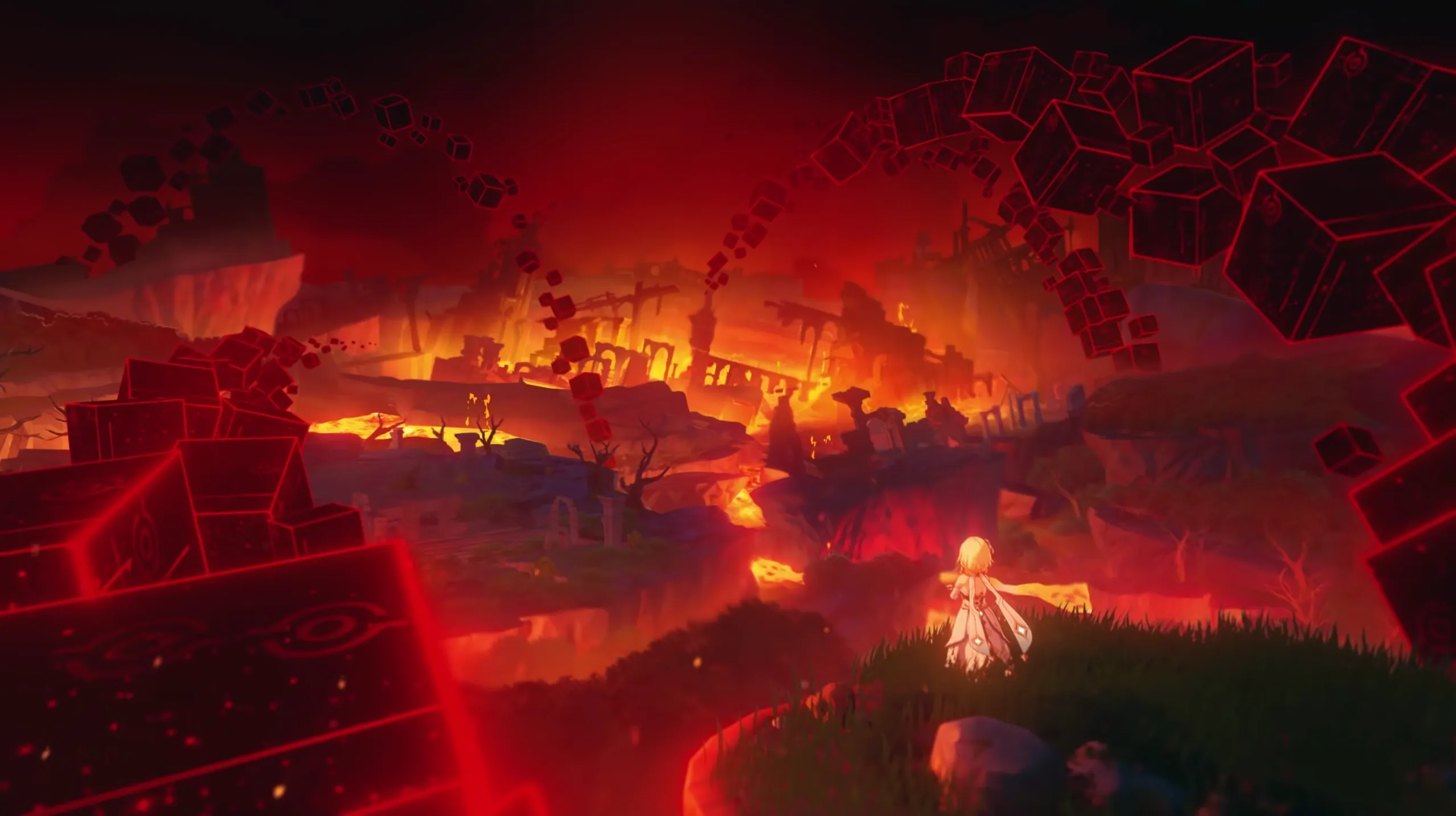 Khaenri'ah
The godless underground civilization that pre-dated the Cataclysm and was destroyed by it 500 years ago, called "the pride of humankind" by Dainsleif: a powerful nation built purely by humans without any god of their own.
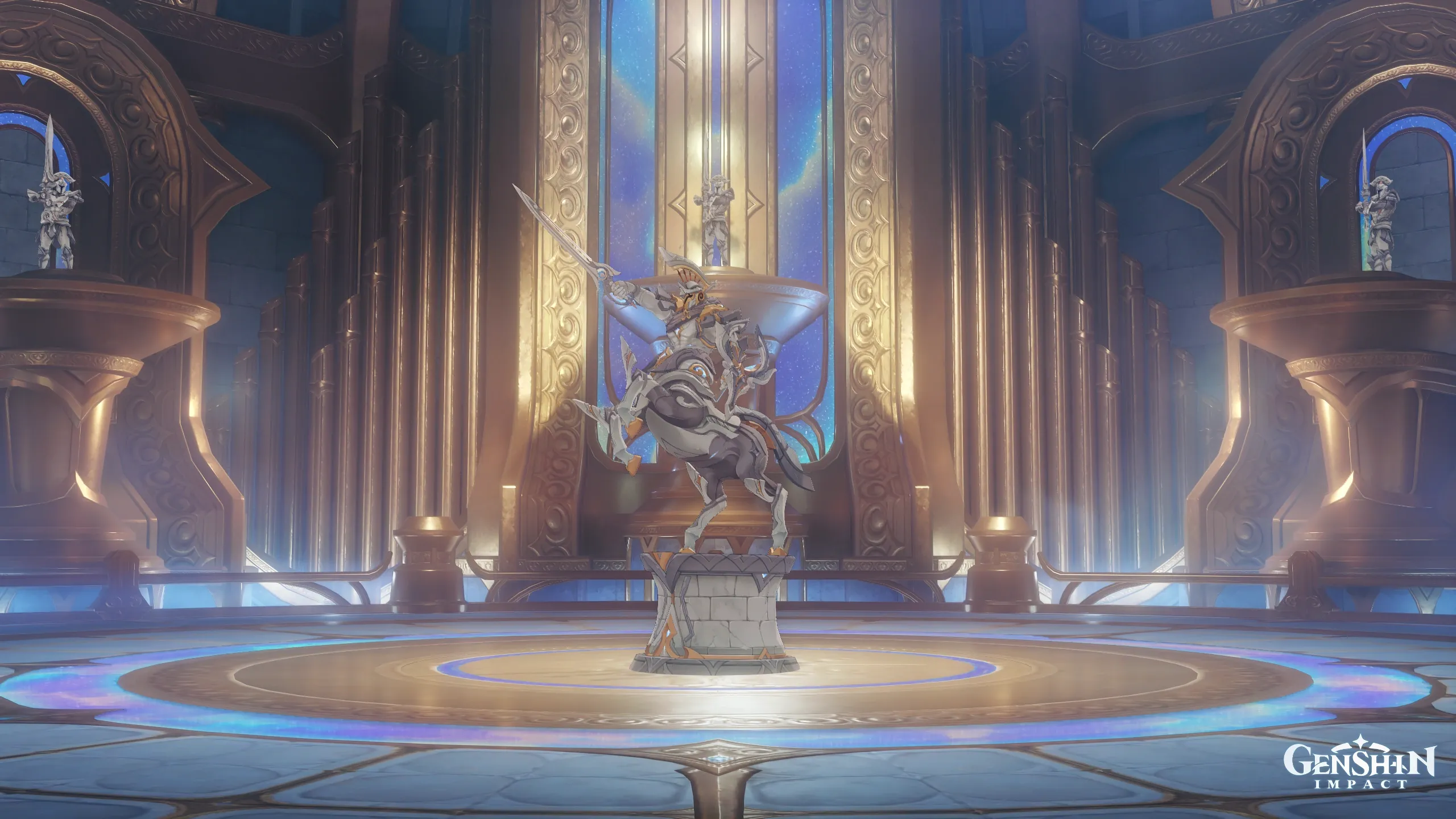 Remuria
The civilisation that ruled what is now Fontaine between the fall of Sumeru's Gurabad and the rise of the Hydro Archon Egeria.
Races & peoples
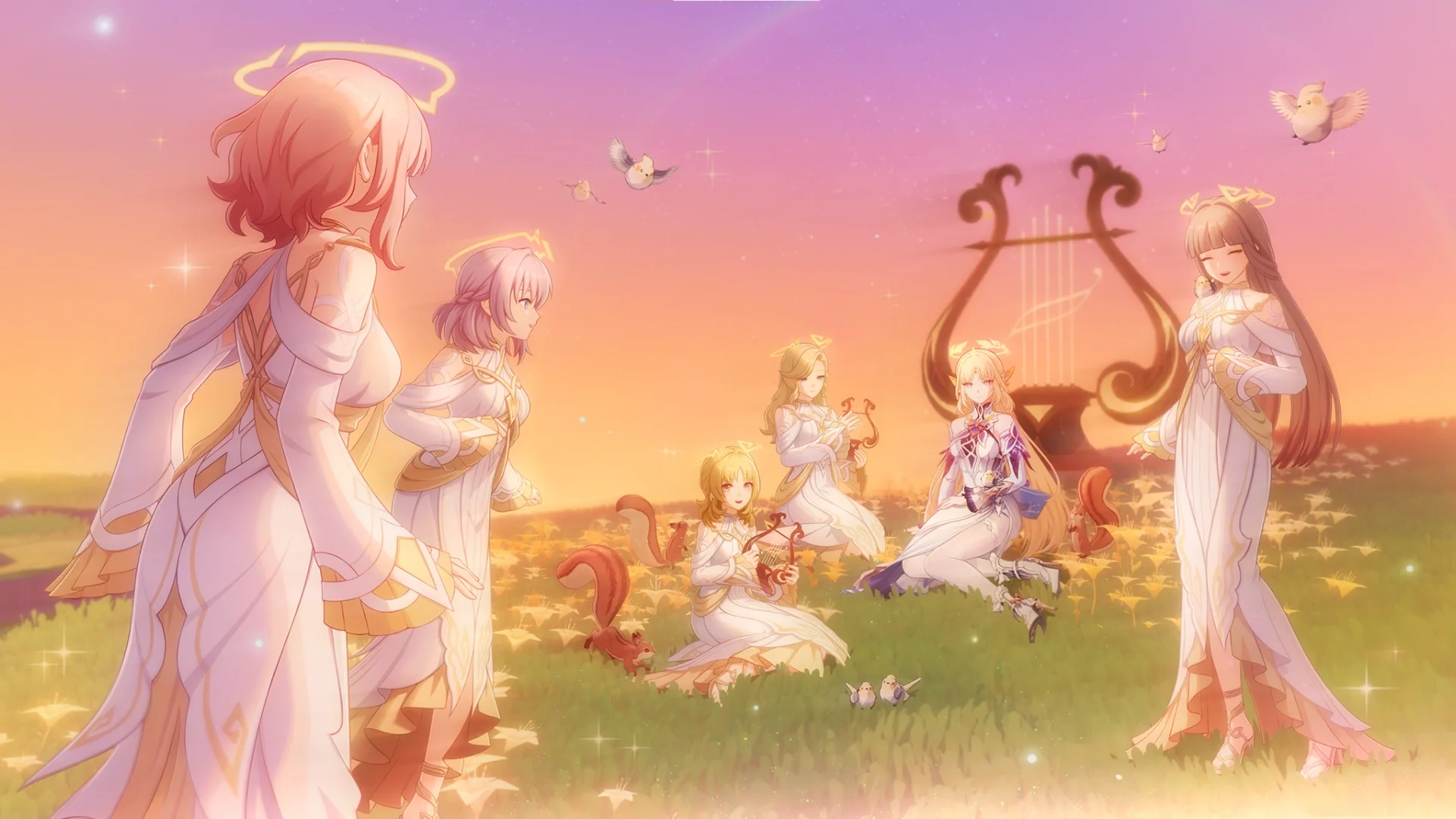 Angels
An ancient race of heavenly envoys who once guided humanity; few remain in their original form.
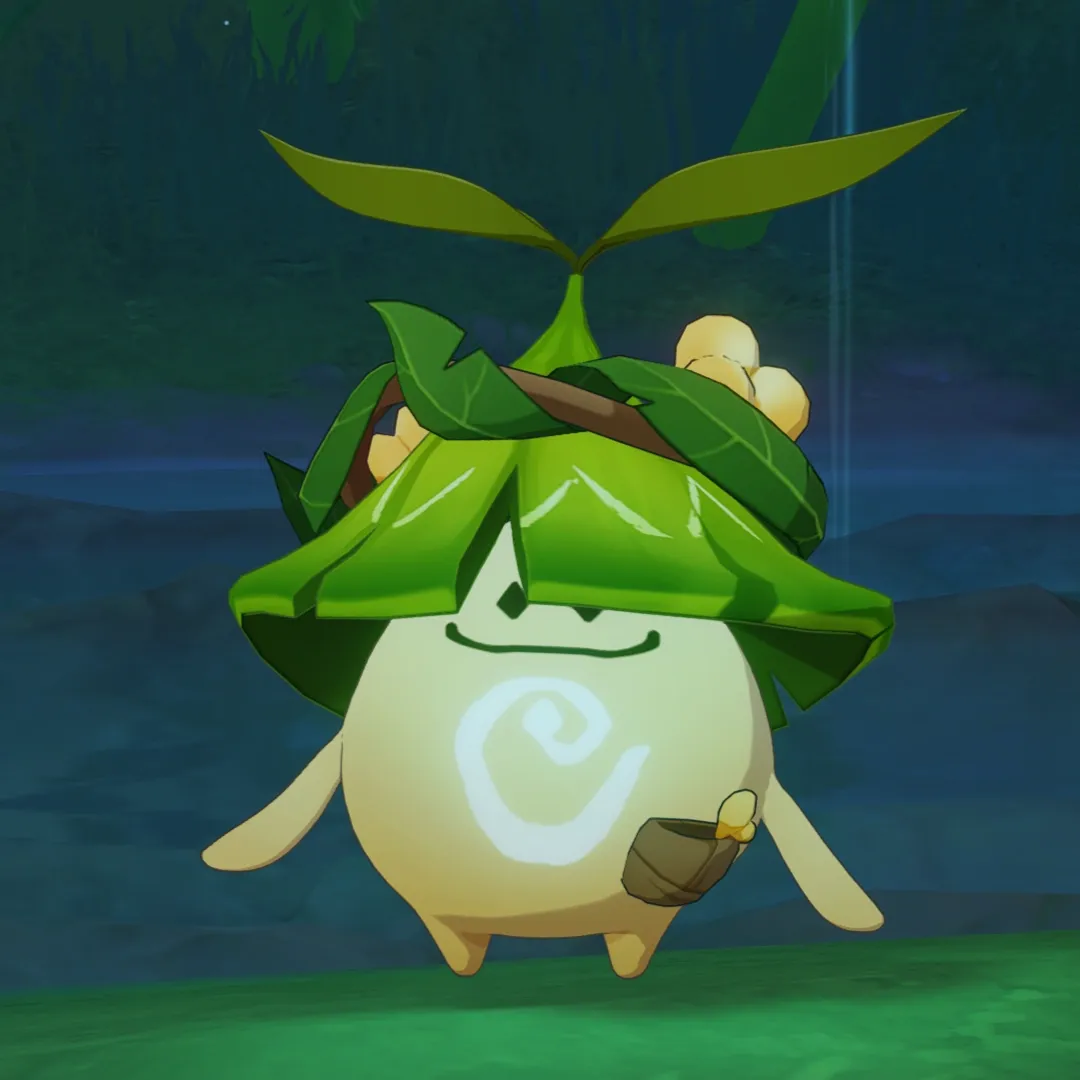 Aranara
 are the small, plant-like forest spirits of Sumeru's rainforest, created by the original Dendro Archon, Greater Lord Rukkhadevata, whom they called Queen Aranyani.
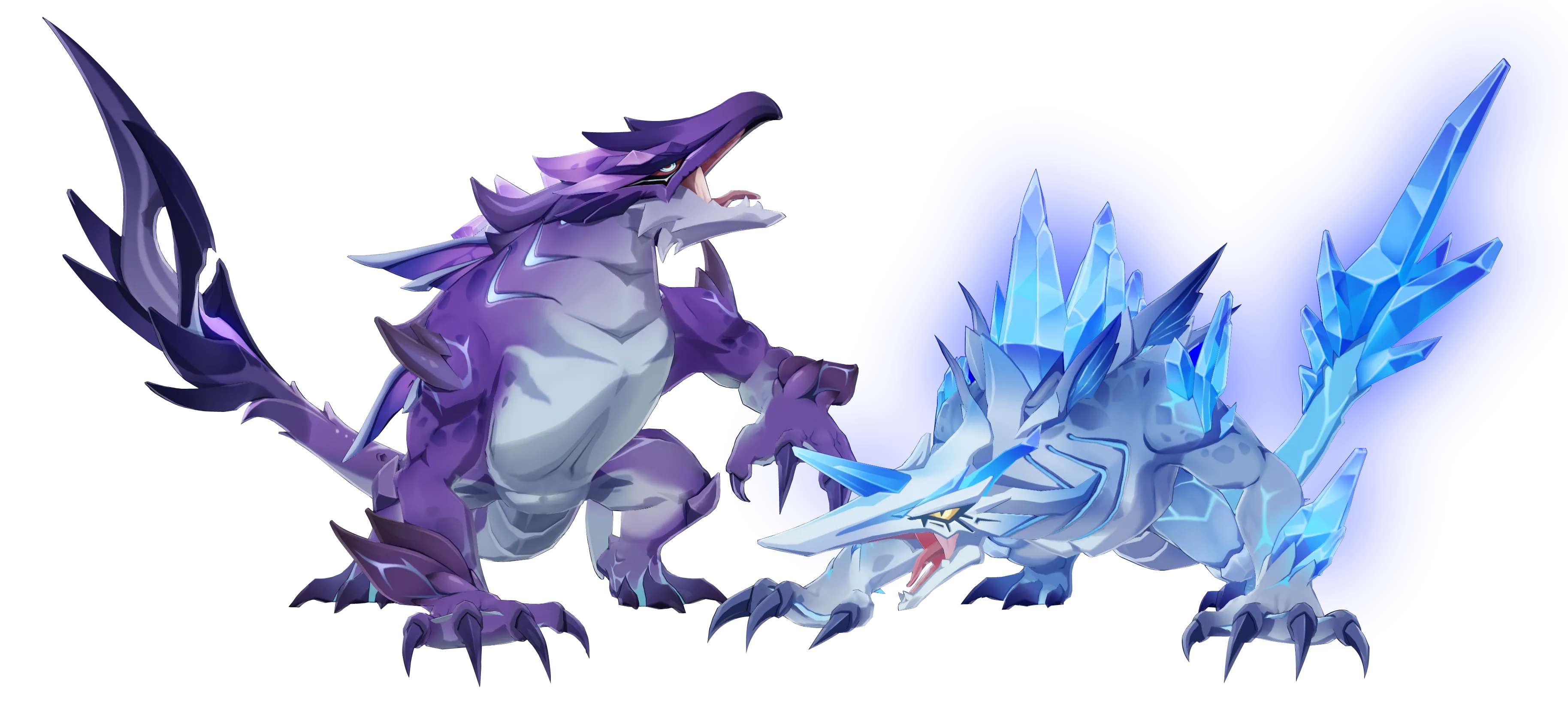 Bathysmal Vishaps
The deep-sea vishaps of Enkanomiya, the "Dragonheirs of the Depths" or "Hydro Vishaps," and the most-documented vishaps in the game.
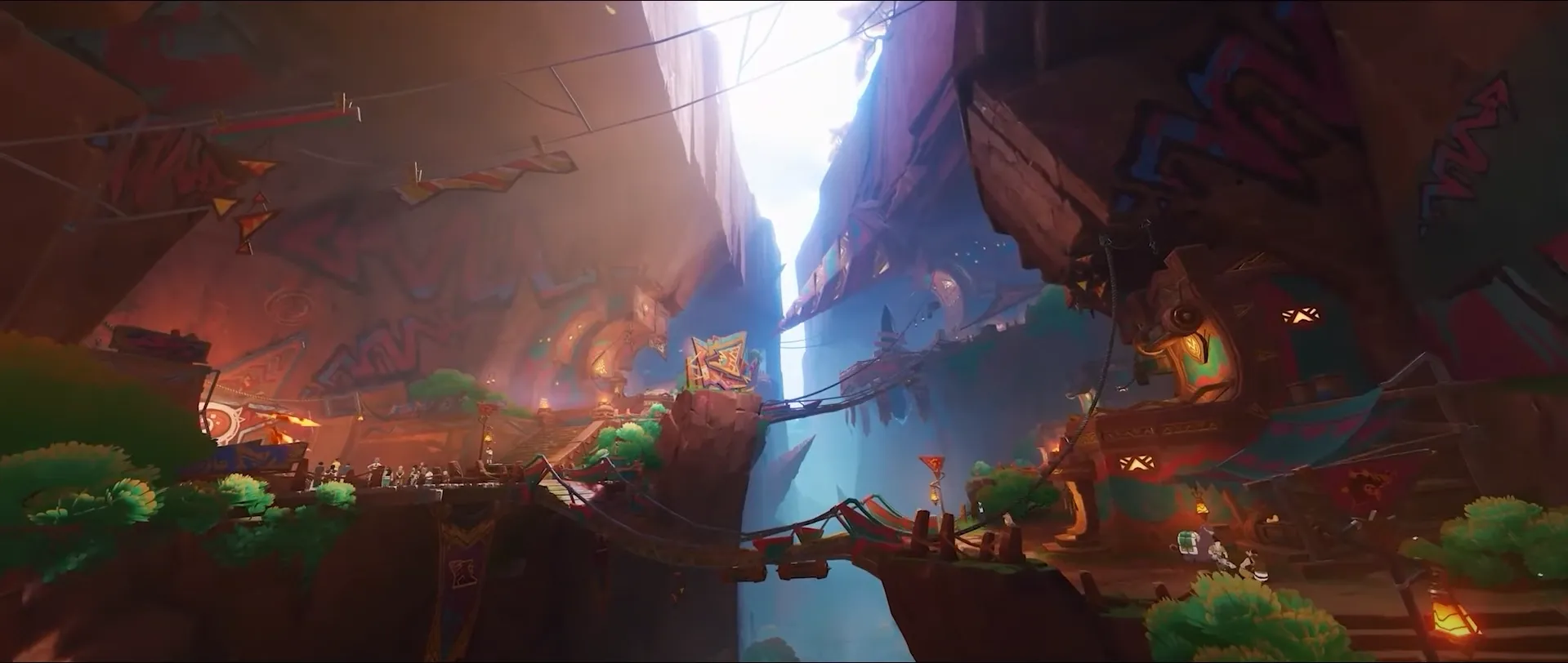 Children of Echoes (Nanatzcayan)
One of Natlan's six tribes, also called Nanatzcayan.
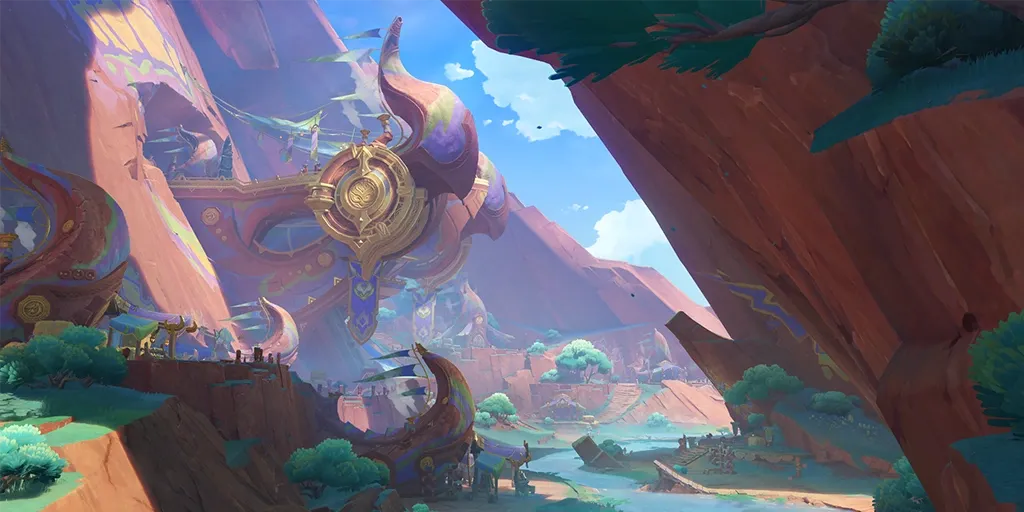 Collective of Plenty (Teteocan)
One of Natlan's six tribes, also called Teteocan - the bodybuilding-and-agriculture tribe by the Great Volcano of Tollan, who wrestle their Tatankasaurus companions and farm fertile volcanic lands.
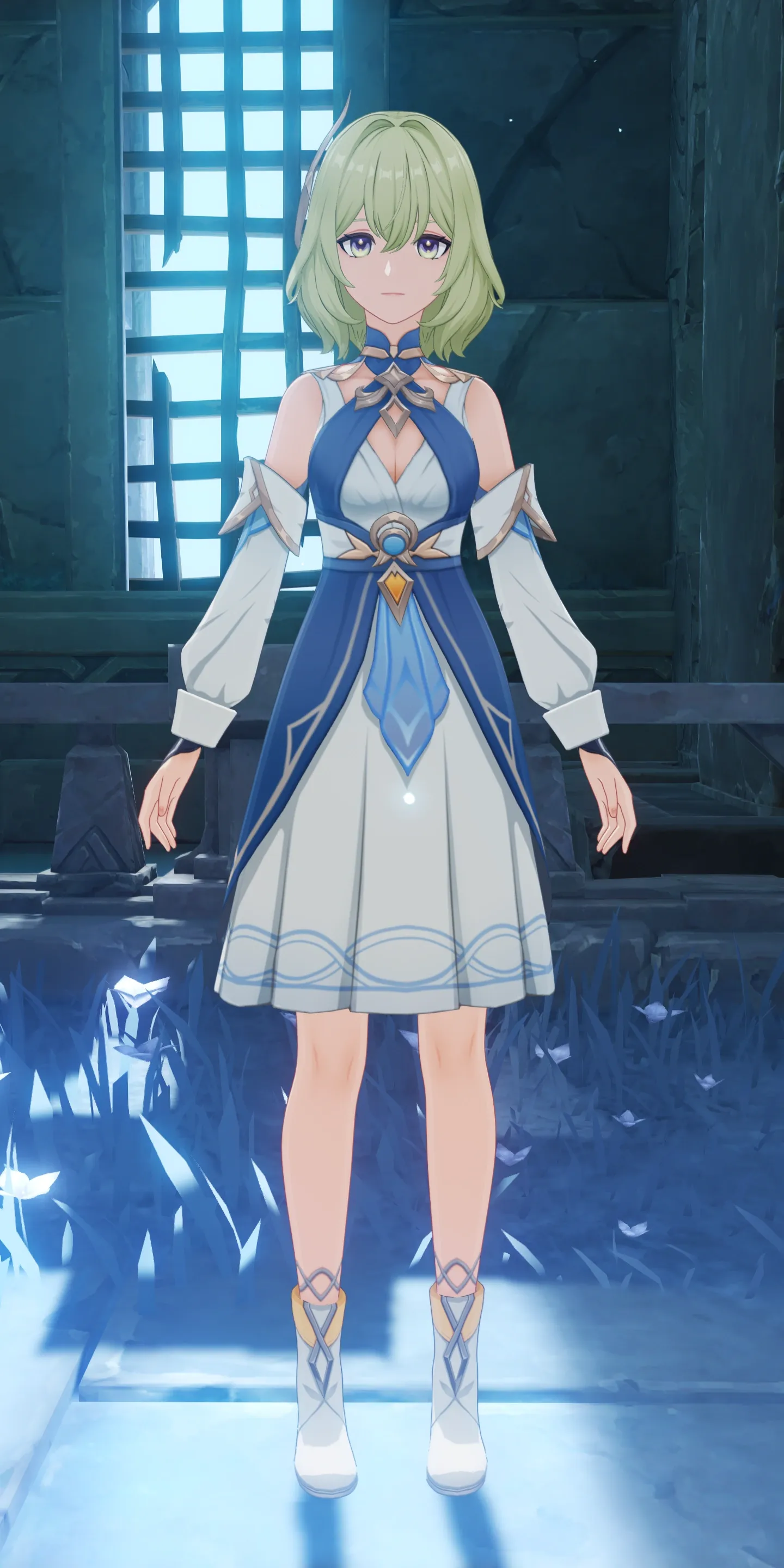 Crimson-Moon-blooded
The bloodline of Khaenri'ah's older ruling dynasty, the Crimson Moon Dynasty: human descendants marked by red X-shaped pupils within black irises and the Balemoon Bloodfire curse that runs in their veins.
 Fae
The non-human peoples of Snezhnaya, from the Vila to the house-dwelling Domovoy, who share the nation with its humans.
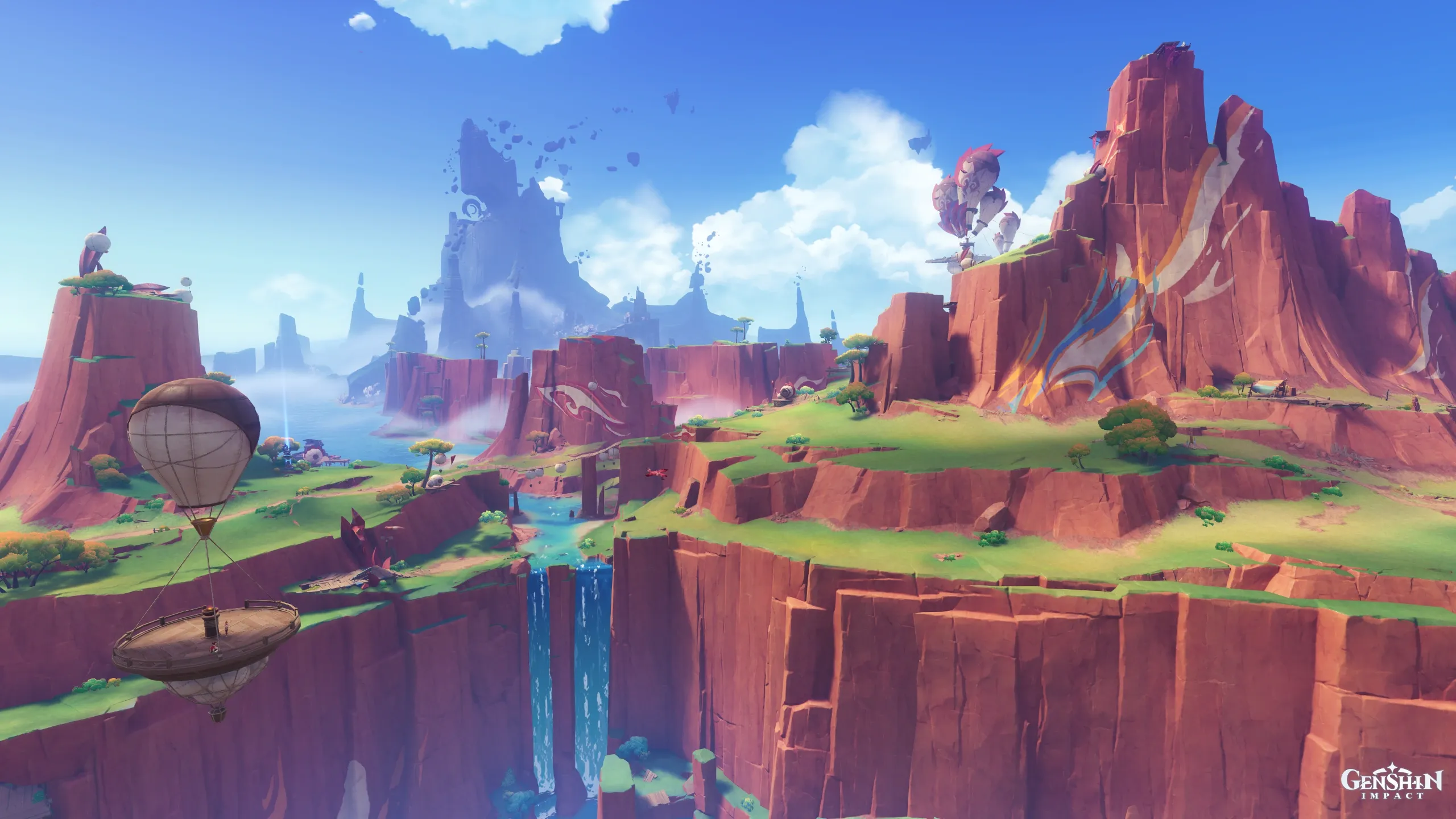 Flower-Feather Clan (Tlalocan)
One of Natlan's six tribes, also called Tlalocan, the sky-patrolling tribe atop Quahuacan Cliff who fly the Qucusaurs.
 Frostmoon Scions
The Nod-Krai tribe descended from fallen Hyperborea, marked by silver blood and antler crowns, who worship the Frost Moon goddess Kuutar (who served the Fatui as the Harbinger Columbina).
- GGods
The catch-all page for gods as a species in Teyvat (Chinese 神 shén, "god"; 魔神 móshén, "demon god," the term the Archon Quests are named for).
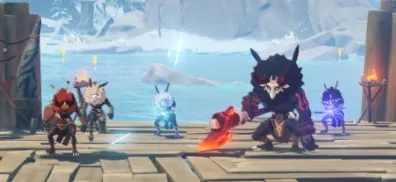 Hilichurls
A cursed humanoid race spread across Teyvat.
- HHumans
Humans are the default people of present-day Teyvat and the species most of the playable cast belong to.
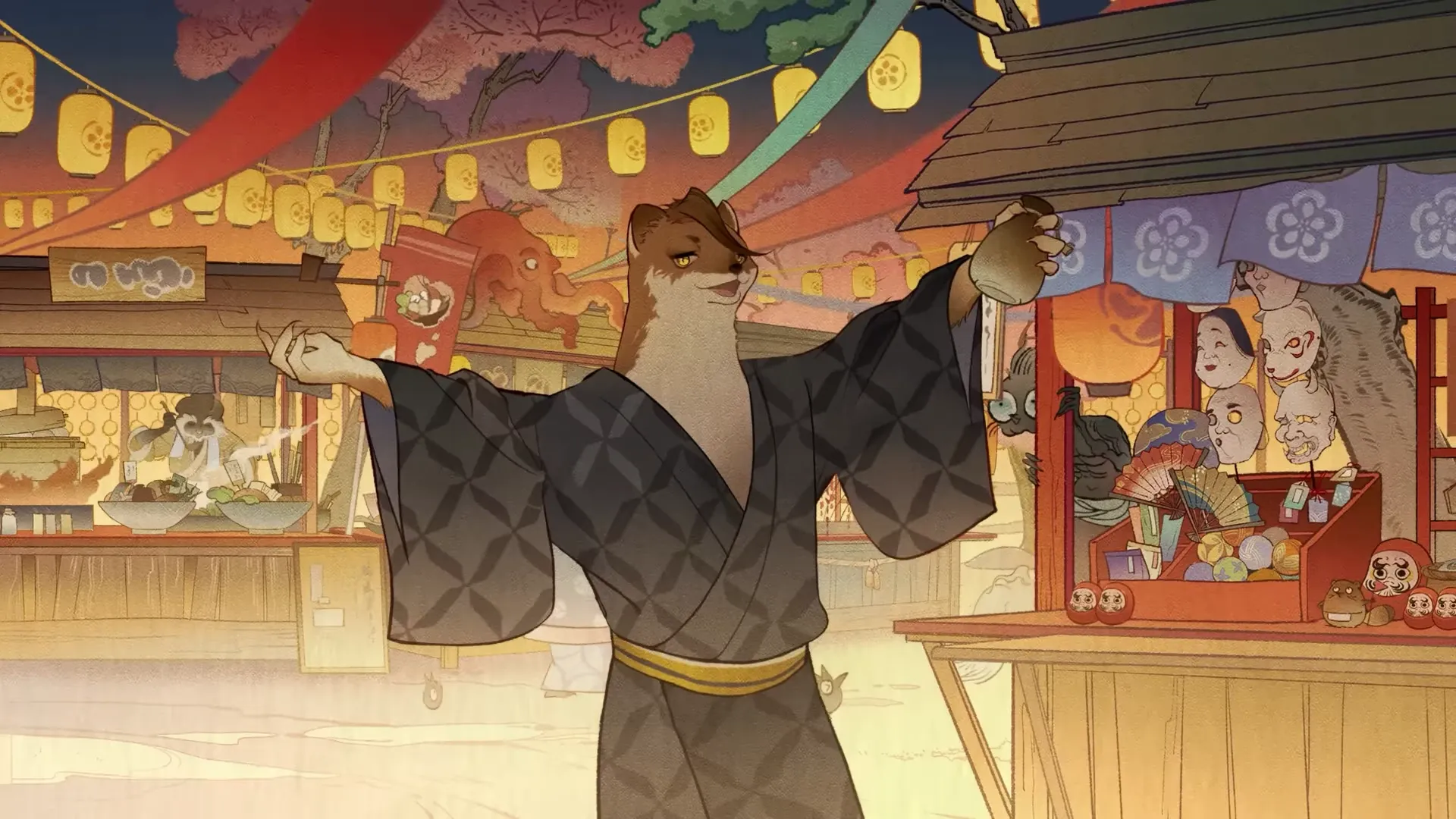 Inazuman Yokai
 (Japanese 妖怪, youkai) are Inazuma's broad class of supernatural creatures, the regional counterpart to Liyue's illuminated beasts.
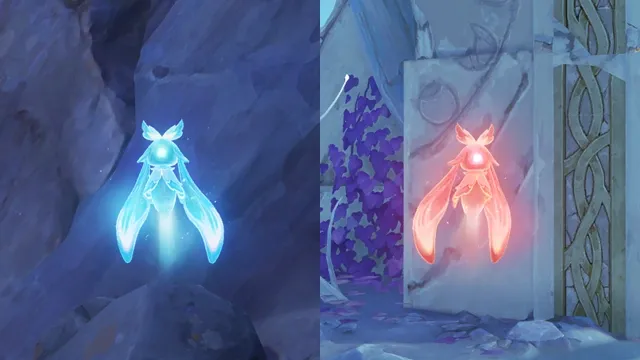 Kuuhenki
 are the small kuuvahki-state creatures of Nod-Krai, beings empowered by polarised kuuvahki energy.
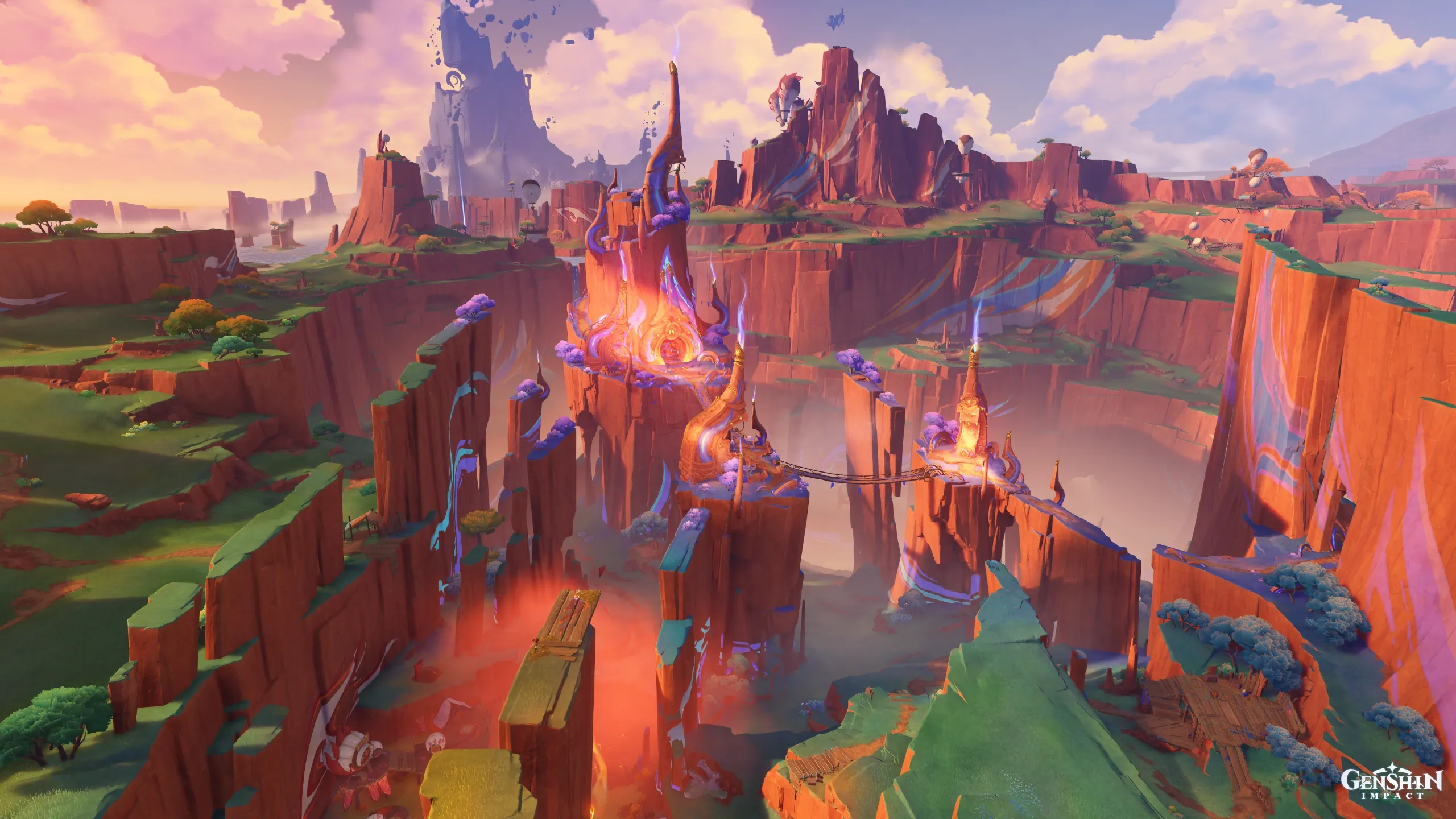 Masters of the Night-Wind (Mictlan)
One of Natlan's six major tribes, also called Mictlan.
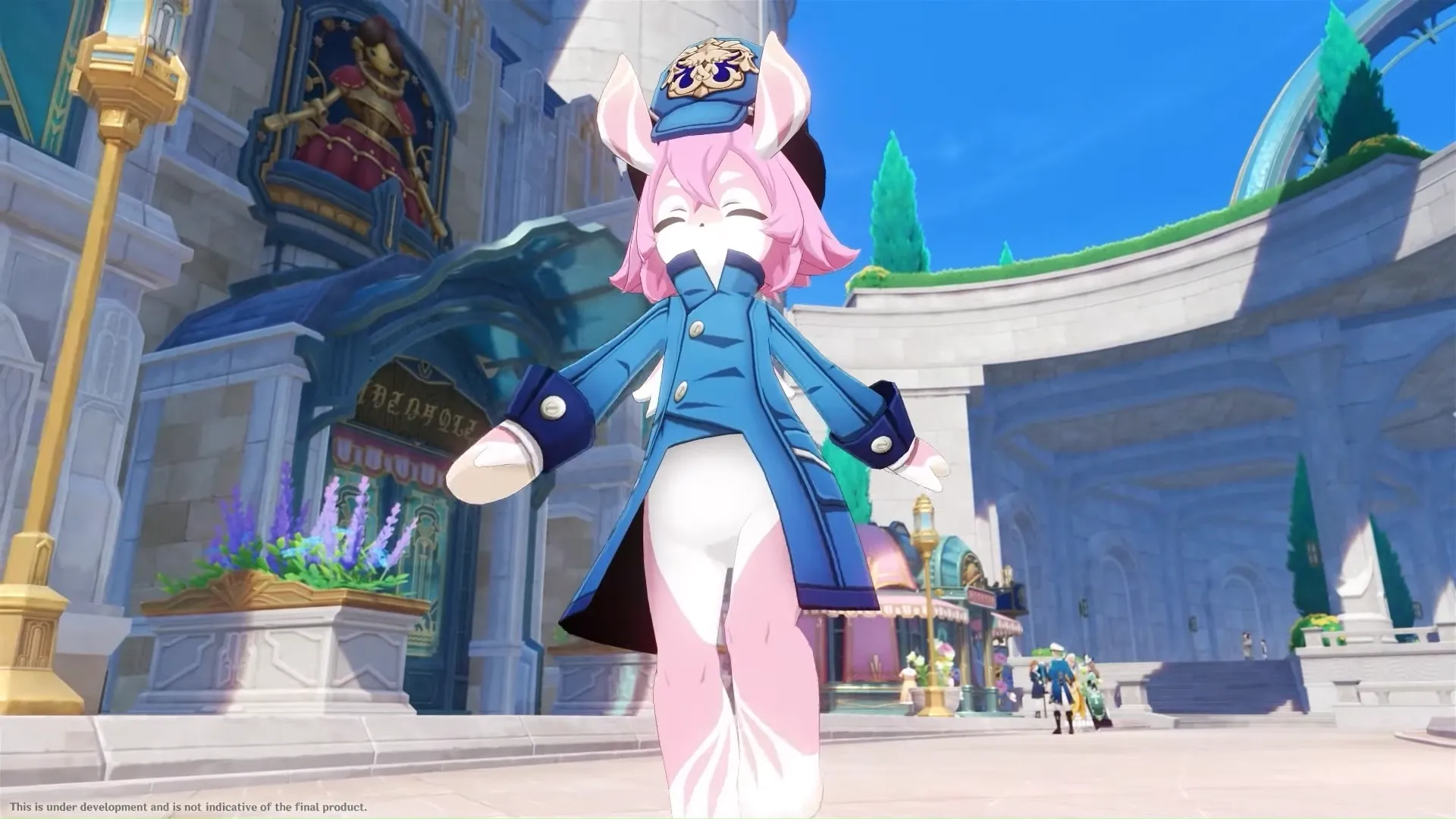 Melusines
Fontaine's small, all-female, amphibious people.
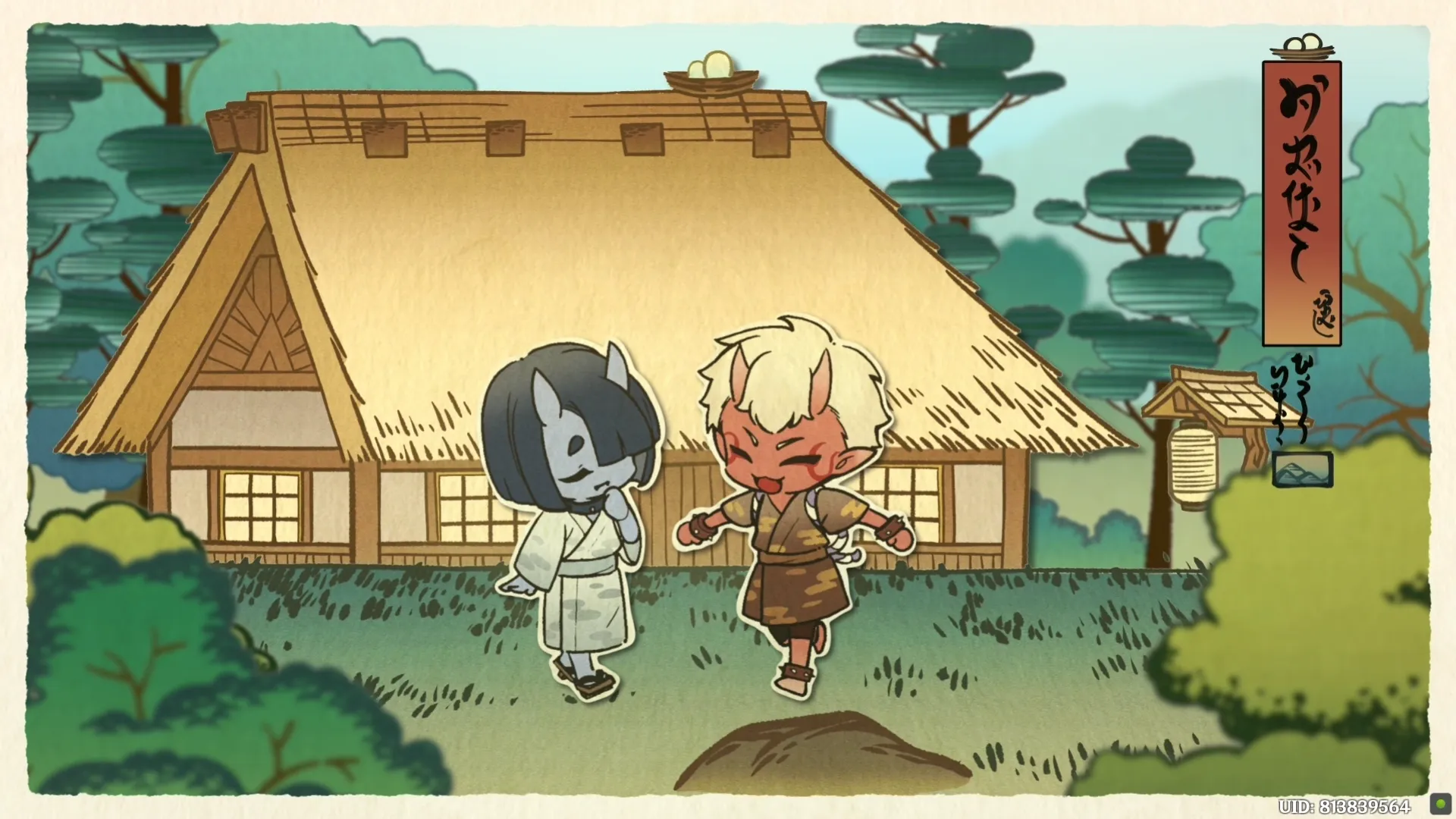 Oni
Inazuma's tall, horned yokai, with near-superhuman strength.
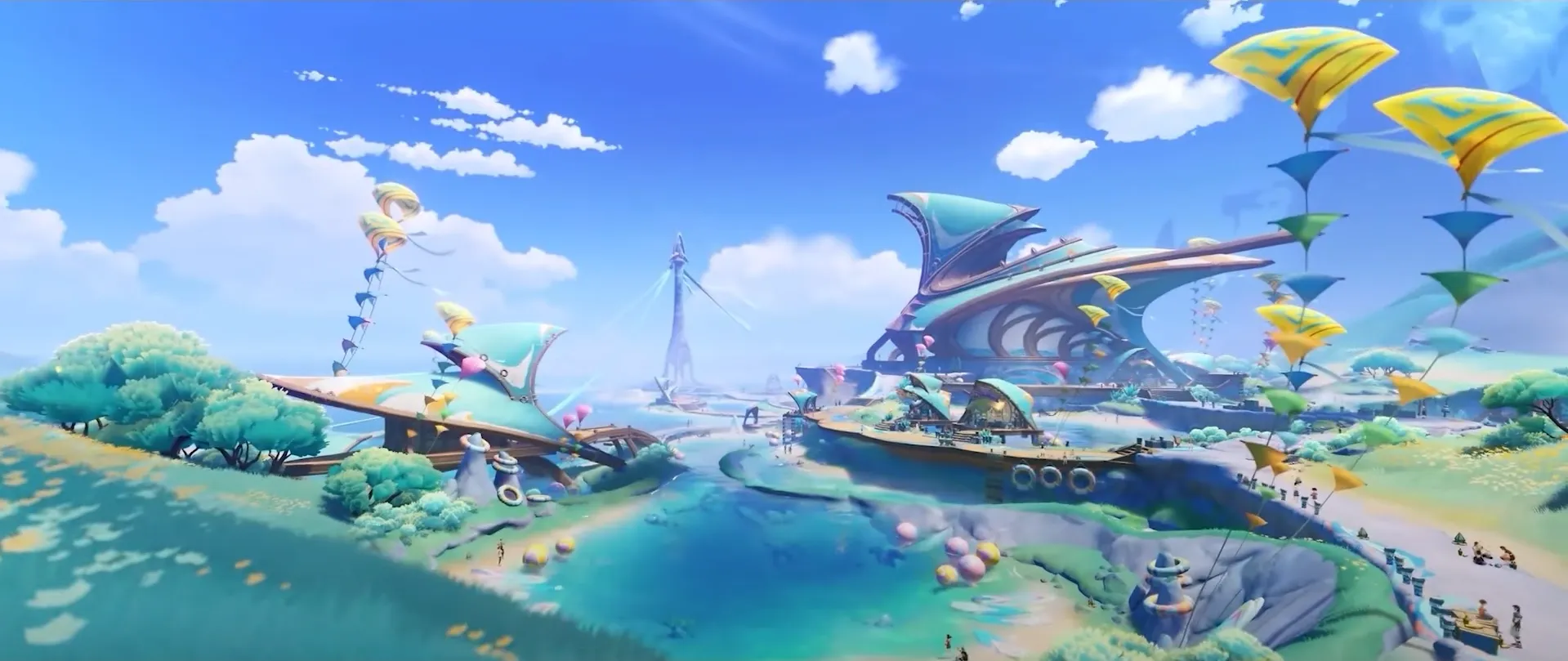 People of the Springs (Meztli)
One of Natlan's six tribes, also called Meztli: the guides and hot-spring people of the Toyac Springs who live alongside the Koholasaurus.
 Ruin Machines
 are the mechanical war machines built by the lost civilization of Khaenri'ah, which called them Field Tillers.
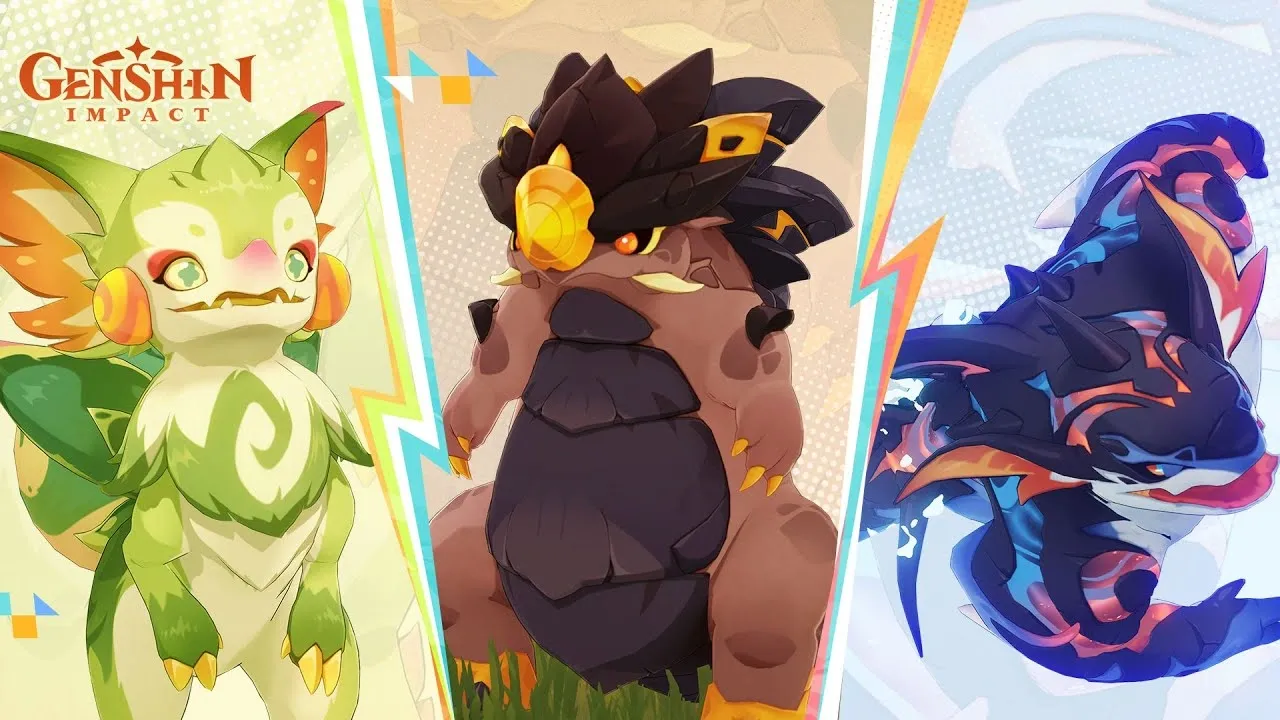 Saurians
The dragons of Natlan: small, intelligent but non-magical, and bonded for life to the tribe they share their land with.
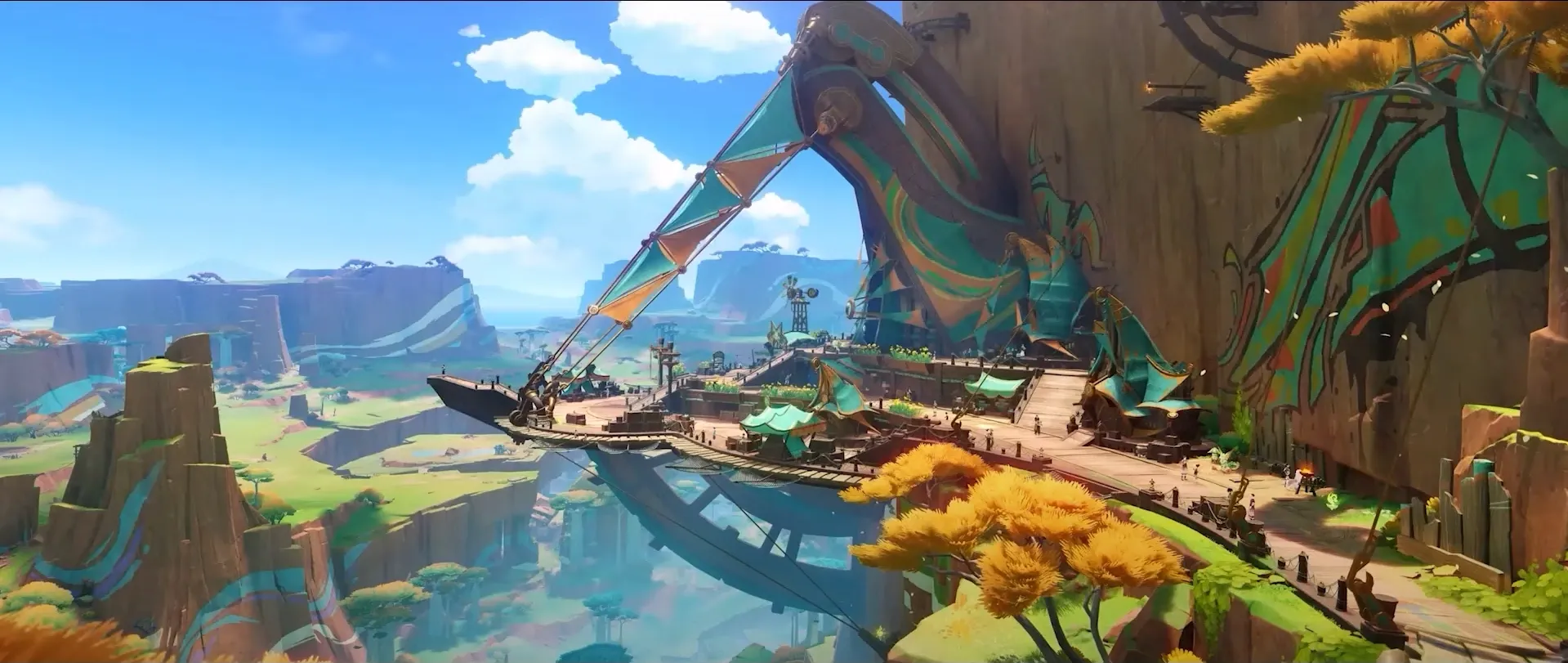 Scions of the Canopy (Huitztlan)
One of Natlan's six tribes, also called Huitztlan - the explorers, messengers, and hunters off Coatepec Mountain who live alongside the Yumkasaurus.
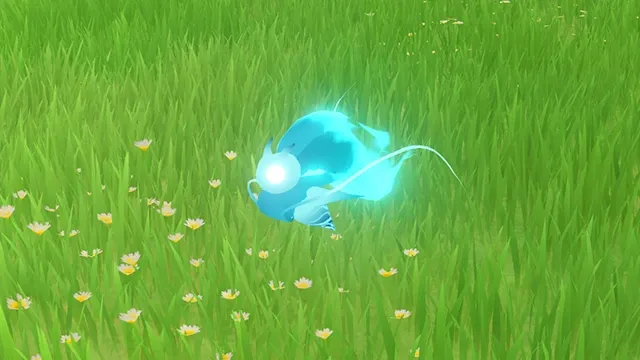 Seelies
The small floating spirit-creatures that lead the Traveler to treasure.
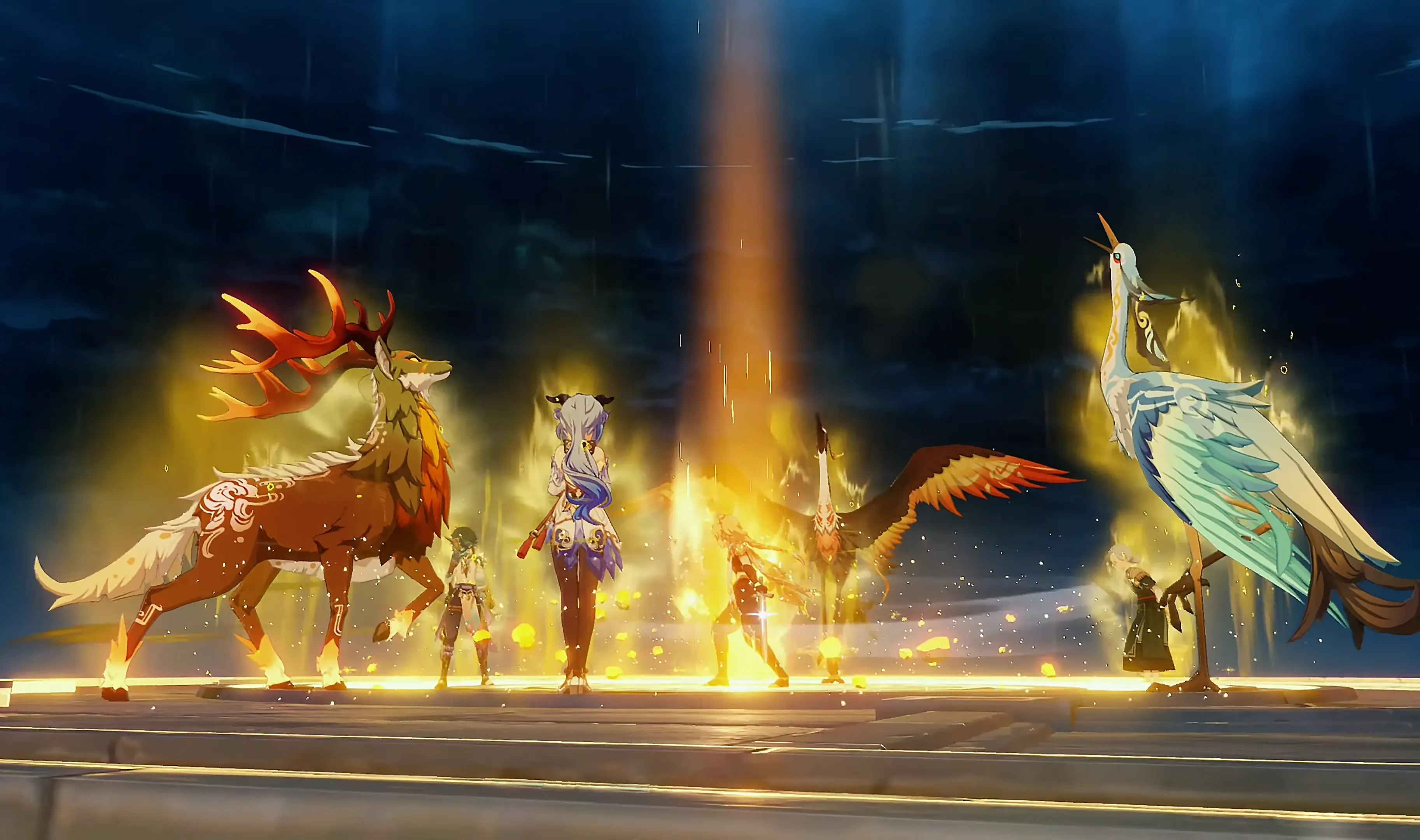 The Adepti
Liyue's illuminated immortal beings, led by the Geo Archon Morax (Rex Lapis) as their Prime.
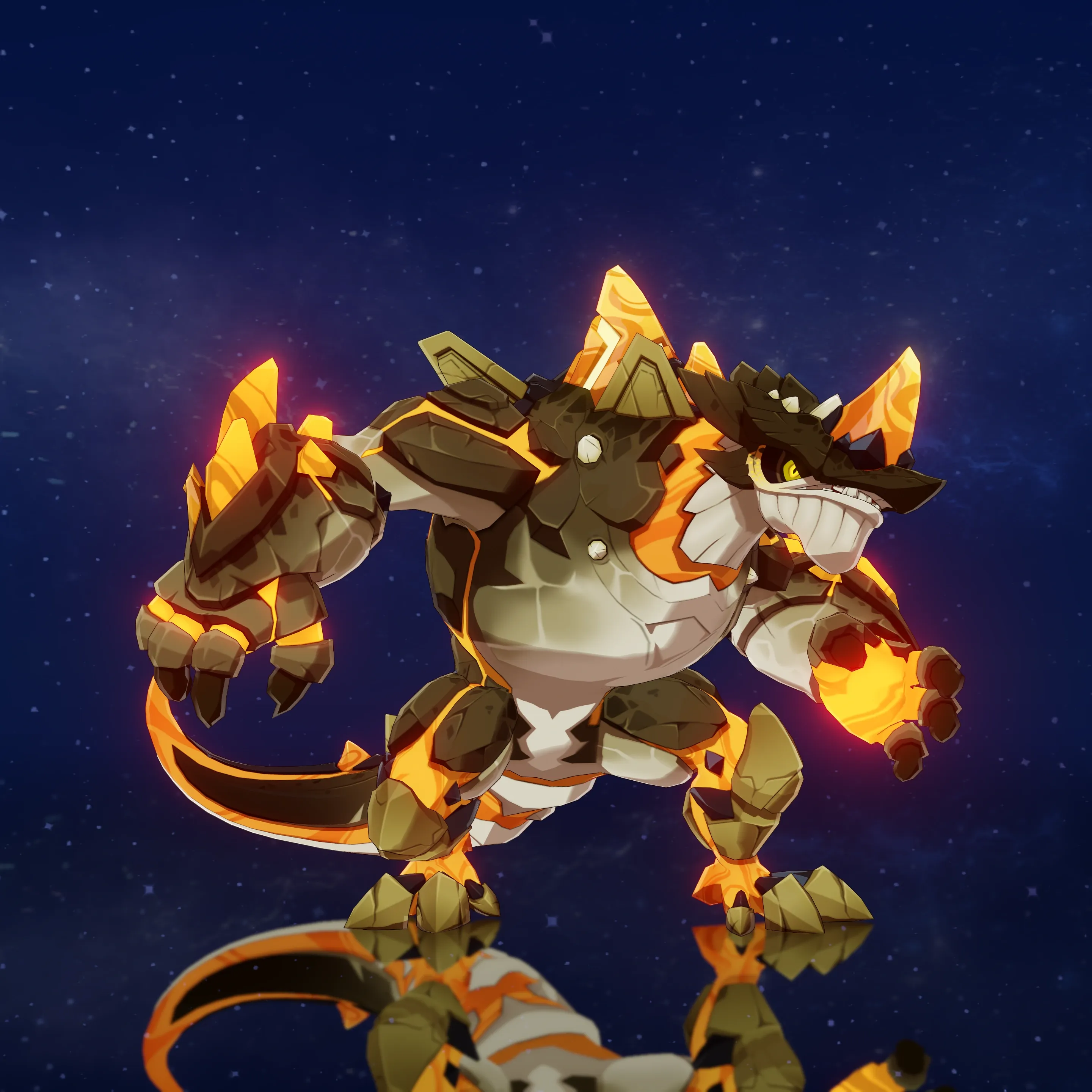 Vishaps
The dragon-like race of the surface and the deep sea that the Seven Sovereigns once ruled.
- WWayob
The Wayob are Natlan's tribal ancestral spirits: non-corporeal, Pyro-coded consciousnesses that each of Natlan's six tribes venerates, dwelling in the Night Kingdom.
Factions
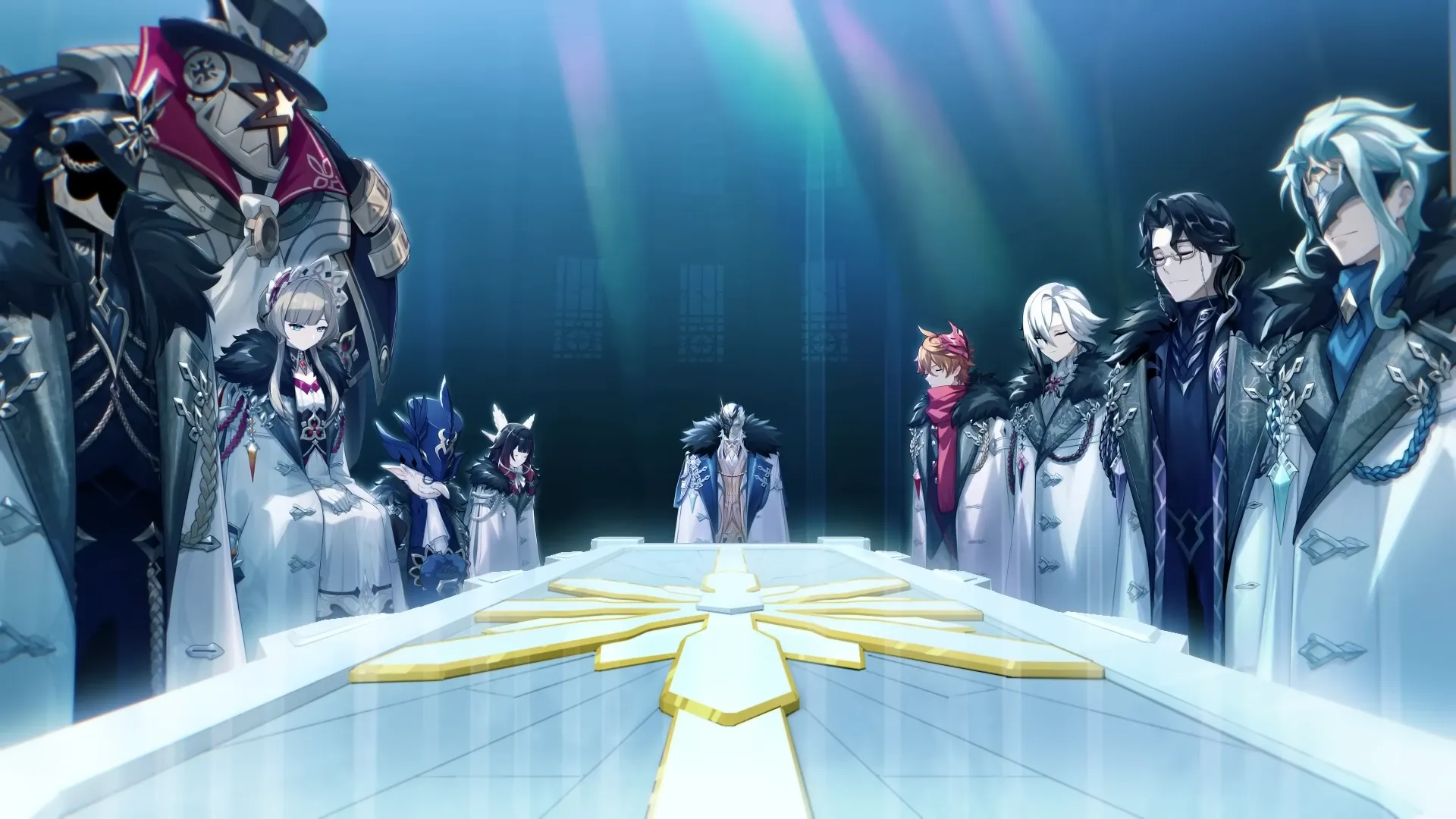 Eleven Fatui Harbingers
The Tsaritsa's elite executive officers, each bearing a commedia dell'arte codename and directing part of the Fatui's international operations.
 Knights of Favonius
Mondstadt's order of knights, founded by Vennessa 1,000 years ago after she overthrew the city's aristocrats.
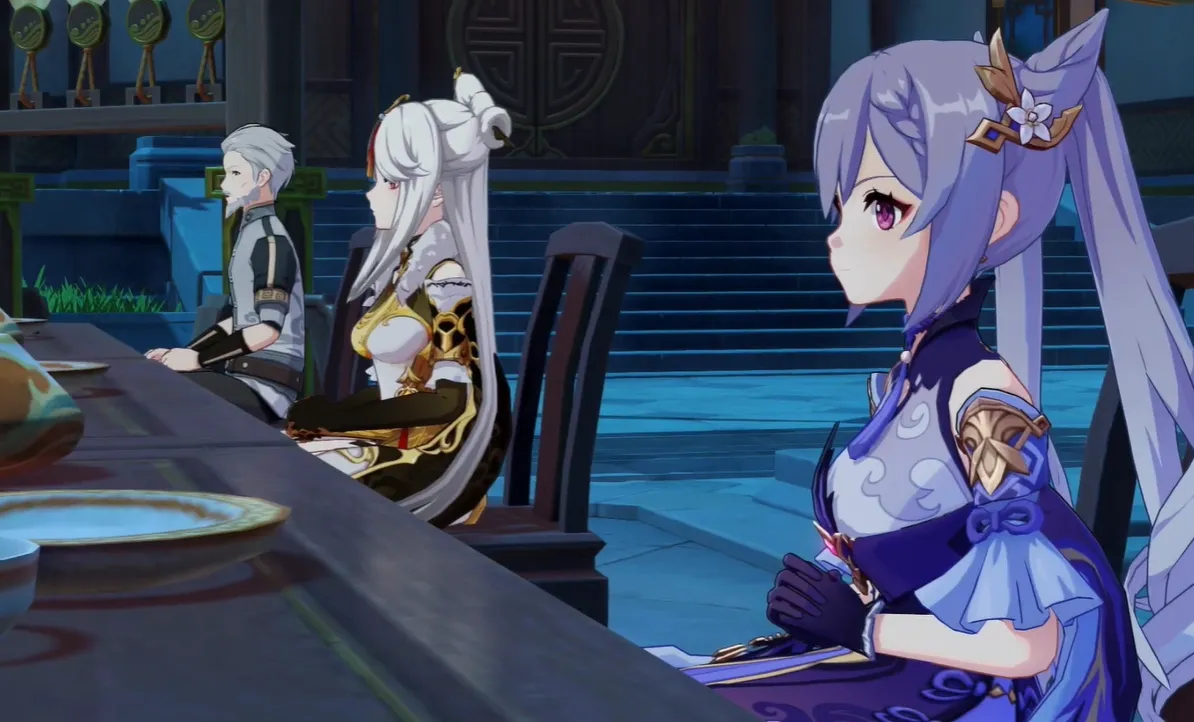 Liyue Qixing
Liyue's seven-merchant governing council.
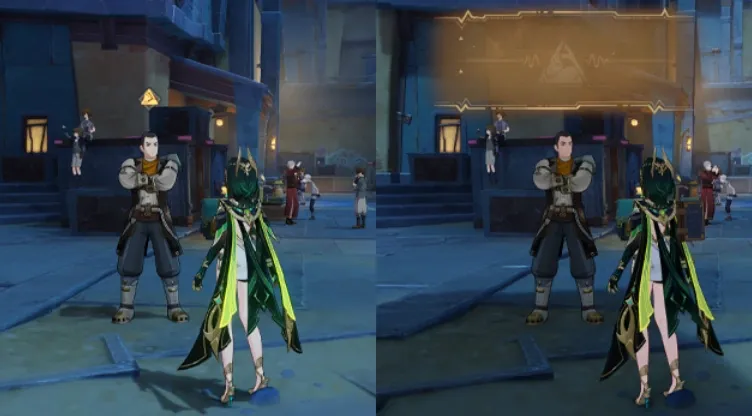 Northern Intelligence Network (Curatorium of Secrets)
Nod-Krai's underground intelligence operation, run by Nefer as the hidden inner sanctum of her public Curatorium of Secrets.
- RRokot
A covert Snezhnayan organization whose members act independently under concealed identities while working to improve ordinary people's lives and challenge harmful policies.
 The Eremites
Sumeru's umbrella mercenary organisation, drawn from the peoples of the Great Red Sand and their many brigades and tribes.
 The Fatui
Snezhnaya's diplomatic-and-military organisation, the public arm of the Cryo Archon the Tsaritsa abroad.
 The Lightkeepers
Nod-Krai's volunteer defensive order, founded centuries ago to guard the region against an Abyssal threat called the Wild Hunt.
 The Spina di Rosula
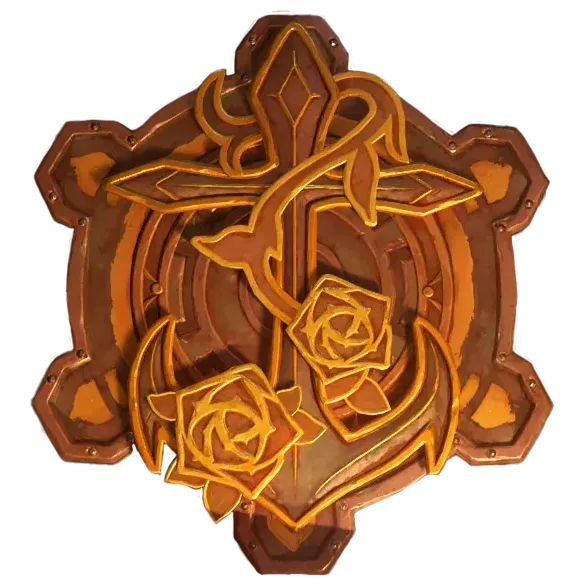
The Caspar family's civilian organisation in Fontaine for investigating cases and helping people, established by Callas Caspar and now led by his daughter Navia.
 The Tri-Commission
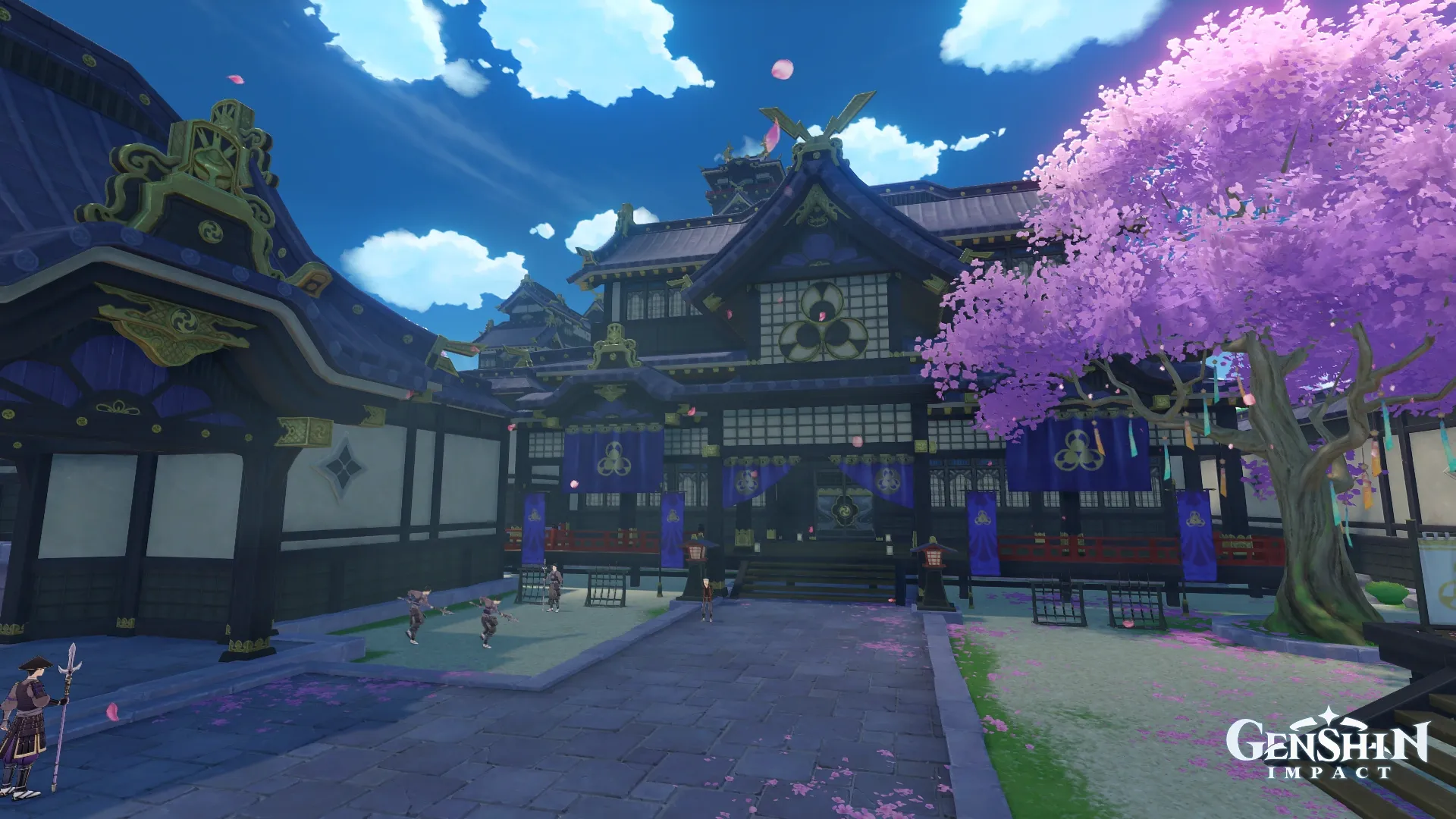
Inazuma's three-arm civilian government, operating under the Raiden Shogun's formal authority.
 The Wild Hunt
A centuries-old, self-perpetuating Abyssal cavalry that besieges Frostmoon Scion settlements, Lightkeeper outposts, and everything else within reach across Nod-Krai.
 Treasure Hoarders
A decentralised bandit syndicate across Teyvat that digs up relics and melts down artifacts.
 Voynich Guild
The merchant guild that is the de-facto governing force of the lawless Nod-Krai, based in Nasha Town.
Institutions
 Abyss Lectors
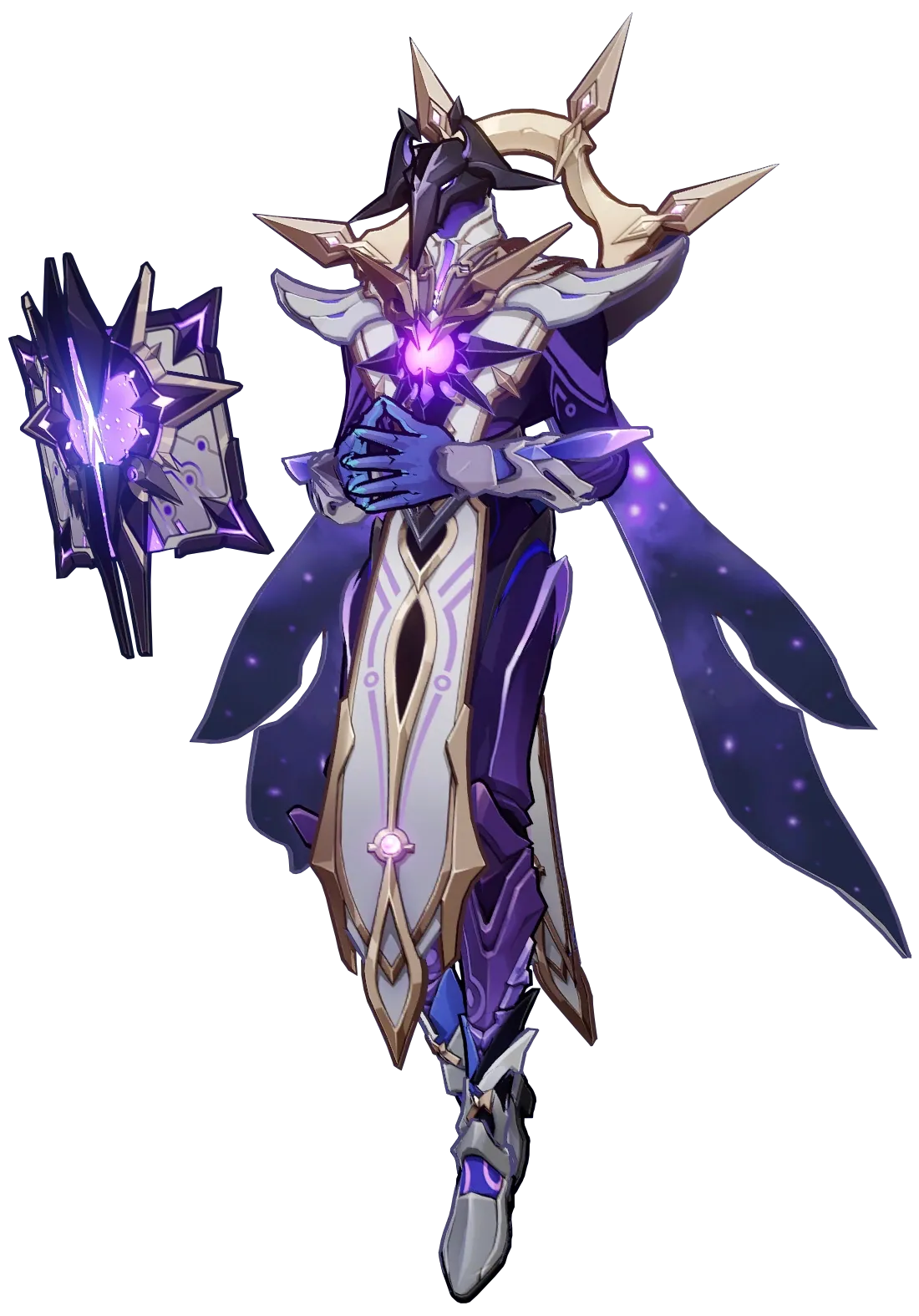
The elite ranged casters of the Abyss Order, the catalyst-wielding counterparts to the melee Abyss Heralds.
 Adventurers' Guild
The international organisation, headquartered in Snezhnaya, that supports adventurers across the seven nations with quests and intelligence.
 Forest Watchers (Forest Rangers)
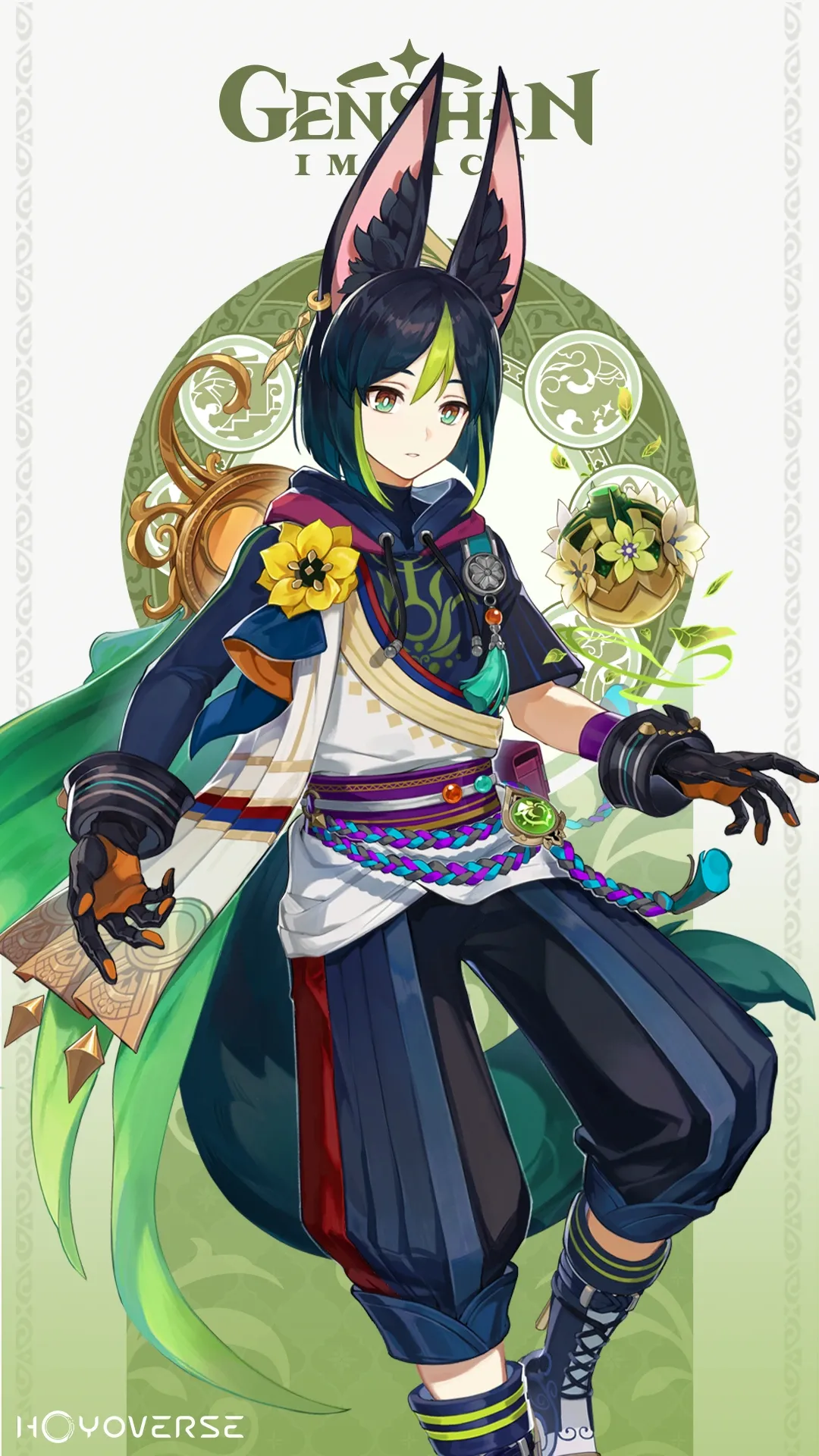
The Sumeru civil servants who protect the rainforest - the Forest Rangers, whose senior members are the Forest Watchers - based at Gandharva Ville and led by Tighnari.
 Northland Bank
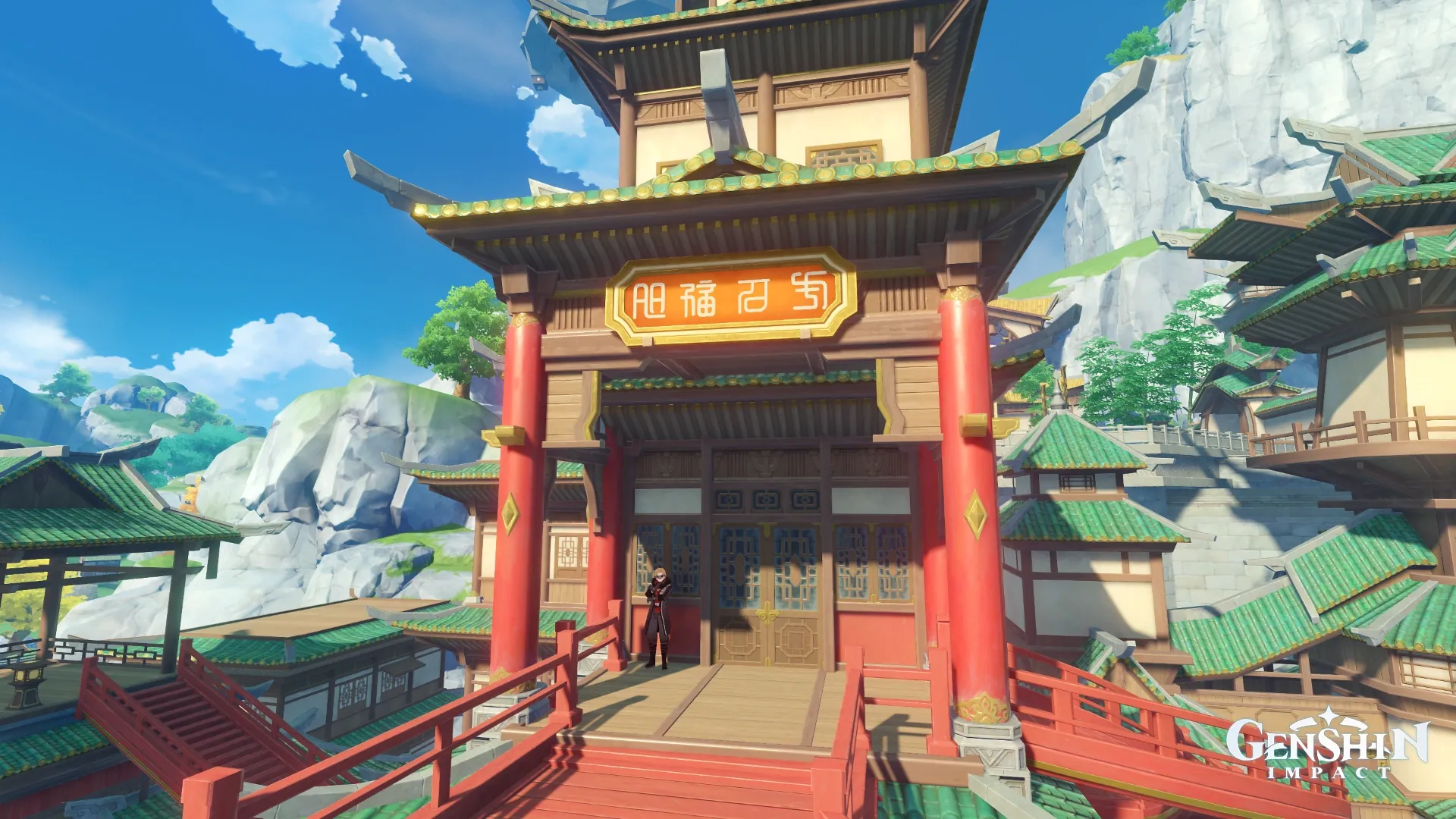
The Snezhnayan bank that funds the Fatui and serves as their base abroad, run overall by the Harbinger Pantalone.
 Sumeru Akademiya
Sumeru's governing body and Teyvat's most prestigious university, built into the Divine Tree in Sumeru City.
 The Abyss Order
A Khaenri'ah-rooted institution founded by Chlothar Alberich after the Cataclysm.
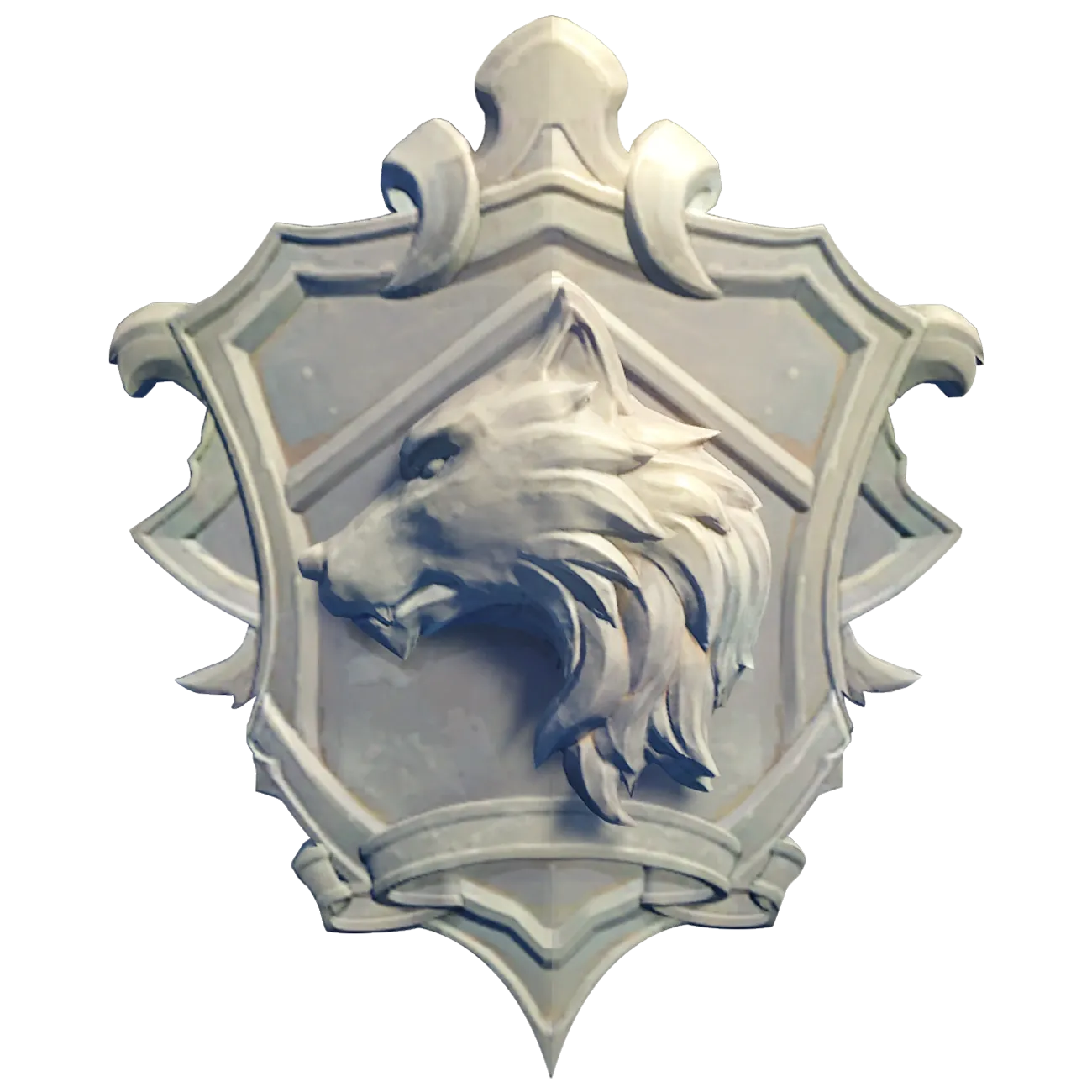 The Four Winds of Mondstadt
 are the four guardians the Anemo Archon Barbatos entrusted with the city's safety before his thousand-year disappearance: the Wolf of the North (Boreas/Andrius, with Varka co-titled through the Knight of Boreas tradition), the Lion of the South (Jean today, after Vennessa, Arundolyn, and Valentine), the Dragon of the East (Dvalin), and the Falcon of the West (Vennessa, with the Knights of Favonius collectively named in one account).
 The Hexenzirkel
Teyvat's "Circle of Witches," a mysterious group of powerful witches and mages founded by Alice, who meet for formal tea parties.
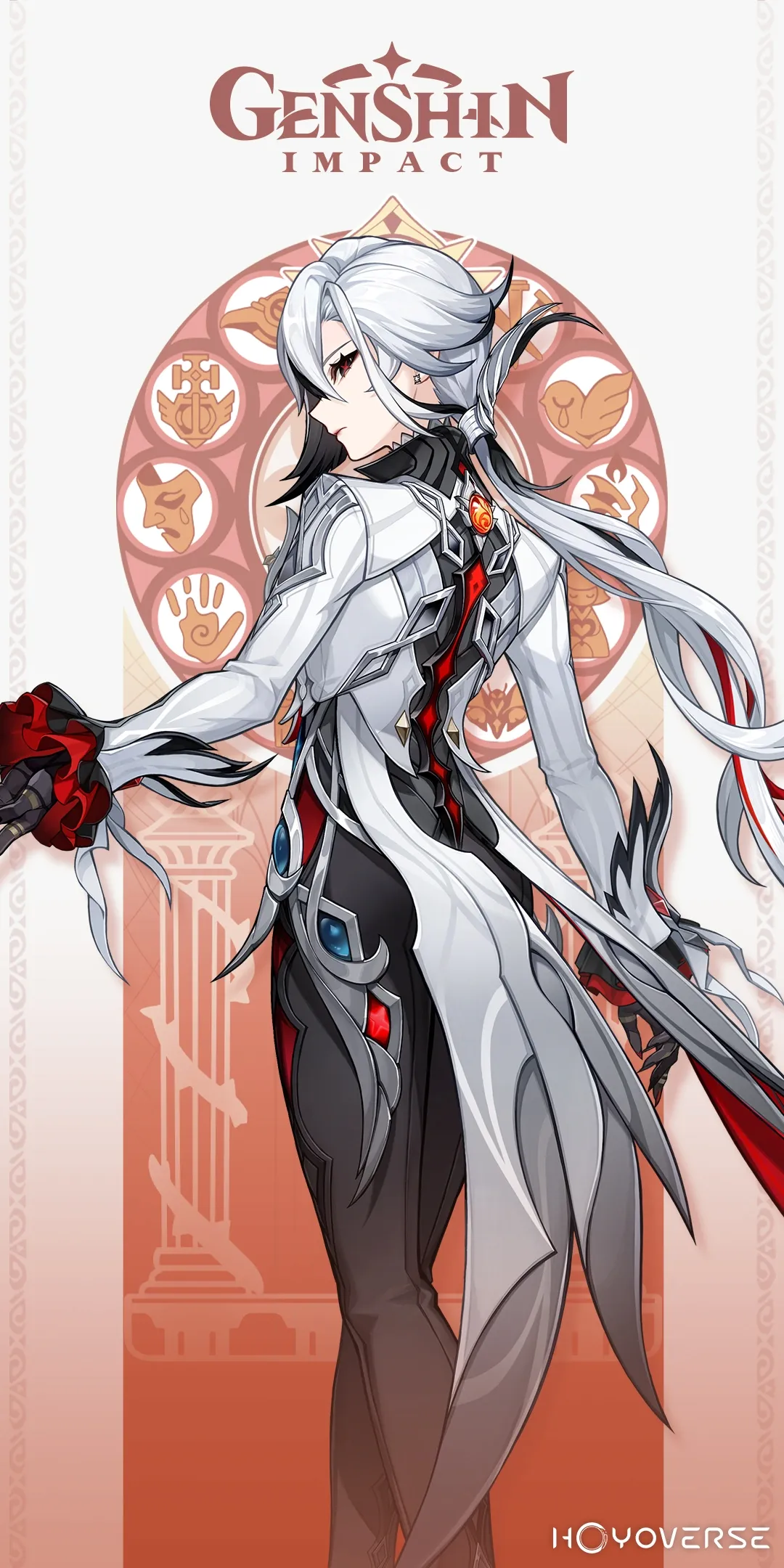 The House of the Hearth
The Fatui's institution for recruiting orphans and training sleeper agents, run by the Fourth Harbinger Arlecchino ("The Knave") from a base in Fontaine.
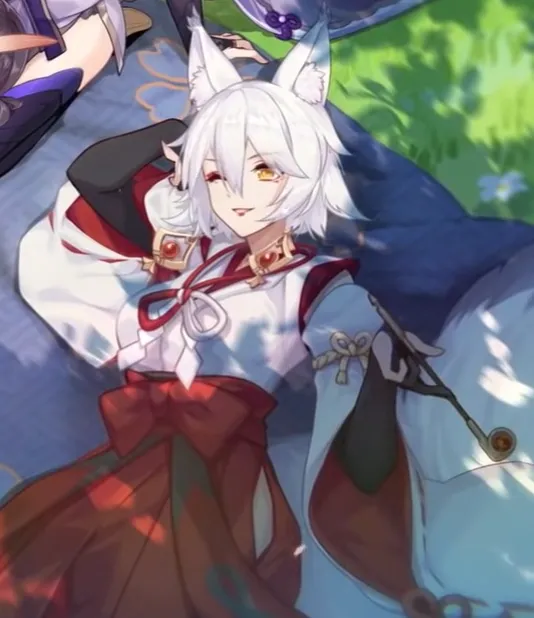 The Kitsune Saiguu
, also called the Hakushin Kitsune, was the pre-Cataclysm High Priestess of the Grand Narukami Shrine and the founder of the Sacred Sakura Cleansing Ritual.
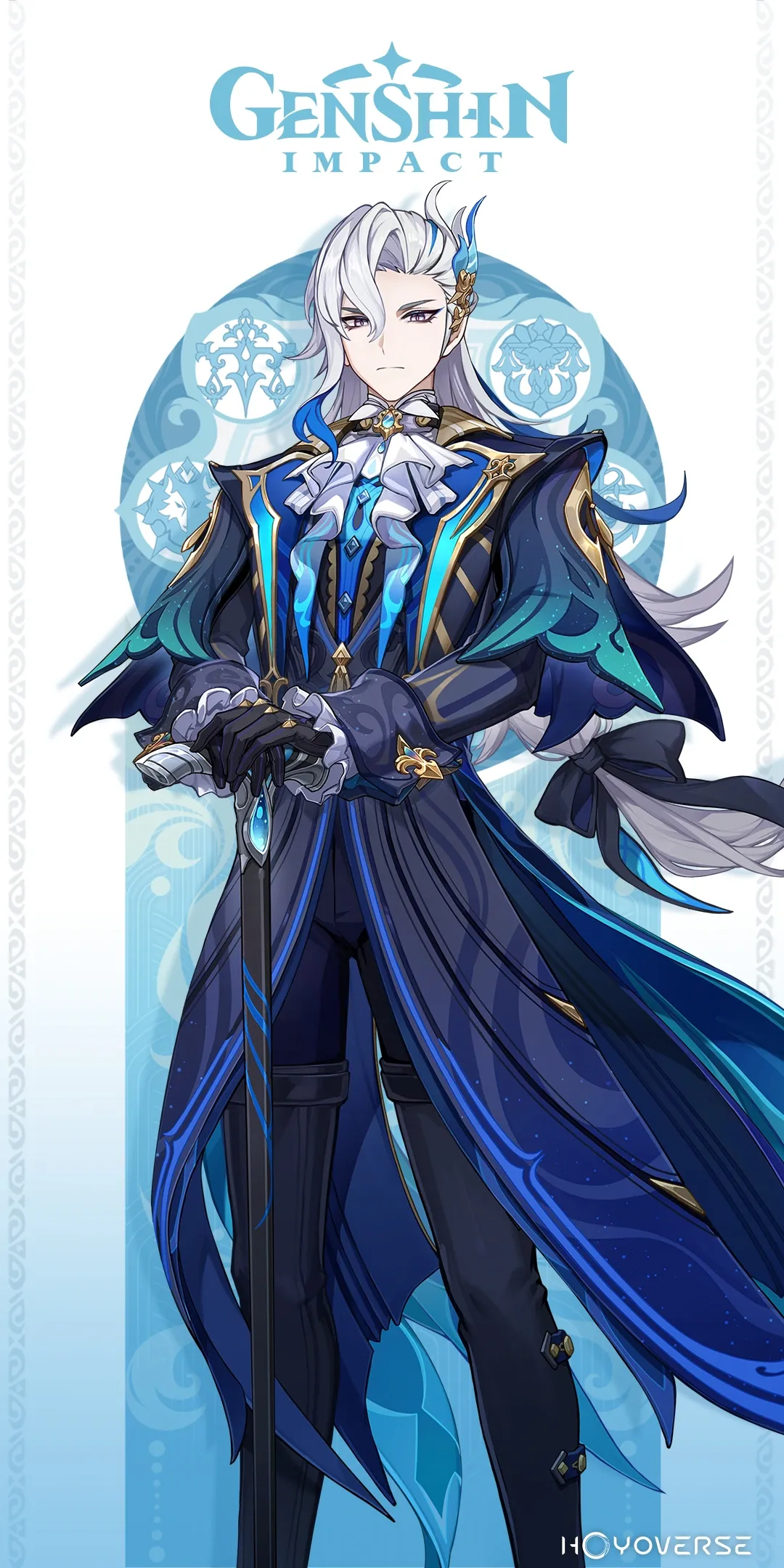 The Marechaussee Phantom
Fontaine's special-detective force, led by the Iudex Neuvillette and mostly composed of Melusines, whose powerful eyesight and perception make them unusually suited to investigation.
 The Narzissenkreuz Ordo
A Fontainan secret society founded over 400 years ago by Rene de Petrichor and Jakob Ingold, two ex-members of the disbanded Narzissenkreuz Institute.
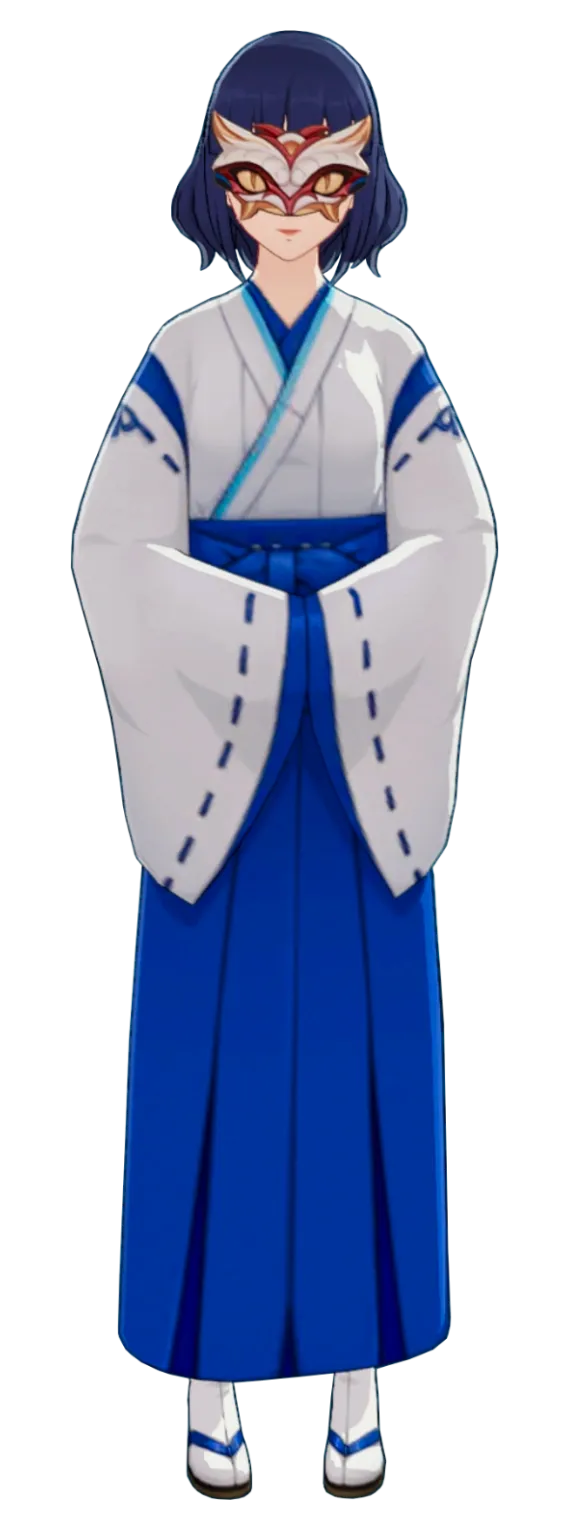 The Vassals of Watatsumi
 were a pre-Cataclysm Enkanomiya order of half-human, half-snake familiars created by the serpent-god Watatsumi Omikami, worshipped today as Orobashi.
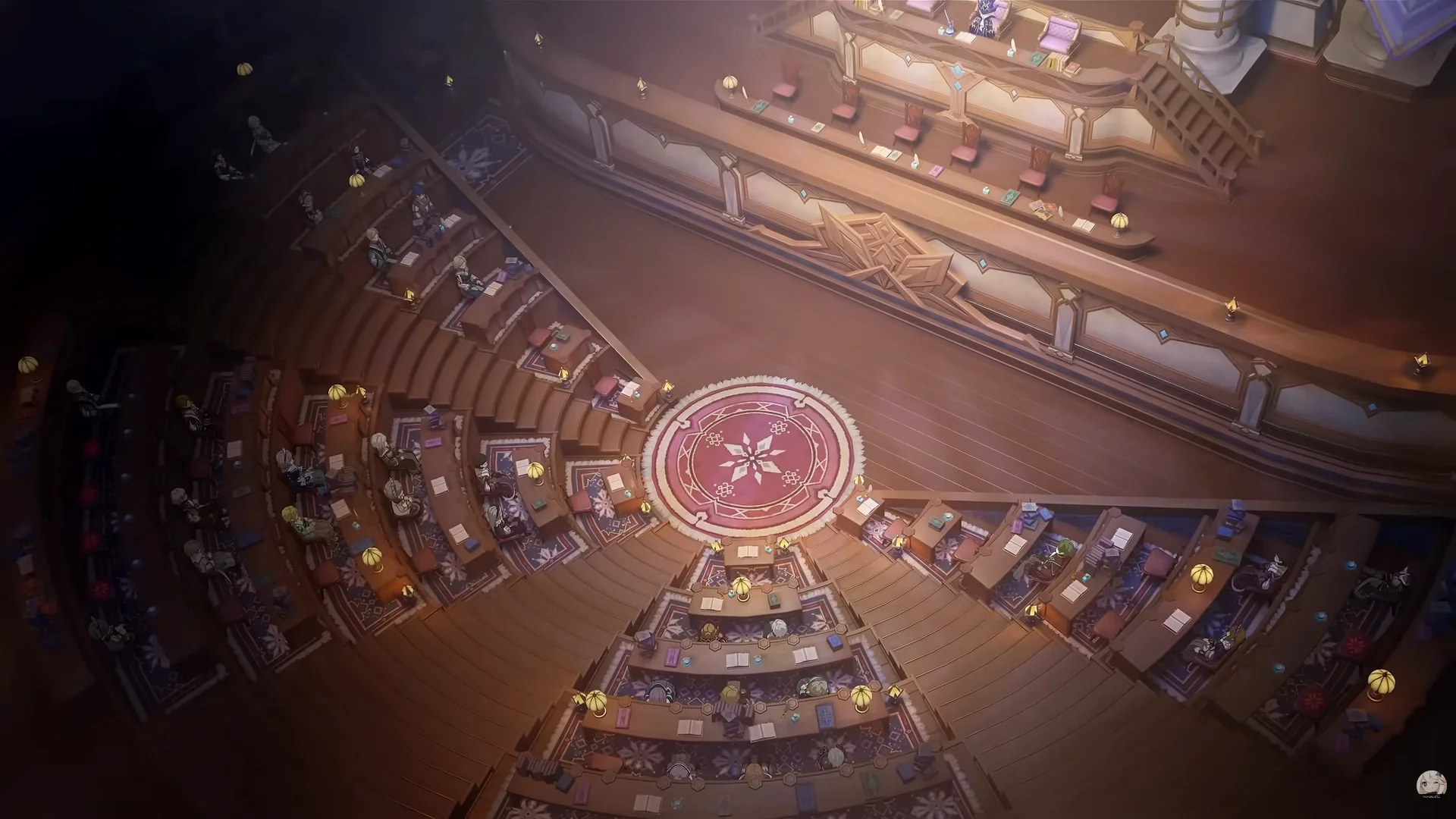 The Veche
Snezhnaya's council in the capital, Snezhnograd.
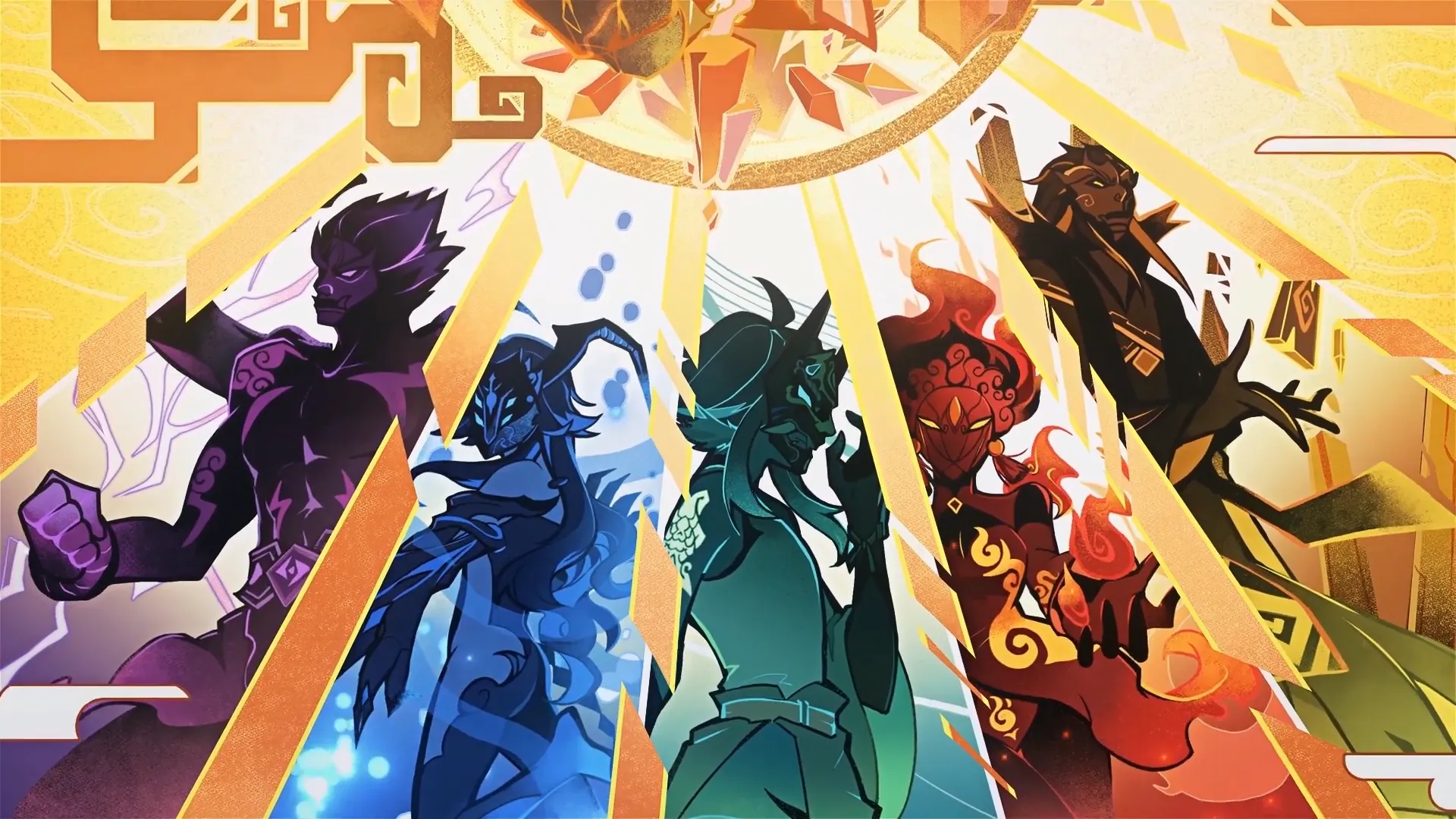 The Yakshas
Liyue's fierce illuminated-beast adepti, called by Morax (Rex Lapis) to purge the demons, plagues, and miasmas born from the lingering hatred of gods defeated in the Archon War.
 Thirteen Sovereign Lords
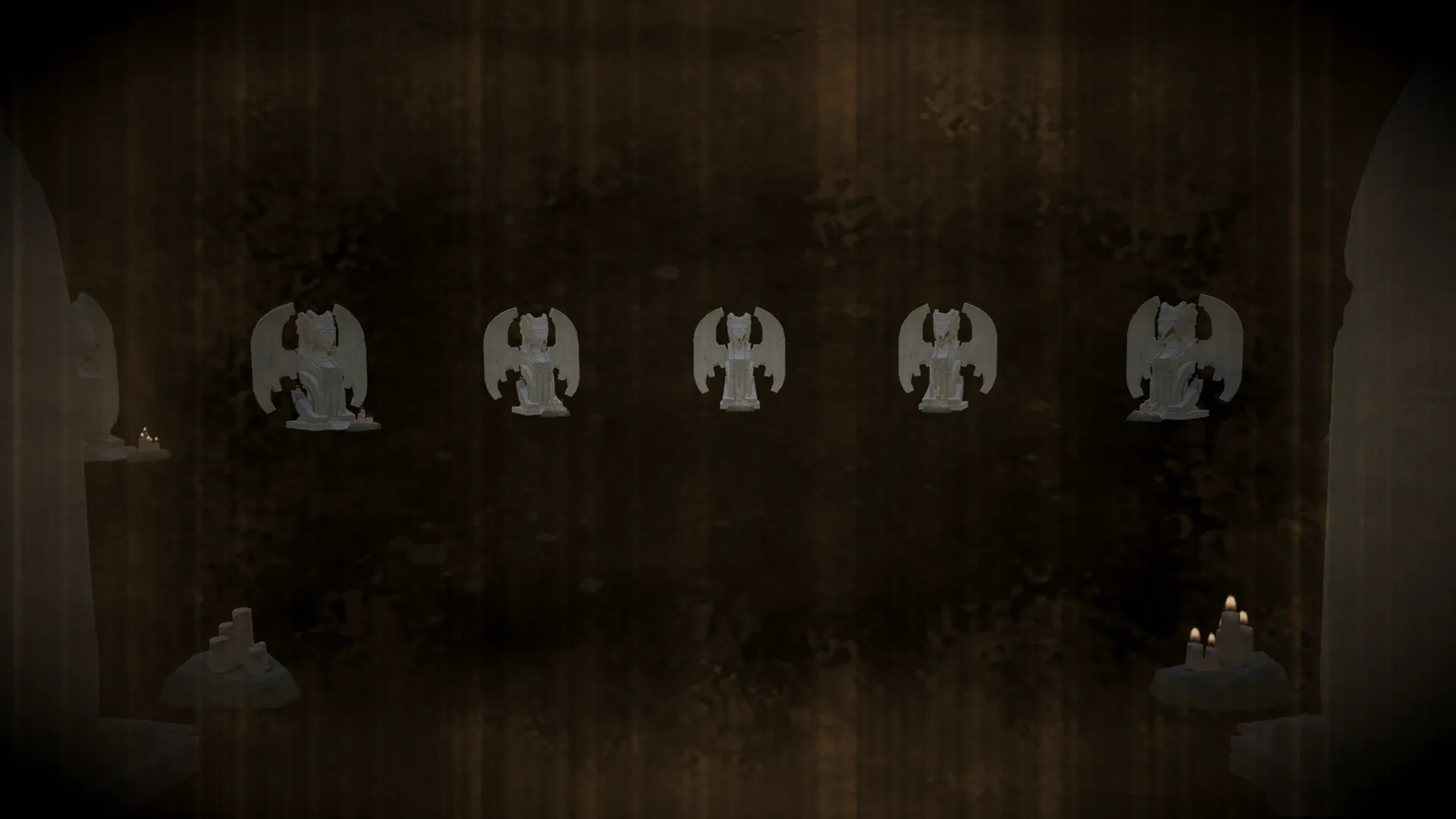
The thirteen artificial-intelligence Dragonlords the Pyro Sovereign Xiuhcoatl created from the primal flame to rule the ancient dragon civilisation of Natlantea, each given a territory and meeting together as the Chamber of Deliberation.
 Universitas Magistrorum
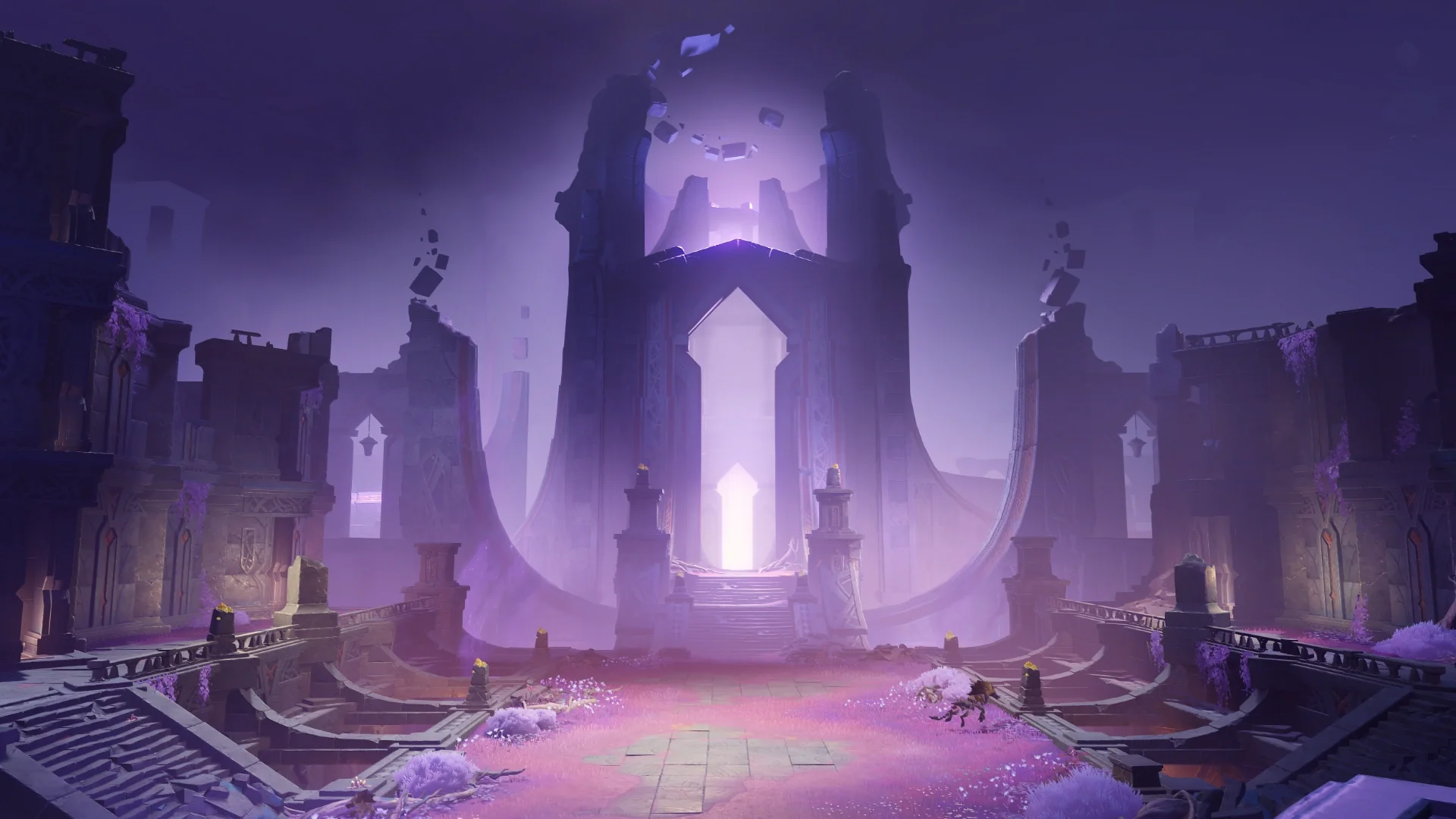
Khaenri'ah's academy of scholars and researchers, which answered to the kingdom's ruler.
 Wangsheng Funeral Parlor
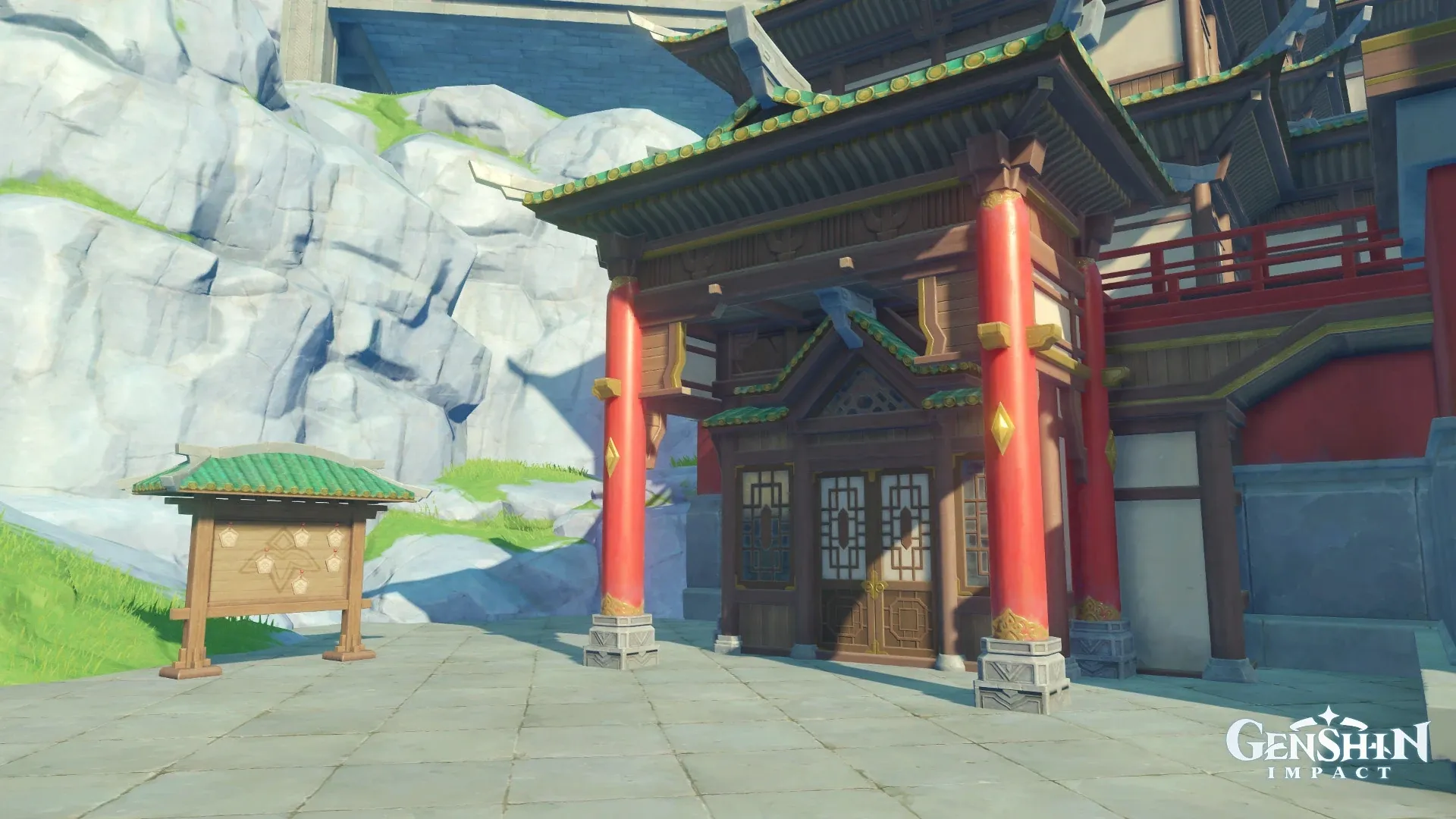
Liyue Harbor's funeral parlor, run by the Hu Family for 77 generations and directed by Hu Tao, with Zhongli as consultant.
Events
 Lantern Rite
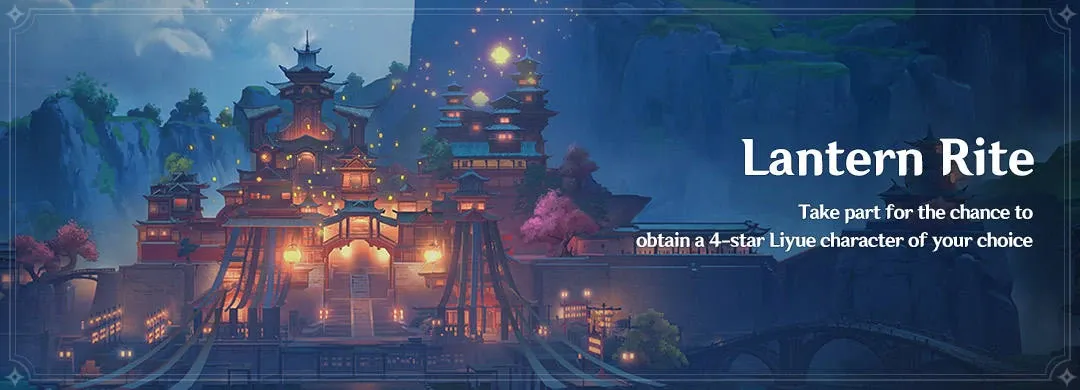
Liyue's biggest annual festival, held on the year's first full moon.
- AThe Archon War
The age of wars among Teyvat's gods that ended about 2,000 years ago and produced the Seven Archons who rule the seven nations.
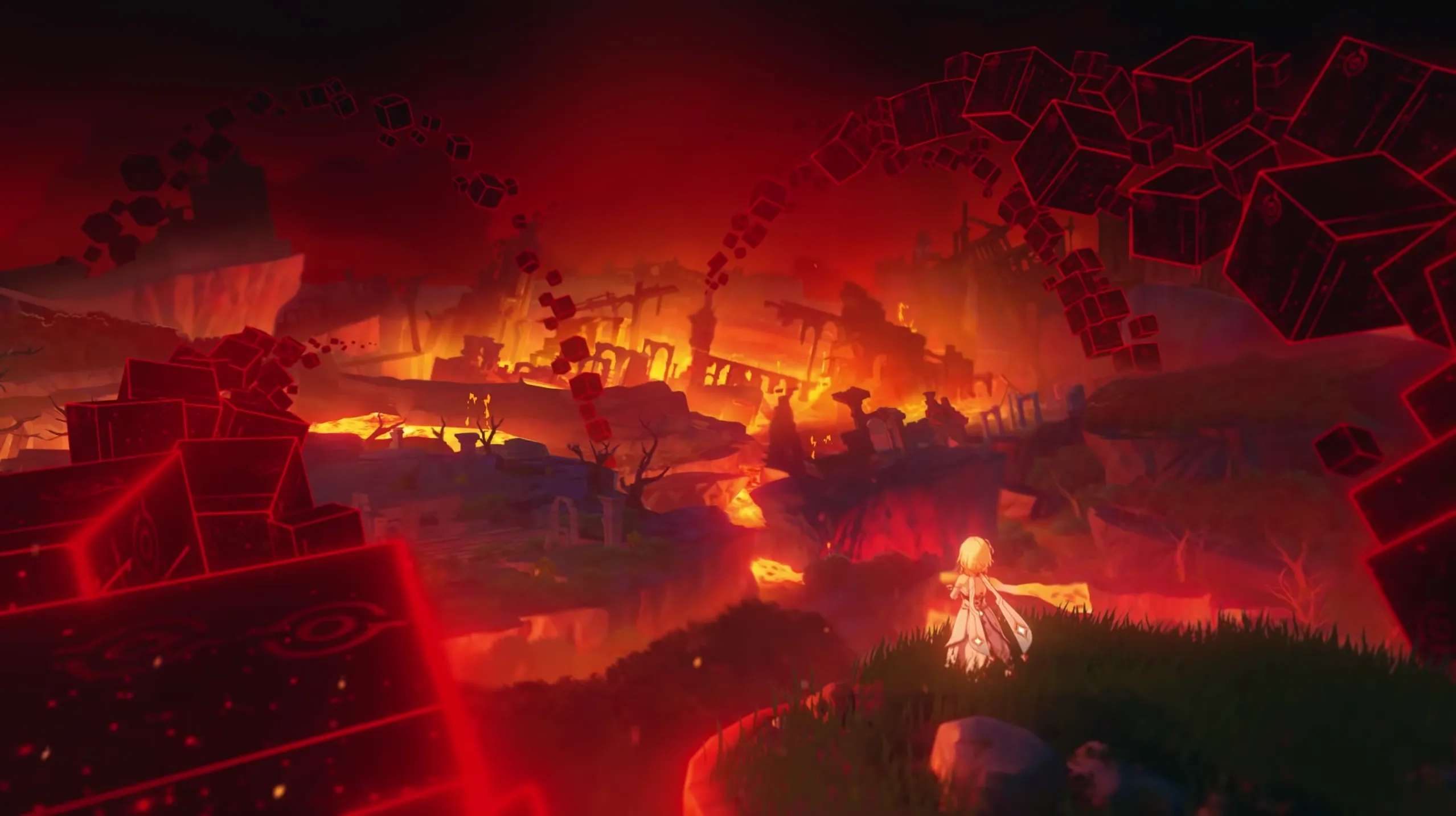 The Cataclysm
The world-scale disaster of 500 years ago: Khaenri'ah fell, Abyssal monsters erupted across Teyvat, the Heavenly Principles and the Archons destroyed the godless underground nation, and its people were cursed.
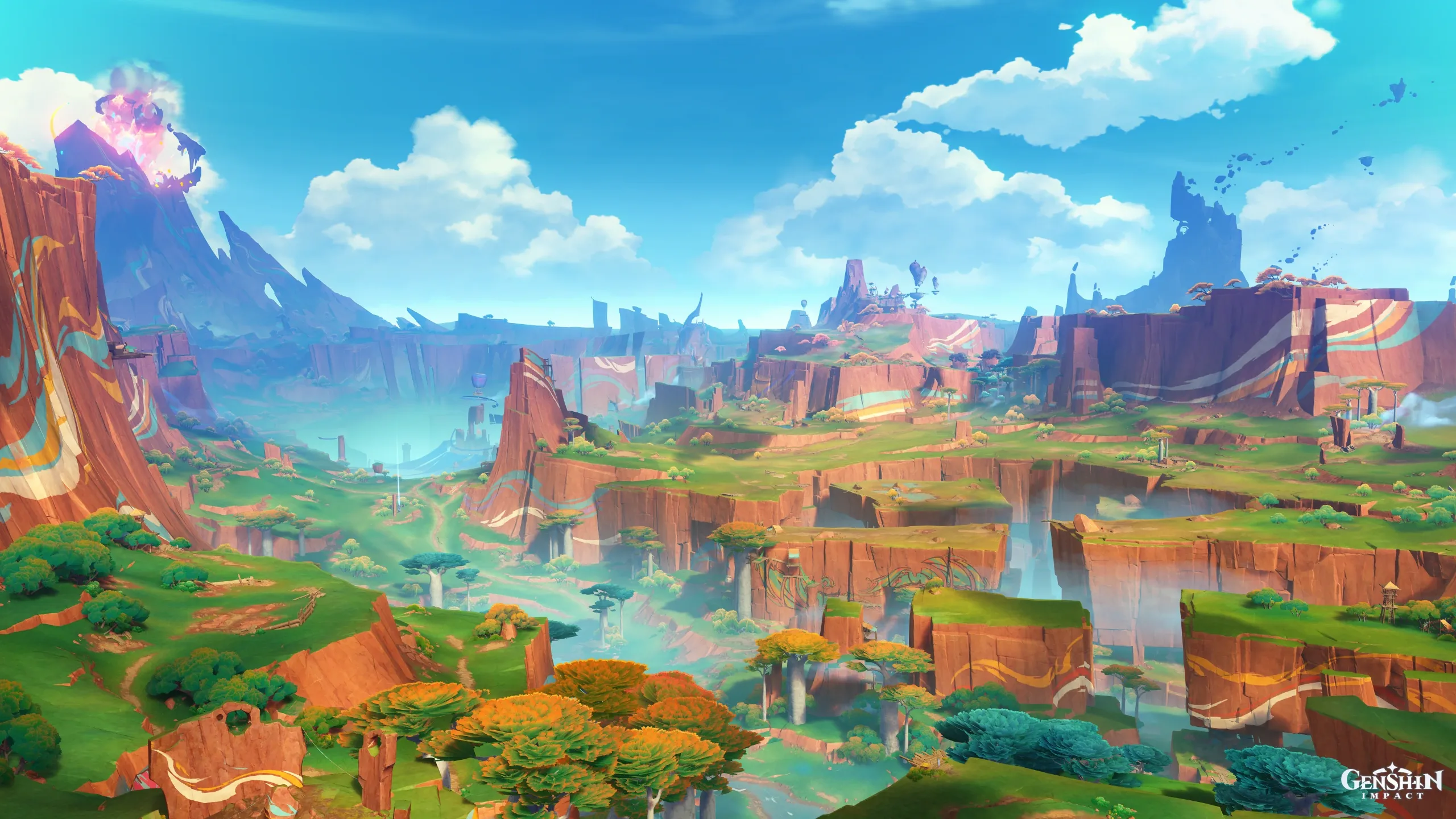 The Gods' Limits
A short official teaser video released after the Natlan chapter.
- PThe Prophecy of Fontaine
An old prophecy that Fontaine will flood and its people dissolve into the water, which hangs over the whole Fontaine Archon Quest.
- VThe Vision Hunt Decree
The Raiden Shogun's order to confiscate every Vision in Inazuma, which drives the conflict of the Inazuma Archon Quest.
Other
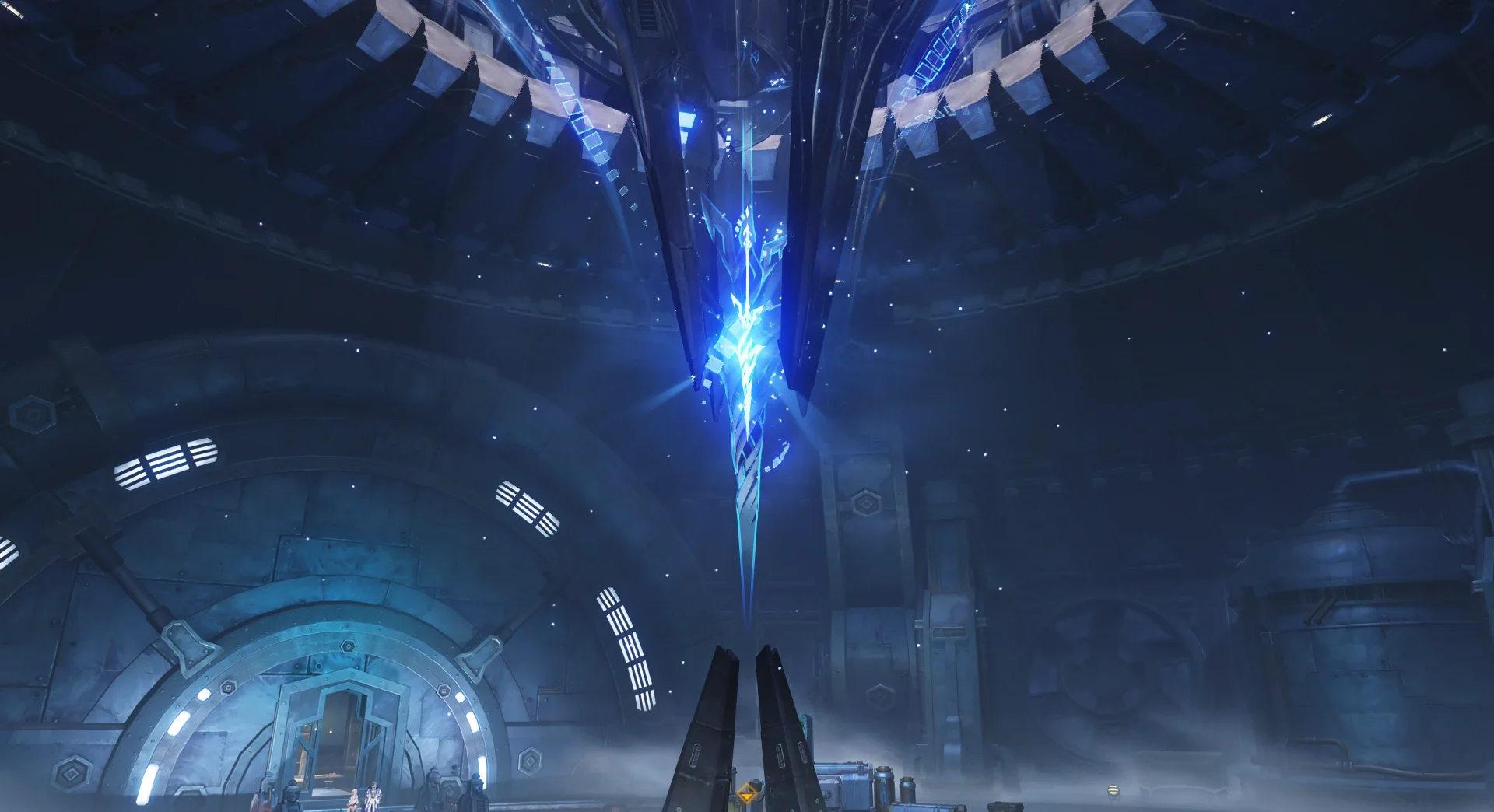 Project Mistilteinn
A secret Fatui weapon project in Snezhnaya, overseen by Pierro at the Armory Palace in Snezhnograd and supplied by the energy rationing of Project Stuzha.
- PProject Stuzha
Snezhnaya's national energy-rationing policy at the start of Chapter VII.
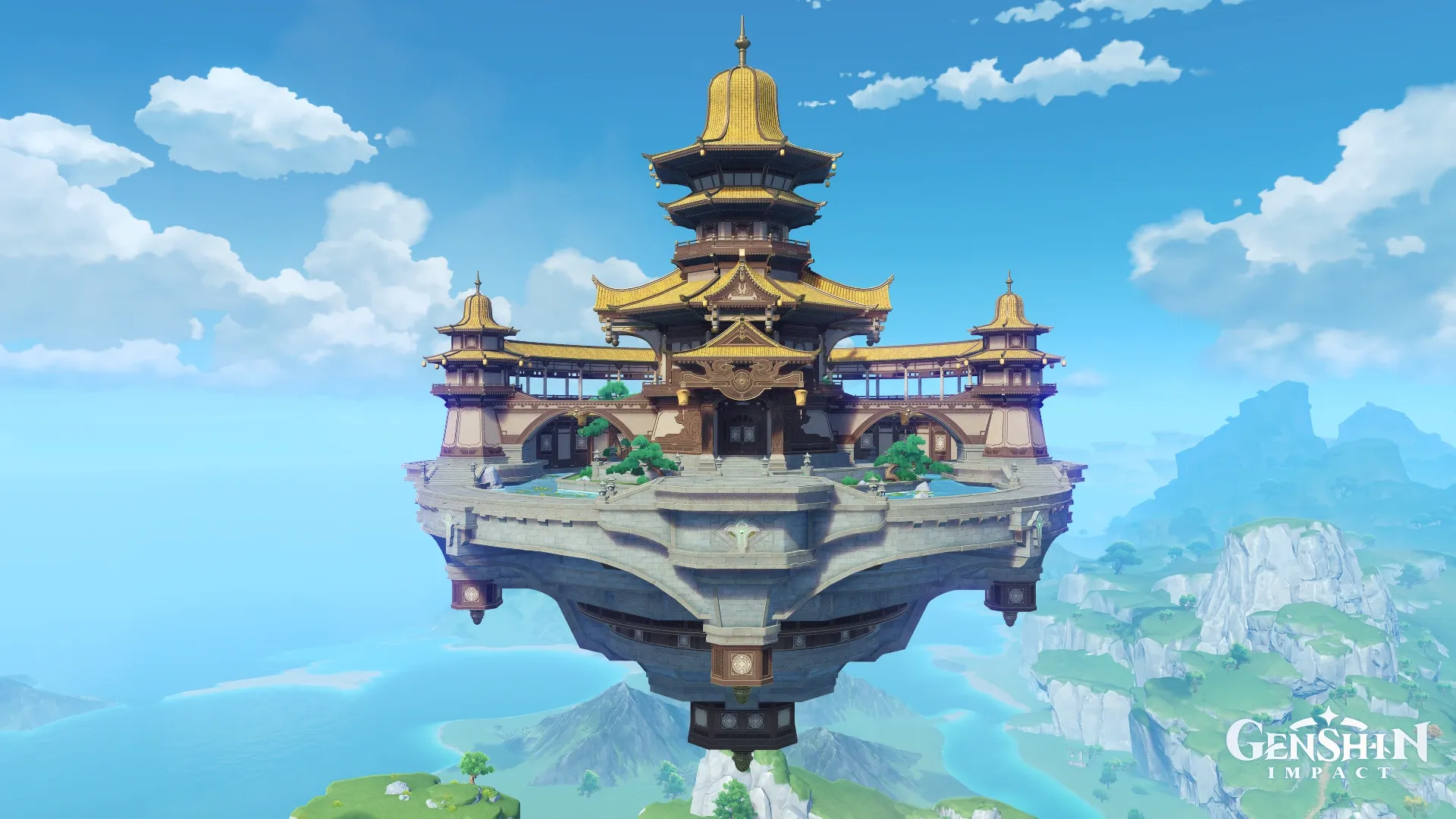 The Jade Chamber
Ningguang's floating palace above Liyue Harbor, the vantage from which the Liyue Qixing watch over the region.