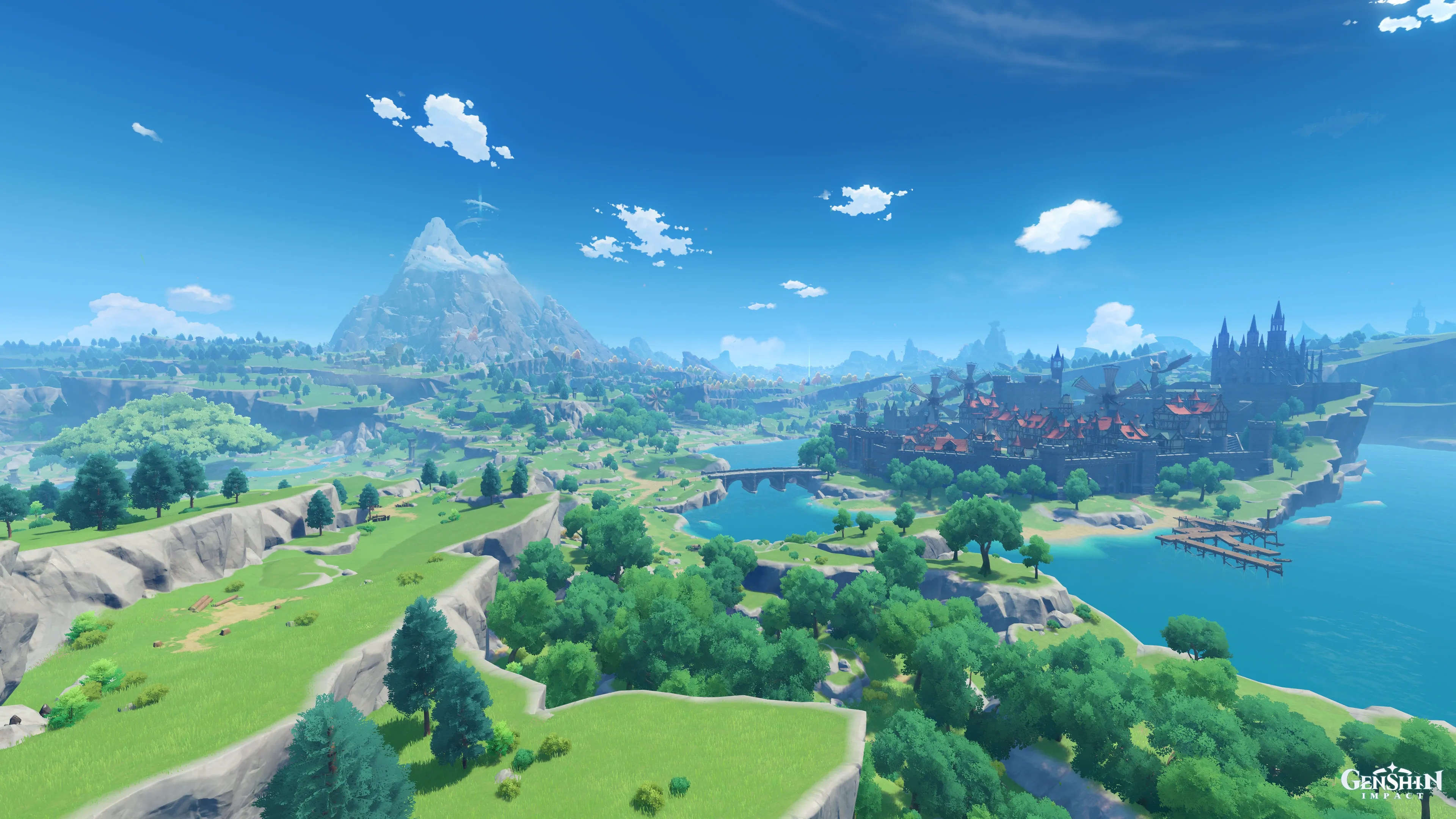
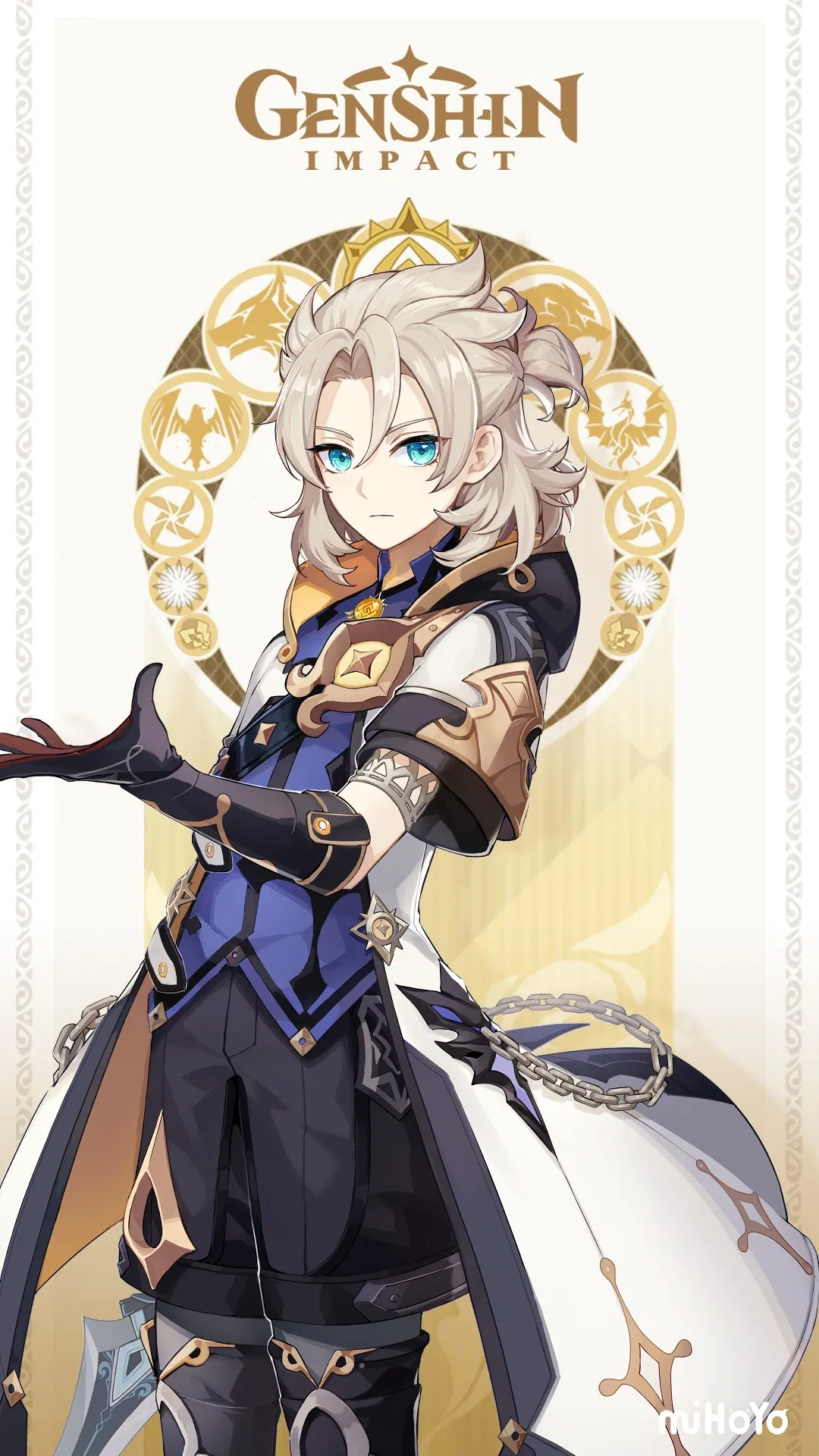
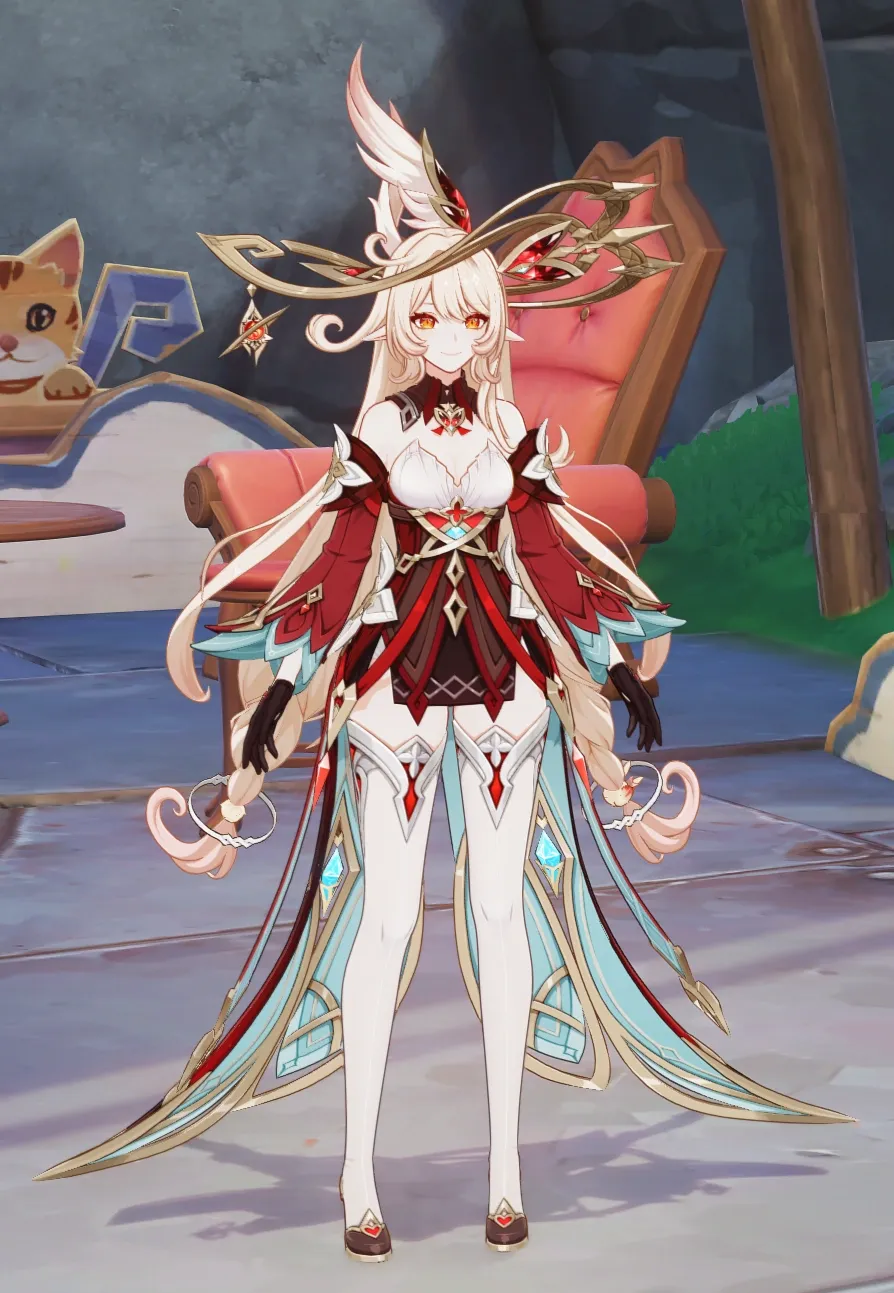
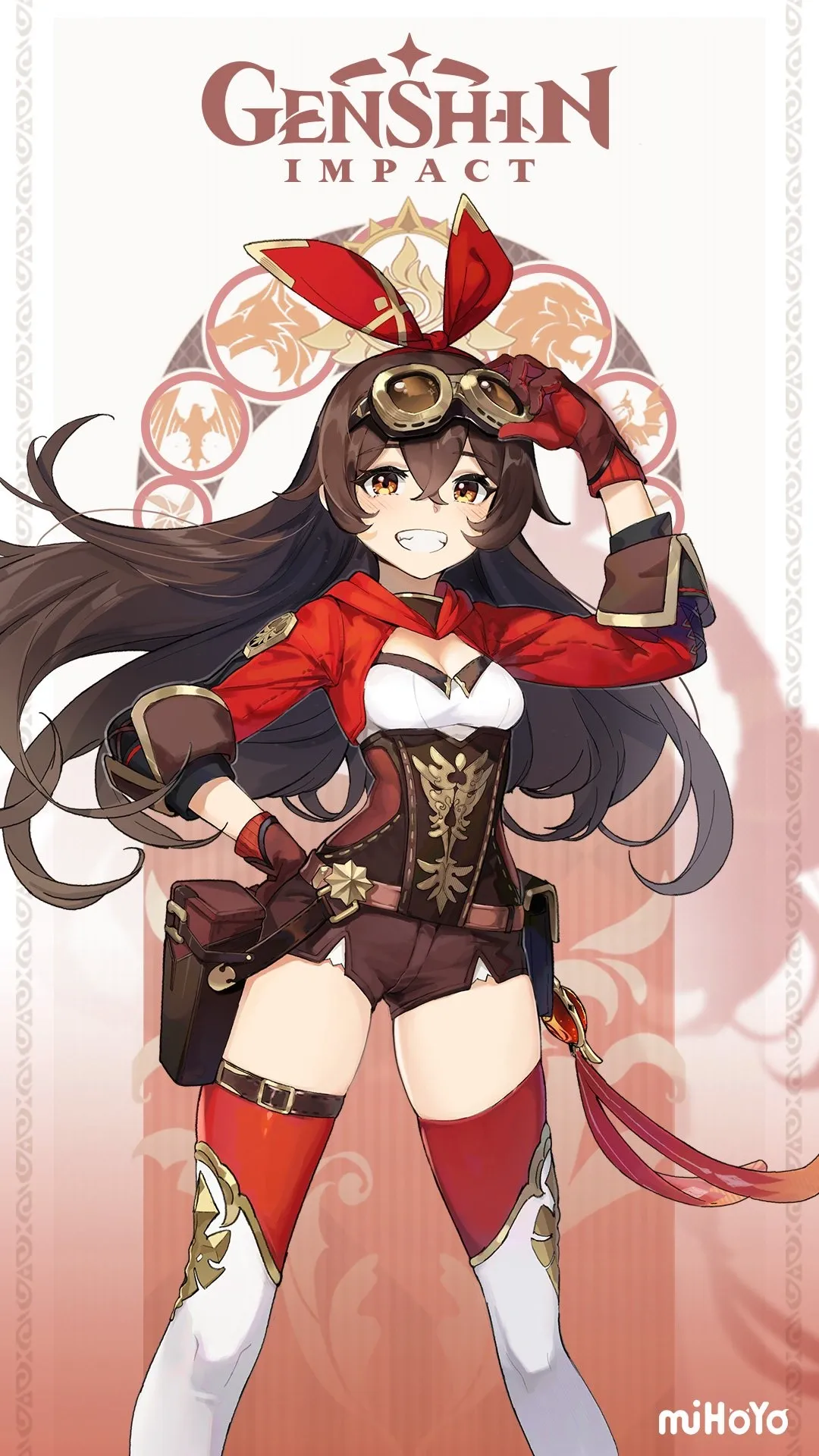
A free-spirited city-state in the windswept north of Teyvat, ruled in name by the absent Anemo Archon Barbatos and in practice by the Knights of Favonius. Its founding ideal, that the wind belongs to no master, is among Teyvat's most tested promises, and the one most often broken.
History
Long before Mondstadt was a city, the people of these mountains lived under the god of storms, Decarabian. He raised a fortress of howling wind around them, partly to shield them from the bitter cold outside and partly because gods of his era didn't really distinguish between protection and possession.[5] A pair of rebels brought him down: a young human named Amos and a wind sprite who would eventually become Barbatos, the Anemo Archon. They shattered Decarabian's tower, and the wind they unleashed became the air over modern Mondstadt.
Centuries later a slave named Vennessa led another revolt, this time against the aristocrats who had quietly recreated the old tyranny.[2] With Barbatos's blessing she founded the Knights of Favonius and the city-state we know today. Mondstadt has answered to no living god since.
The Hallowing
When the Holy Soil phenomenon spread across Teyvat in Version 7.2, Mondstadt's Nail of Retribution was the Skyfrost Nail, "at the very top of Dragonspine." The Hallowing began far enough from the city to give the Knights of Favonius time to respond, Kaeya says, and they used it for "scouting, moving resources, fending off the monsters, and drafting an evacuation plan" that would move Mondstadt City "up north to Dornman Port" if the spread grew too fast. The wind turned with it. It "has been very turbulent ever since the Hallowing began," and to many the creaking windmills are "a bad omen." [9]
Varka and Venti had already gone to the nations' meeting in Snezhnograd in Act V. In Act VI the Knights settled on the wind as Mondstadt's answer to its Trial of Usurpation, whose subject was "Freedom," and Varka meant to ride Dragonspine's air currents up to the Nail himself. Venti went in his place. Inside the Nail he answered that "freedom has begun to blossom in this world. It's happening right here, in Mondstadt." The trial passed, and Venti went on to speak for Mondstadt in Celestia. [8] [9]
Culture
Mondstadt is wine country. Its signature dish is dandelion wine and its national symbol a soaring lyre. The annual Windblume Festival is a several-day excuse to drink, sing, and write love letters. Bards are protected by tradition almost as fiercely as the Knights of Favonius are. Locals say the wind here carries melodies, which is romantic but also literally true on a few documented occasions involving Barbatos.
Religion
Mondstadt's relationship with its Archon is unusual: Barbatos is revered but absent. He hasn't formally appeared in centuries, and locals are quietly fine with that. The official church is the Church of Favonius, headed by the Grand Master of the Knights. Worship leans more toward "respect for the wind" than scripture, and a windmill turning is treated as more holy than any prayer.
Who lives in Mondstadt
Mondstadt's population is narrow compared with Teyvat's other regions. There is no equivalent of Inazuma's yokai, Liyue's adepti, Sumeru's aranara, Natlan's Saurians, or Fontaine's melusines. Two kinds of being anchor the region.
Humans are the majority. They live under the Vision system, the Archon hierarchy, and Irminsul keeping the world's memory, which the Humans page reads together as one system the Heavenly Principles left in place (its own reading, not a stated rule). Both of Mondstadt's revolutions, the overthrow of Decarabian in Old Mondstadt and Vennessa's revolt against the aristocrats, are human stories through and through, driven by human ambition, human Visions, and institutions led by humans. Vennessa's ascension to Celestia was long read as the path by which a Vision-bearer can rise toward godhood, though whether reaching Celestia is the same as becoming a god stayed unsettled.[6] Chapter VII Act VI shows what Celestia made of her. There Nukvah points to a flashing light and calls it the place "where Vennessa is stored," and when Paimon says she always thought allogenes would "ascend to Celestia, become a god," Venti replies, "That's what everyone thought until now."[9]
The gods active in Mondstadt fall into two ranks. The Archon is Barbatos (Venti), an example of how gods can be elevated from a lower existence and given powers from another god, the wind-sprite who became the Anemo Archon (per Venti Character Story 3).
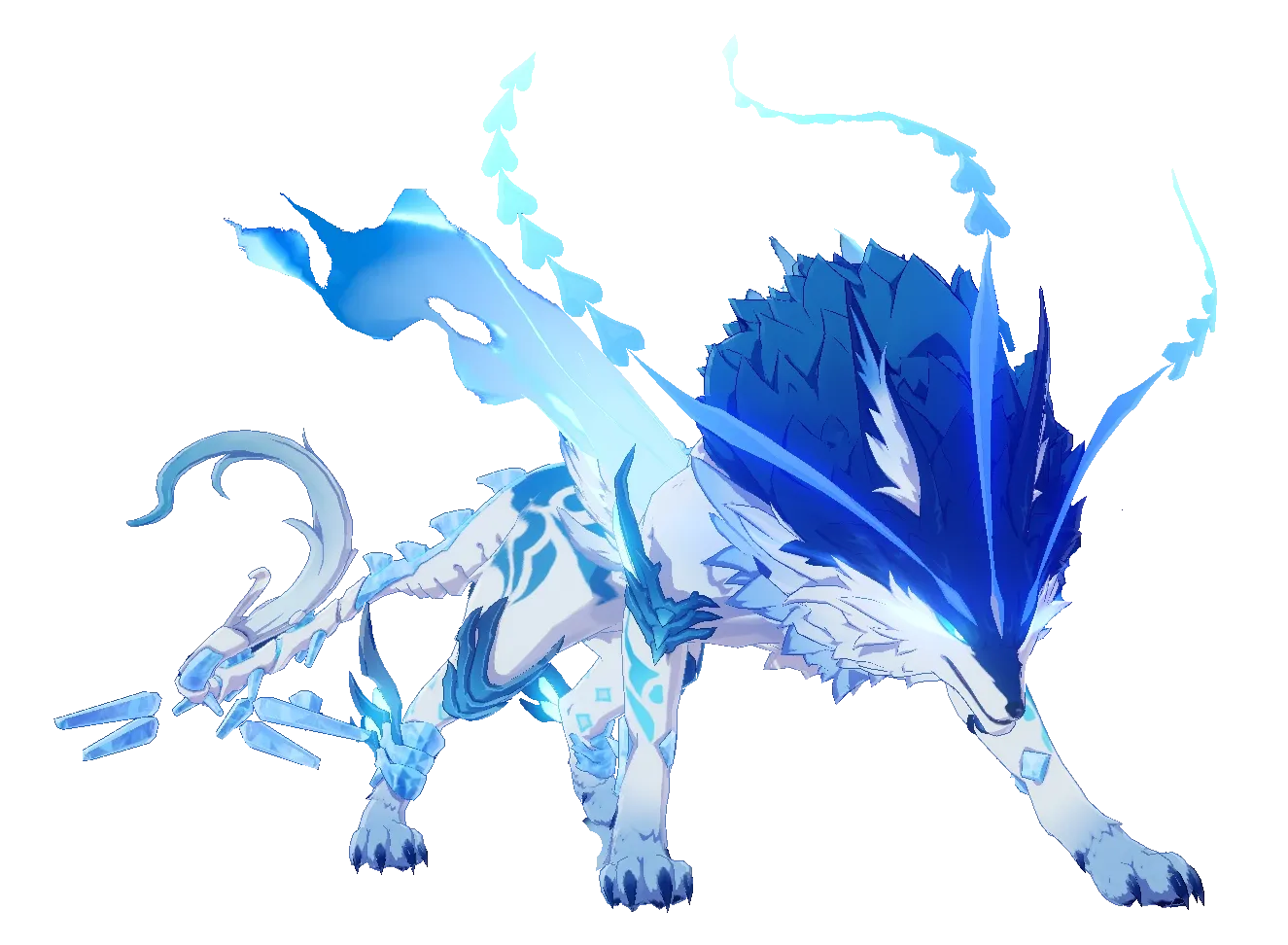
Below him are several lesser deities. Andrius, also called Boreas, the God of the North Wind, leader of the Lupical and the Wolf of the North, is the clearest case of the rule that gods who place their power into the land may be considered "dead" but can continue manifesting in the world afterwards. He stays fully conscious, his memories intact, at Wolvendom, even though he is plainly said to have died. Decarabian, the God of Storms and tyrant of Old Mondstadt whom his own people killed roughly 2,600 years ago, is the example of a god from the era after the Archon War but before the Cataclysm who dies when his worshippers turn on him. The Thorn King, named only in a Dornman Port loading-screen tip with his true name lost to history, has no settled placement at all.
The Four Winds of Mondstadt, covered on the Four Winds page, were set up about 1,000 years ago after Vennessa's revolt, some 1,600 years after Old Mondstadt fell. The four seats are the Wolf of the North, the Lion of the South, the Dragon of the East, and the Falcon of the West: Andrius as the Wolf; Jean, Vennessa, Arundolyn, and Valentine in the lineage of the Lion of the South; Dvalin as the Dragon of the East; and Vennessa again as the Falcon of the West after her ascension. Decarabian and Barbatos are not among them. Decarabian was overthrown 1,600 years before the group was founded, and Barbatos created the Four Winds by entrusting four individuals with Mondstadt's protection rather than taking a seat himself.[7]
The full primary-text detail lives on the race pages for humans and gods.
Notable figures
World Quests
- Time and Wind · Patch 1.0
- In the Mountains · Patch 1.2
- Bough Keeper: Dainsleif · Patch 1.3