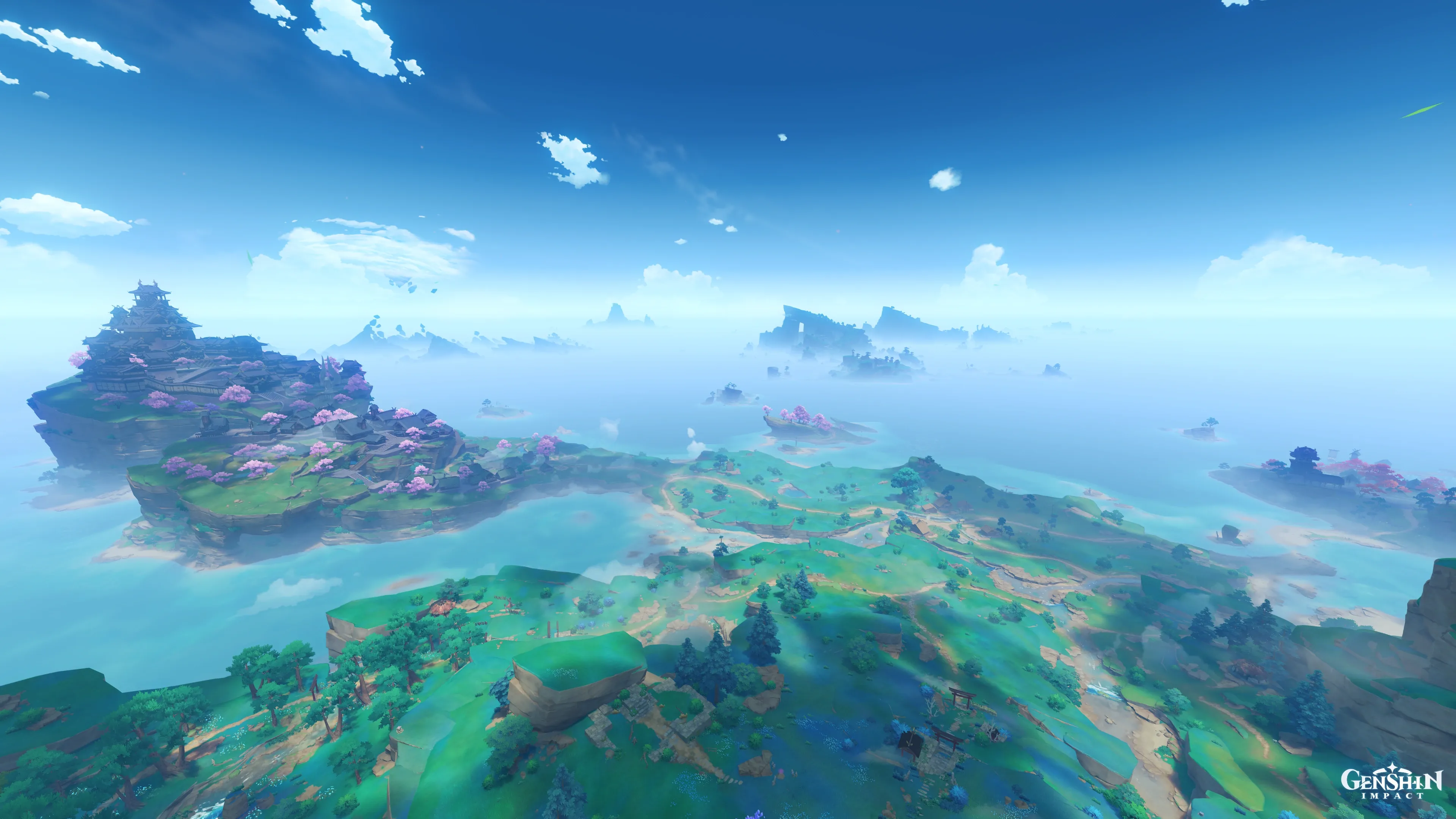
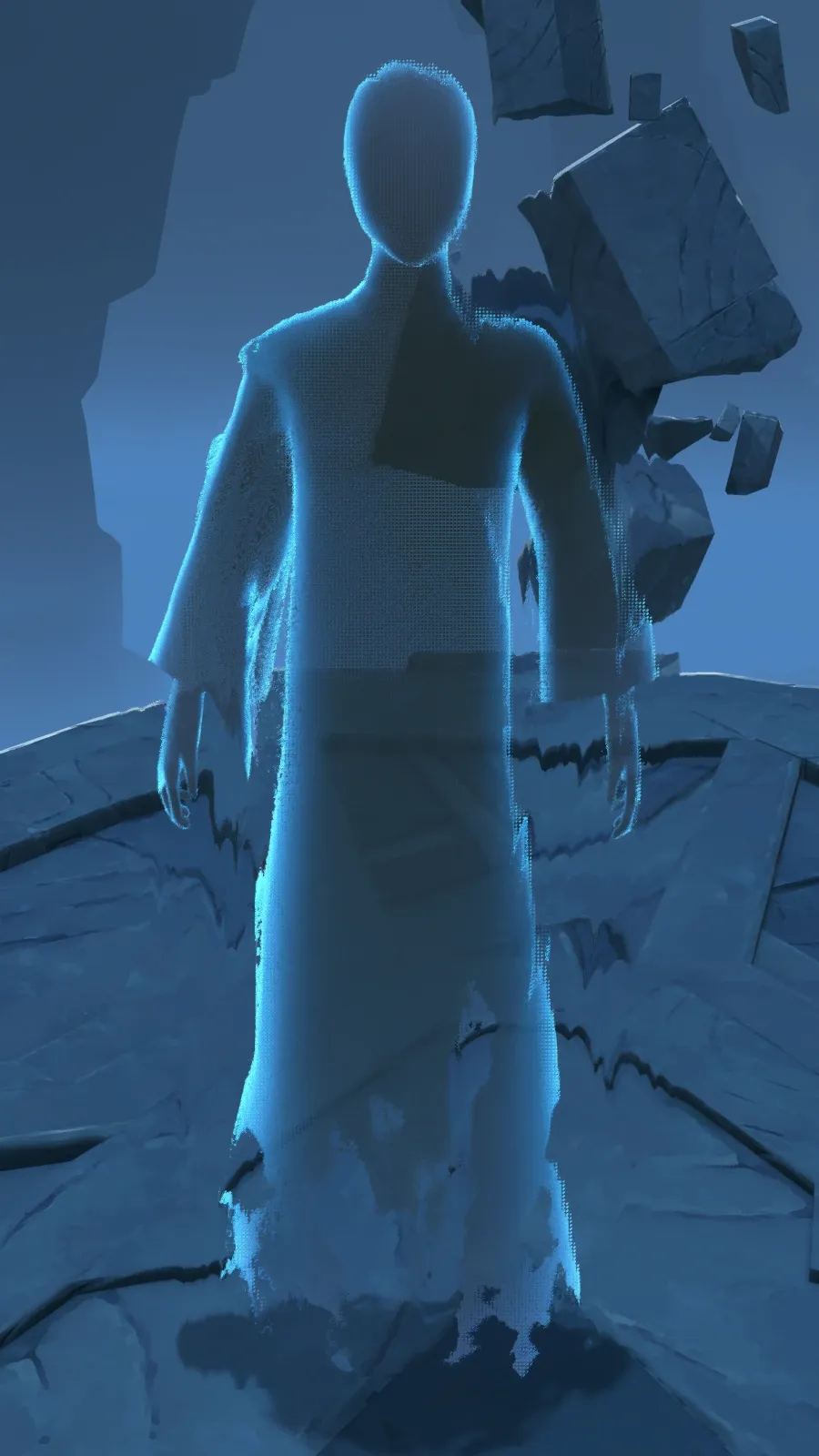
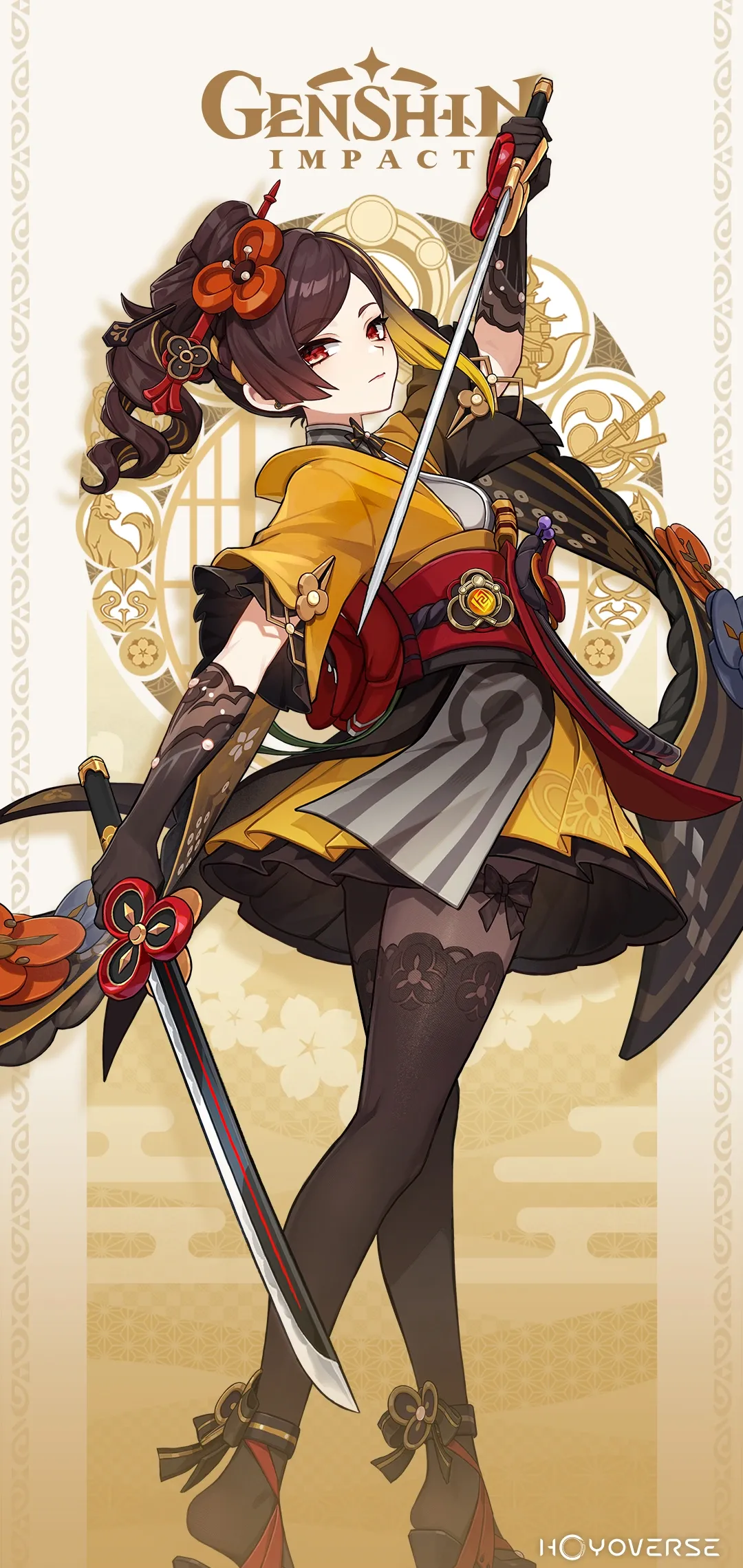
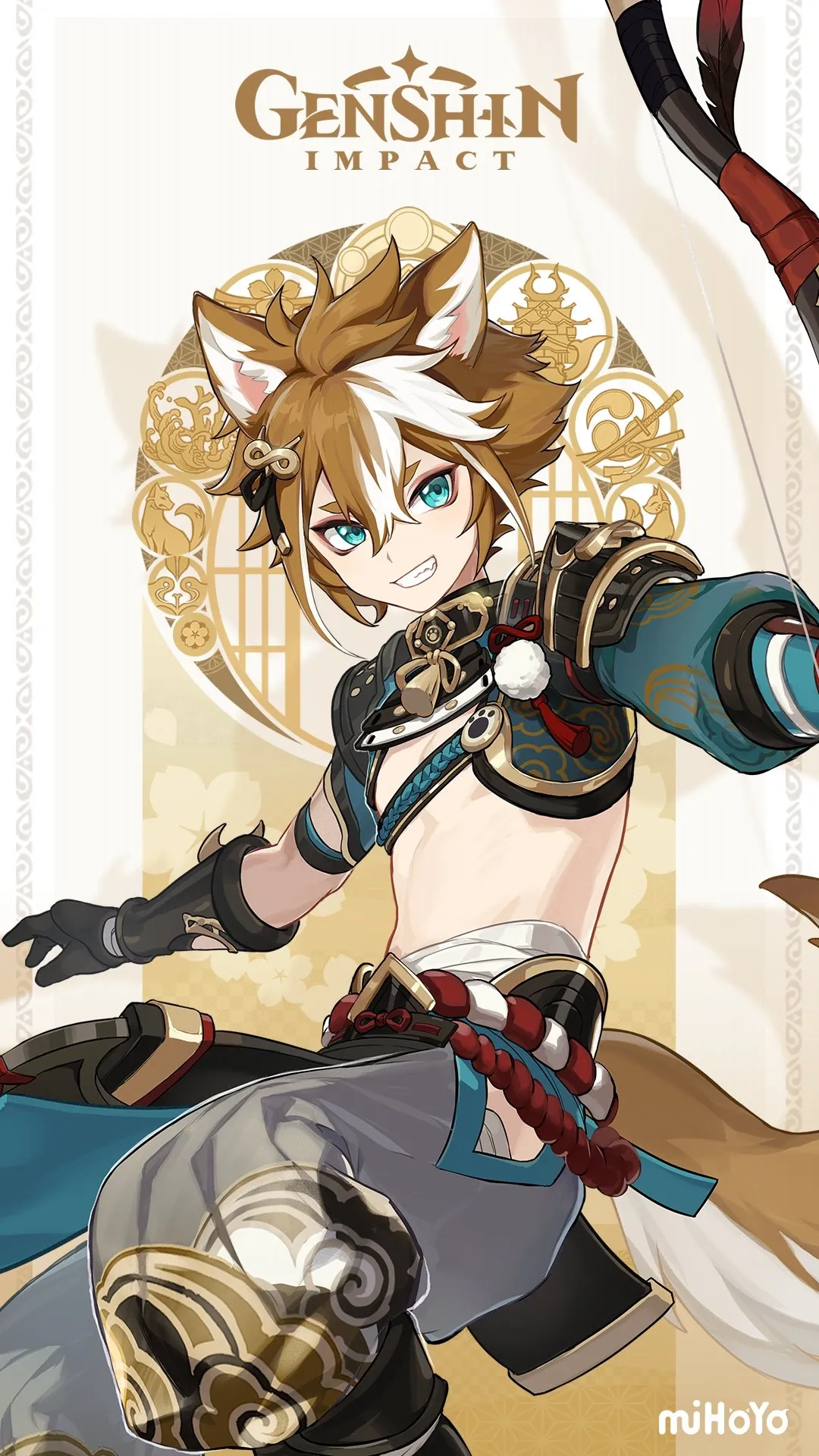
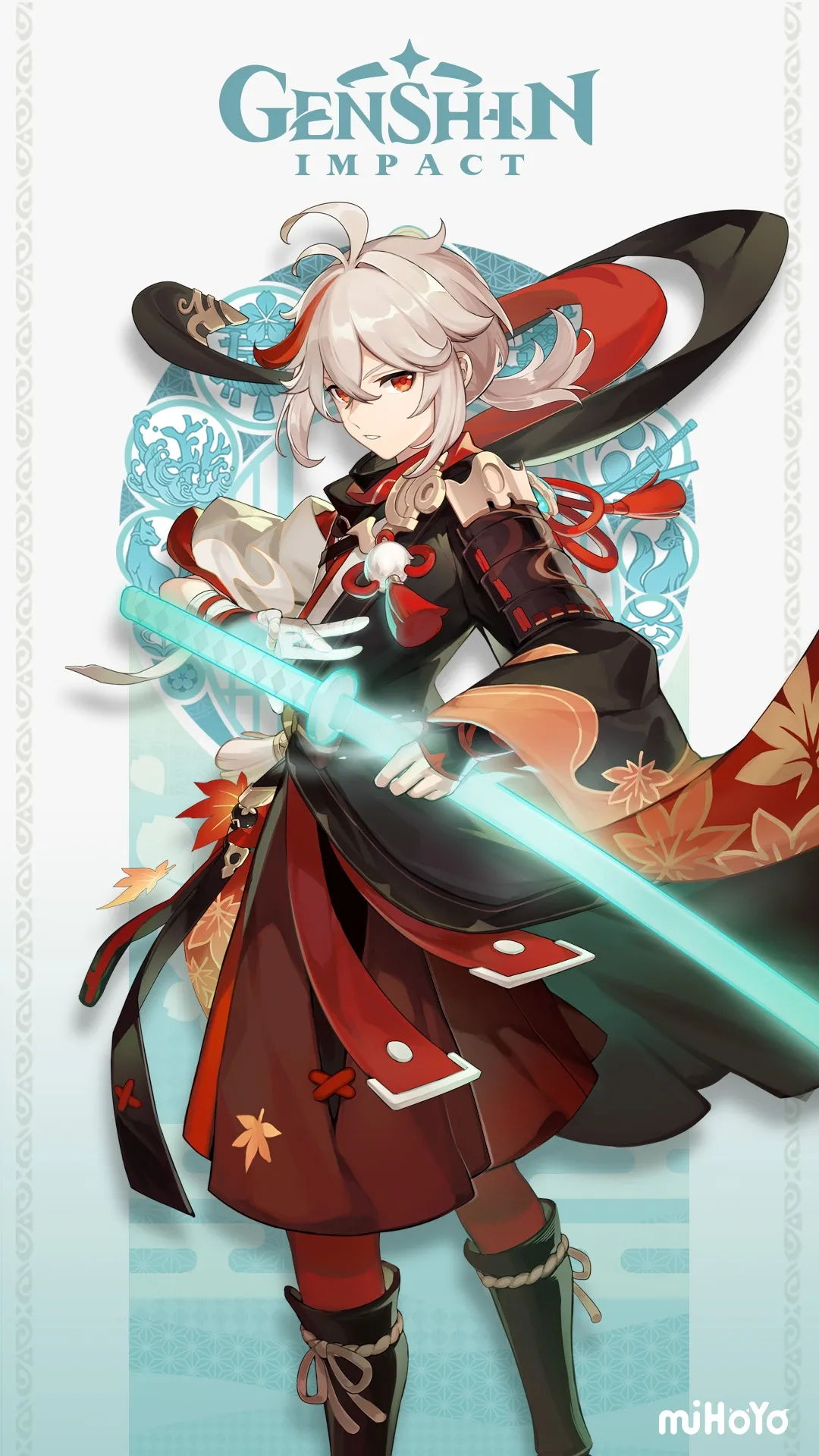
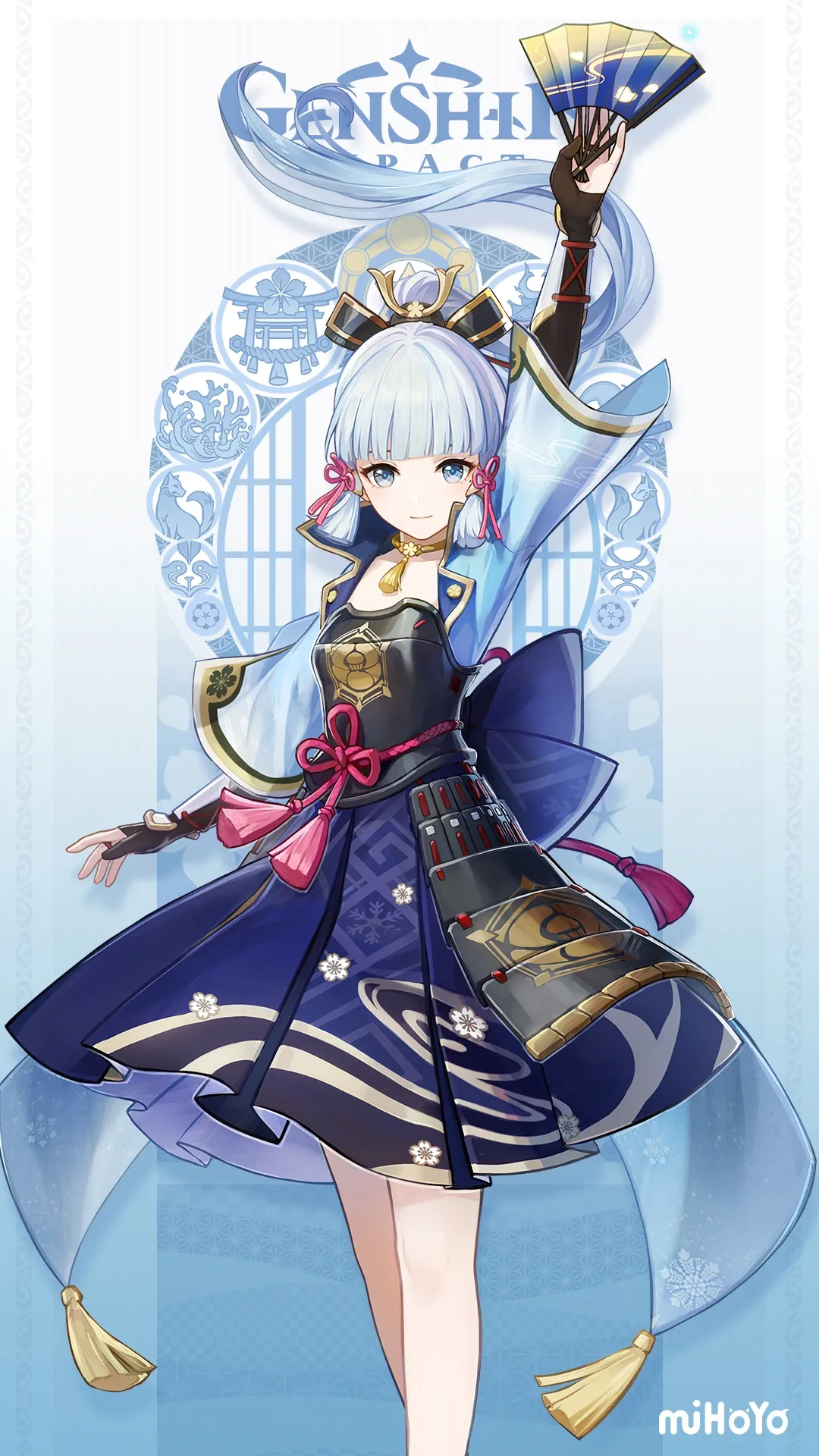
An island nation under perpetual storm, ruled by the Electro Archon Raiden Shogun through a strict (and for a while, ruinous) pursuit of "eternity." When the Traveler arrives, Inazuma is caught in civil war, isolation, and a crisis of identity.
History
Long before there was an Inazuma there was Enkanomiya, a sunless underworld kingdom. Its god Orobashi later broke coral from his own body to make Watatsumi Island as a new home for its people. [11] Above them, on the surface, the Shogun Raiden consolidated power, first as a warrior-god and then as the architect of the Tenshukaku and the first Shogunate.
Inazuma's modern history pivots on one event: the death of the original Raiden Shogun, Raiden Makoto, during the Cataclysm 500 years ago. Her sister Raiden Ei took her place as Archon and locked herself away to grieve. She left her body to a constructed puppet, the Raiden Shogun the public knows, while her consciousness retreated into a meditative dream. The puppet's pursuit of "eternity" gradually hardened into the catastrophic Vision Hunt Decree that the Traveler ends up overturning.
The Inazuma Archon Quest is the story of breaking Ei out of that dream. The Vision Hunt Decree falls. Inazuma reopens its borders. The civil war ends. Ei wakes up.
Under the Hallowing
In Chapter VII the Holy Soil phenomenon, also called the Hallowing, spreads across Teyvat from the Nails of Retribution. At the meeting of the nations' leaders in Snezhnaya in Act V, Ei and Sangonomiya Kokomi speak for Inazuma, with Kujou Sara and Gorou among the delegates. Kokomi tells the meeting that "We've dealt with the same phenomenon before on Watatsumi Island," and Ei volunteers her nation to test a trial first: "Inazuma should take the lead." [16] [18]
In Act VI the Hallowing reaches Tsurumi Island and then, against expectation, Seirai Island's shores, which convinces Kamisato Ayaka that "the sea isn't the protective barrier we believed it might be." The Tri-Commission answers together. Every Commission fights monsters and coordinates evacuations, the Kanjou Commission readies ships, storage sites in Ritou are cleared for refugee shelters, and Kokomi joins the talks at Tenshukaku, where Kujou Kamaji warns that "If we don't act in solidarity now, it will only serve to deepen any existing divisions." Should the islands have to be evacuated, Thoma says, "our destination will ultimately have to be Fontaine." [17]
The nation's trial turns on Eternity, the ideal Ei rethought at the end of the Inazuma Archon Quest, and Yae Miko wonders whether the overturned "Eternity paradigm" makes "the trial impossible to pass." Ei's evidence is a Thunderbird she once slew on Seirai Island. She had sealed its primordial Electro energy away, the Hallowing is undoing the seal, and she frees the power and stores it in the Shogun's body, upgraded for the purpose by Xilonen and Neuvillette. The act gives the Thunderbird no name. Ei then takes the trial alone at the Nail of Retribution on Tsurumi Island, passes with her blade, and at the act's end represents Inazuma in Celestia. Meanwhile, in the World Quest Thunder Purges All Spite, Kuki Shinobu, Arataki Itto, Yae Miko and others chant "God of Thunder, heed our call" against filth risen from the Ley Lines, and Kokomi warns that the Hallowing "has destroyed many of the seals left behind by our predecessors." [17] [20]
Sub-regions
Inazuma is partitioned into six named islands. Narukami, the capital island, holds the seat of the nation's institutions. The remaining five (Kannazuka, Yashiori, Seirai, Watatsumi, and Tsurumi) each carry their own civic and cosmological history.
- Seirai Island is the smallest of the outer islands, home to the Thunder Manifestation domain and the setting of the Seirai Stormchasers WQ Series, which anchors the post-Cataclysm story of thunder disposal tied to Tenshukaku.
- Watatsumi Island is the seat of the Sangonomiya and the centre of worship of Watatsumi Omikami (Orobashi). It was the centre of the resistance that followed the Vision Hunt Decree, settled at AQ II Act III. Its four named subareas are Bourou Village, Mouun Shrine, Sangonomiya Shrine, and Suigetsu Pool. The five Goshou Rocks (Eye, Fang, Fin, Tail, and Heart) are the seals on the entrance to Enkanomiya, not a division into sub-areas. [12] [13]
- Tsurumi Island is the perennially fog-shrouded southeastern sub-region, setting of the Through the Mists WQ Series and anchor for two pre-Inazuma civilisations. The Pre-Thunderbird Civilization was a Celestia-worshipping underground culture annihilated by a sky-fallen object, likely a Celestial Nail; the later Thunderbird Civilization was a surface tribe wiped out by Kanna Kapatcir's grief-curse after their human sacrifice of Ruu. Kapatcir herself was slain by Ei in the interval after Ruu and before the Cataclysm, her residual presence forming the Thunder Manifestations of Mt. Kanna and Amakumo Peak. In Chapter VII the island holds Inazuma's Nail of Retribution, where Ei takes the nation's trial. [17]
The Narukami, Kannazuka, and Yashiori cluster is covered through the AQ Chapter II act pages. The three outer-island deep-dives above carry their own primary-text sourcing.
Culture
Inazuma's culture is a careful, gorgeous tension between rigid ceremony and quiet rebellion. The capital city is built around the Raiden Shogun's seat and every commission has its precisely-defined responsibilities, yet the most beloved local festival is Akitsu Kimodameshi, a courage-test in which children dare each other to walk into purposefully spooky places. The cuisine is famously sharp: Tri-Flavored Dango is everywhere, and the spicier "fragrant pork" is a Watatsumi specialty. Calligraphy and sword-arts are taken roughly as seriously as one another.
The Inazuman Mask Tradition matters: oni and yokai folklore is taught to children, and adults still leave offerings at the smaller shrines.
Government - the Tri-Commission
The Raiden Shogun ratifies day-to-day governance through three commissions, each run by a specific clan:
- Yashiro Commission (rites and ceremonies), led by the Kamisato Clan: Kamisato Ayato as commission head, Kamisato Ayaka as heir-presumptive and public face.
- Tenryou Commission (military and law enforcement), led by the Kujou Clan: Kujou Sara, the Commission's General, is the adopted daughter of Kujou Takayuki. Takayuki headed the clan until his collusion with the Fatui was exposed; he was then removed as clan head, and his son Kujou Kamaji took his place as proxy clan head. [14] [15] The clan enforced the worst of the Vision Hunt Decree before Ei's awakening, and Sara has since publicly reconciled with the post-Decree settlement.
- Kanjou Commission (civilian affairs and finance), led by the Hiiragi Clan, the least visible of the three on screen. In Act VI of Chapter VII Hiiragi Chisato speaks for it at Tenshukaku; the Commission is readying ships, and Ritou's storage sites are being cleared for refugees. [17]
The Tri-Commission structure survived the Vision Hunt Decree intact and is now the spine of post-Ei Inazuman governance.
Religion
Inazuma's religion is unusually direct. The Raiden Shogun is herself the head of the Yashiro Commission's official observances, and the Sacred Sakura on Mt. Yougou is both a fragment of Makoto's authority and the national seal.
The sub-island of Watatsumi worships Orobashi, a serpent god who reigned as the Watatsumi Omikami. [11] The Gods page lists him among Inazuma's gods; he was not one of the Seven Sovereigns, and the Electro Sovereign seat is never named in primary text. Ei slew Orobashi at Yashiori Island near the close of the Archon War, roughly 2,000 years ago, not during the Cataclysm 500 years ago. As the Gods page puts it, the duty of slaying such foes during the Archon War fell upon Ei, rather than the Electro Archon. The killing blow left its scar at Musoujin Gorge, and Orobashi's lingering divine hatred became the Tatarigami on Yashiori (per AQ Chapter II Act III Omnipresence Over Mortals and the Yashiori Island Rift Valley viewpoint).
The Sangonomiya clan still leads Watatsumi's worship of Orobashi, a worship Ei tolerated so that it might enjoy their offerings (per the Raiden Shogun's voice-over about Sangonomiya Kokomi). The clan also led the resistance against the Shogunate after the Vision Hunt Decree, a conflict settled only in the Archon Quest's second chapter.
Who lives in Inazuma
Inazuma is unusual among Teyvat's nations. Its yokai, the supernatural creatures, helped found the nation rather than being a fringe group fitted into an existing human society. Per Yae Miko's Character Story 4: "A long, long time ago, the youkai lived alongside humans and used their powers to help them through an era of strife and poverty. Together, they founded a city on Narukami Island, which would later become the nation of Inazuma." The founding of Narukami Island rested on yokai and humans working together.[9]
Several kinds of being share the present-day nation:
- Humans, the majority, who live alongside the yokai and in several cases interbreed with them. The reading that the yokai's "bloodlines continue to thin" works through that cross-species reproduction with humans.[7]
- The broader class of Inazuman yokai, split into six kinds: Bake-Danuki (shapeshifting tanuki, anchored on Ioroi); Kitsune (fox-spirits, anchored on the Hakushin Clan, with Yae Miko as their present-day heir and the Kitsune Saiguu as the older anchor); Oni (below); Tengu (bird-yokai, with Kujou Sara as the playable example and the Yougou Tengu line as anchor); Yumekui-Baku (dream-eating tapir yokai, anchored on Yumemizuki Mizuki); and a residual "other" kind that includes the nekomata Kirara.[9]
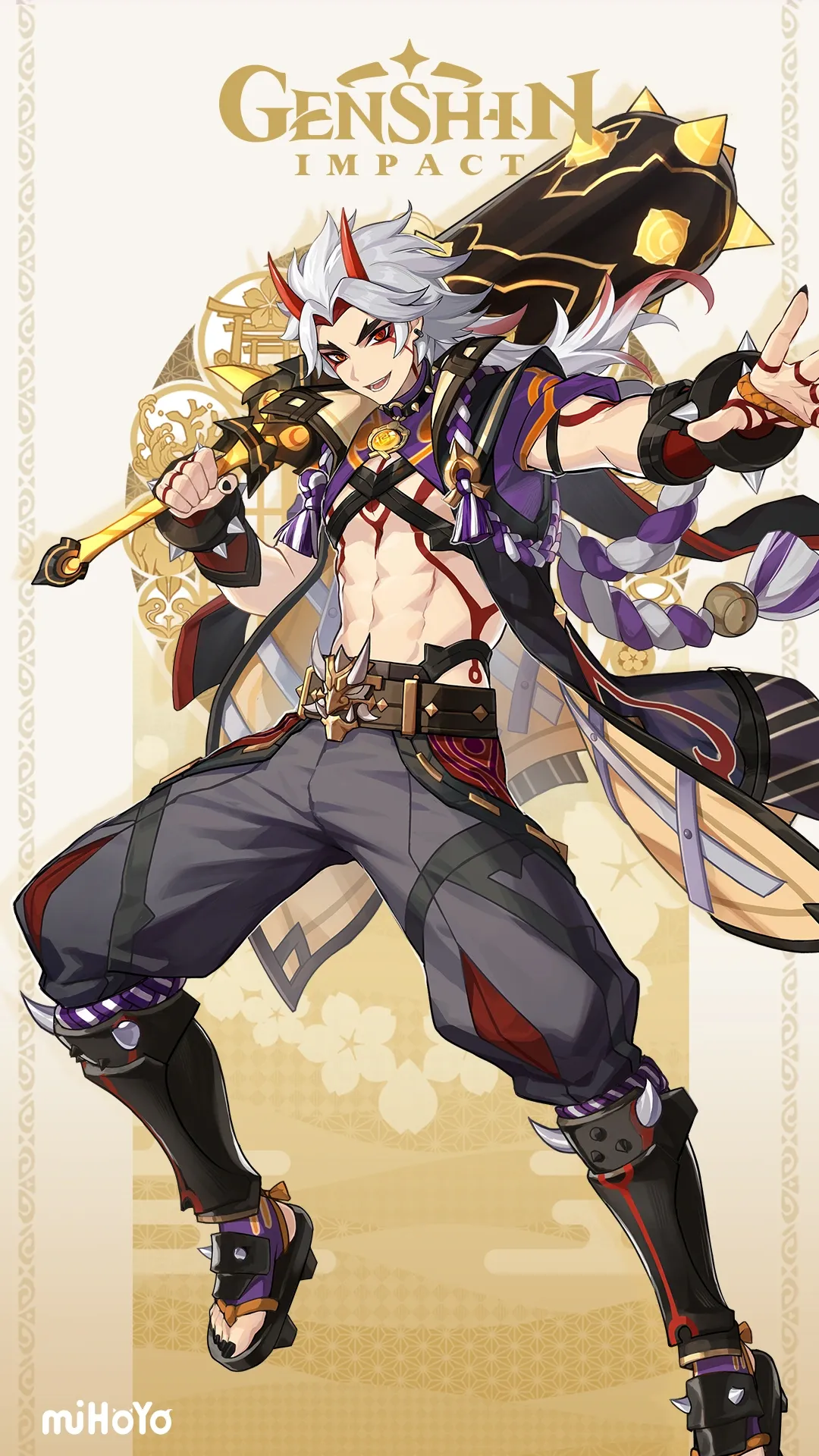
- Oni, the horned, ogre-like yokai. Full-blooded oni are nearly extinct, and Arataki Itto is the last full-blooded oni of the Arataki (Crimson) line. Their decline since the Cataclysm comes from their blood thinning as they have children with humans (per the Mask of the One-Horned weapon-text: "since the events of the cataclysm, the blood of the oni has diluted with each passing day"), not from a divine curse or any active extermination by the Shogunate. Before that thinning, the oni split into two tribes. The Crimson tribe chose to live among humans under the Blue-Crimson pact, and Itto is its present-day representative; the Blue tribe chose seclusion, and Takuya is the survivor seen on screen, rediscovered during Itto's Story Quest Taurus Iracundus Chapter. The turning point was the Mikoshi Chiyo and Iwakura Michihiro arc 500 years ago: Chiyo, one of Ei's friends, was corrupted by a beast of sin and rebelled against the Shogunate, was disarmed by Ei (her sword-arm and one horn) but spared, and her son Michihiro lived in seclusion at Konda Village until he met Teruyo of the Yougou Tengu. None of it was a deliberate policy of pushing the oni to the margins.[8]
- Adepti barely appear in Inazuma; they work mainly out of Liyue, under Morax's blessings and the contracts that bind them there. The clearest case of adept-arts crossing regions is Kamuna Harunosuke, an Inazuman tengu who left for Liyue after failing to save the Kitsune Saiguu during the Cataclysm and combined the tengu art of transcension with Liyue's adept-arts to create onmyoudou. The arts travel between regions, but the standing of being an adeptus stays a Liyue matter.[10]
The full primary-text detail lives on the race pages for humans, yokai, oni, and adepti.
Notable figures
World Quests
- Orobashi's Legacy · Patch 2.0
- Sacred Sakura Cleansing Ritual · Patch 2.0
- Seirai Stormchasers · Patch 2.1
- Through the Mists · Patch 2.2
- Erebos' Secret · Patch 2.4
- Three Realms Gateway Offering: Aftermath · Patch 2.5
- Akitsu Kimodameshi · Patch 3.3