Deep dives
Long essays that connect several topics, built from the same in-game sources. Every claim cites its source, and theories are flagged as theories.
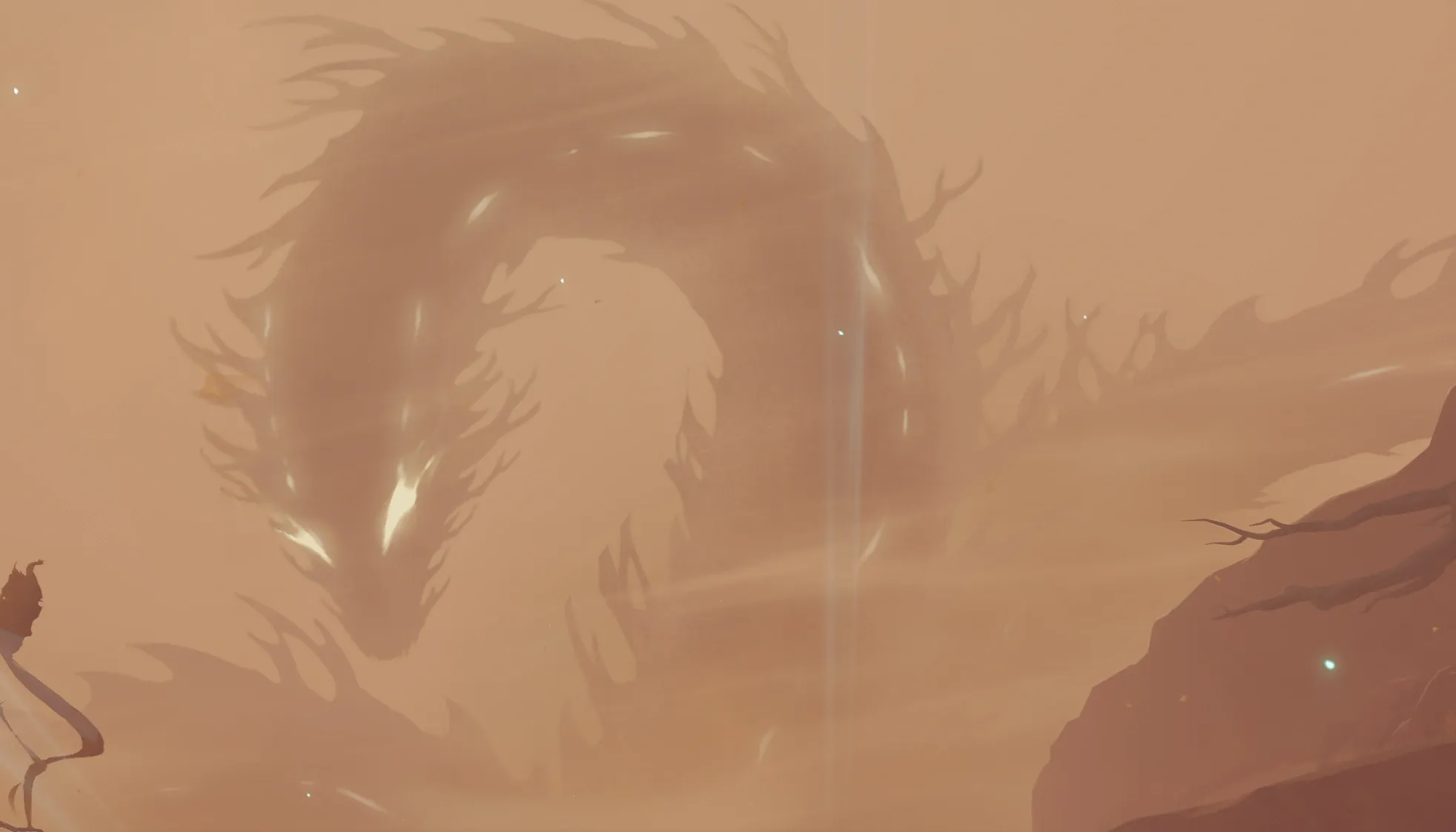 Apep and the Dendro Sovereign lineage10 min read
How Apep holds two roles at once (the Dendro Sovereign from the world's older order, and the seventh of King Deshret's Pillars), and why those two roles never clash.
Apep is both the Dendro Sovereign and the seventh Pillar of King Deshret, holding an older dragon-authority and a place in Sumeru's pre-Cataclysm desert order at once. This essay reads the two roles as one lineage and follows it through Sumeru's earlier rulers and the present-day Akademiya and Nahida.
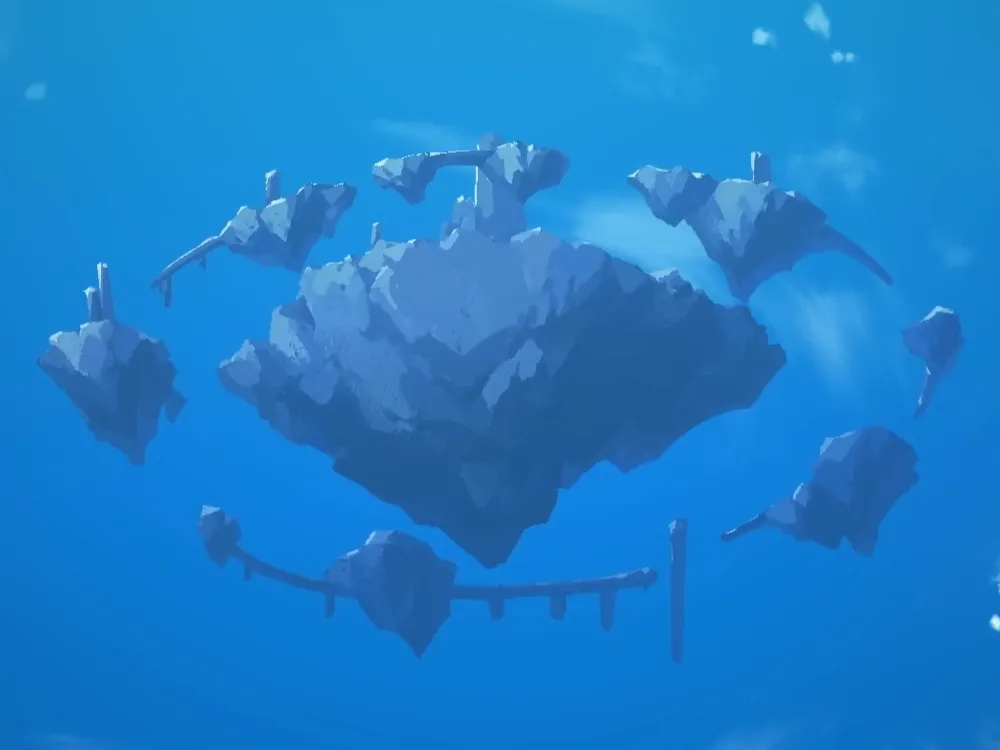 Celestia, the Heavenly Principles, and the Divine Thrones14 min read
Celestia is the seat of the Heavenly Principles, and the Divine Thrones were made from pieces of the Seven Sovereigns' powers. This essay covers how the system is run, the current state of the seven Archon seats including the destroyed Hydro Throne, Apep's disclosure that Irminsul and the Ley Lines predate the Heavenly Principles, and why the 'operating system' reading is kept apart from the Loom of Fate.
- Decoding Apep's dialogue5 min read
What the Dendro Sovereign tells the Traveler about Irminsul, the Ley Lines and the dragons' claim on the world, read as one argument and kept at the level Apep states it rather than treated as settled cosmic fact.
Late in the Welkin Moon arc, the Dendro Sovereign Apep tells the Traveler how the dragons see Teyvat's older order. This essay reads her lines as one argument and keeps them at the level she states them: a partisan's account, not a settled verdict.
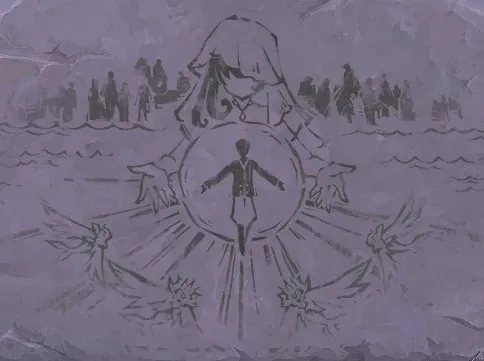 Egeria and the true origin of Fontaine15 min read
Why Fontaine's Archon story properly begins with Egeria, not Focalors. The first Hydro Archon made Fontainan humans, is tied by Neuvillette to the law that hides what they are, and bequeathed an Authority that did not return until five centuries after her death.
Egeria is the first Hydro Archon, the god who made Fontainan humans what they are. This essay reads her creation of the Fontainans, her sealing, the law Neuvillette ties to her, and her Authority's eventual return as a single arc, and threads it through the Pahsiv example and the species-change prohibition Sigewinne broke.
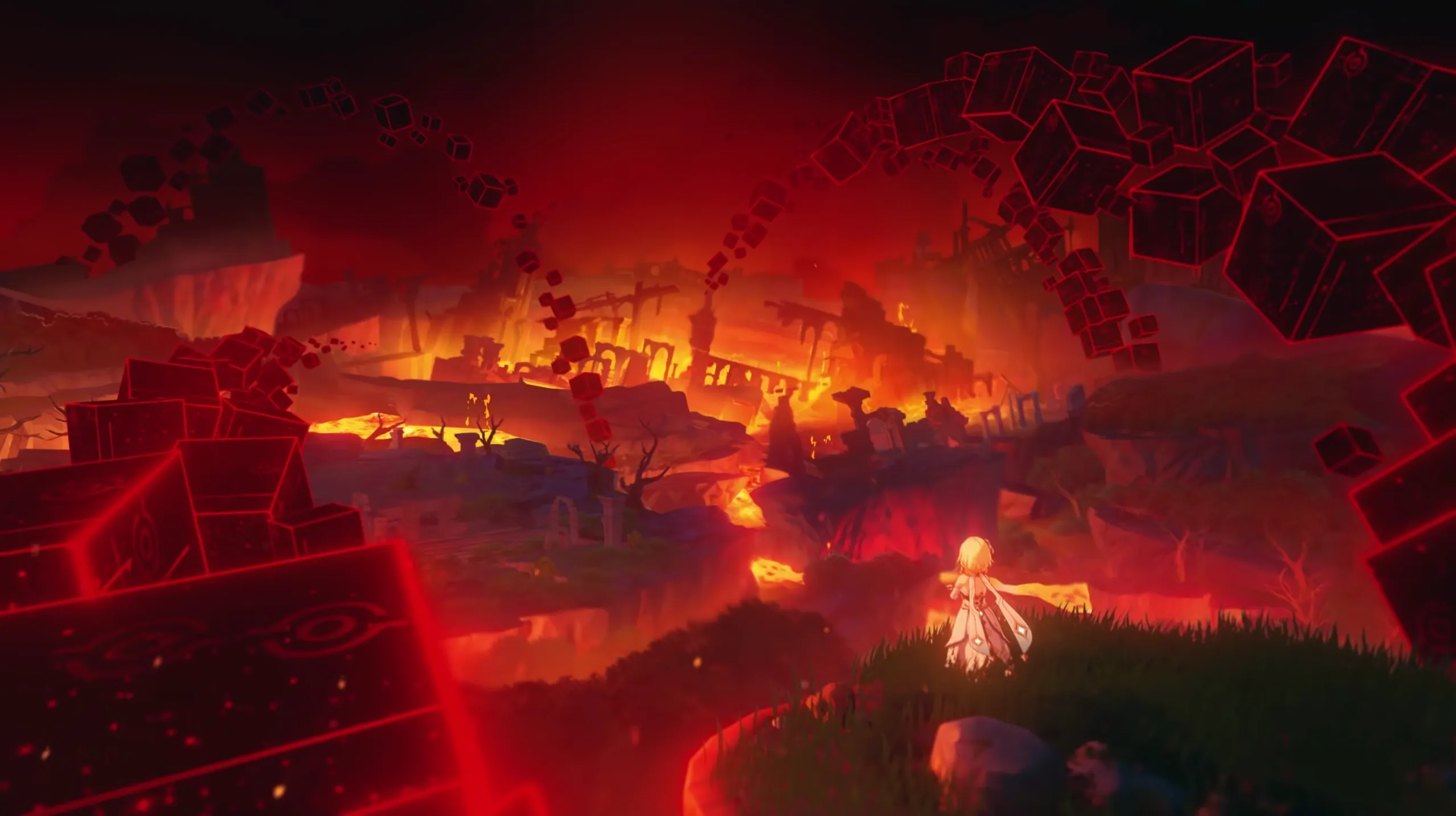 How to tell Khaenri'ah's Crimson Moon and Eclipse dynasties apart10 min read
Khaenri'ah's pre-Cataclysm history runs across two dynasties: the older Crimson Moon Dynasty (alchemy, Beastmaster Knights, the cosmology of the Iridescent Moon, and the original House of the Hearth) and the later Eclipse Dynasty (mechanical engineering, Irmin's program of forbidden knowledge, and the Cataclysm). The two are often confused across five overlapping areas. This essay walks the distinction.
- Khaenri'ah, the Cataclysm, and 500 years after24 min read
What we know about the godless kingdom, what destroyed it, and why every Khaenri'ah-aligned faction is now on-screen.
Five hundred years ago the Heavenly Principles ordered the destruction of an underground human kingdom that had explicitly rejected divine rule. The Fatui, the Abyss Order, and several other present-day factions all descend from that event. This essay walks through what canon currently establishes.
 Marana, the Queen-Aranyani rewrite, and the Outlander who remembered8 min read
When Nahida erased Greater Lord Rukkhadevata from Irminsul at the end of the Sumeru Archon Quest, every aranara forgot they were children of Queen Aranyani and now believe they are children of the present Dendro Archon. The Outlander alone still remembers the old name. This is the clearest species-wide case of the Outlander's immunity to Irminsul edits, and it ties the Withering the aranara fight to Apep's corrupted life-forms.
- Races and peoples, by their underlying nature18 min read
Reading the eighteen Races & Peoples pages as a single map of Teyvat's cosmos: who counts as what kind of being, why the categories blur, and where the real continuums run.
The wiki's eighteen Races & Peoples pages do not describe eighteen unrelated species. They describe one cosmological system seen through eighteen group-shaped windows. This essay reads them together: the questions that sort them, the regional patterns they fall into, and the worked examples where the boundaries break down.
 Saarelainen as the Third Descender: strongly implied, not confirmed12 min read
What Hymns of the Far North says about Saarelainen, what Skirk separately says about the Third Descender's remains, and why their identification is strongly implied rather than explicitly confirmed.
Hymns of the Far North Vol. 2 says Saarelainen was carved into seven pieces. Skirk, and later the Tsaritsa and Rhinedottir, say separately that the seven Gnoses are the Third Descender's remains, and Chapter VII Act IV tells the Third Descender's story without ever using Saarelainen's name. No released primary line explicitly identifies those figures as the same person, so Saarelainen is the strongly implied candidate when the sources are read together, not a Third Descender the game itself names. Neither his exact date nor a divine office is stated.
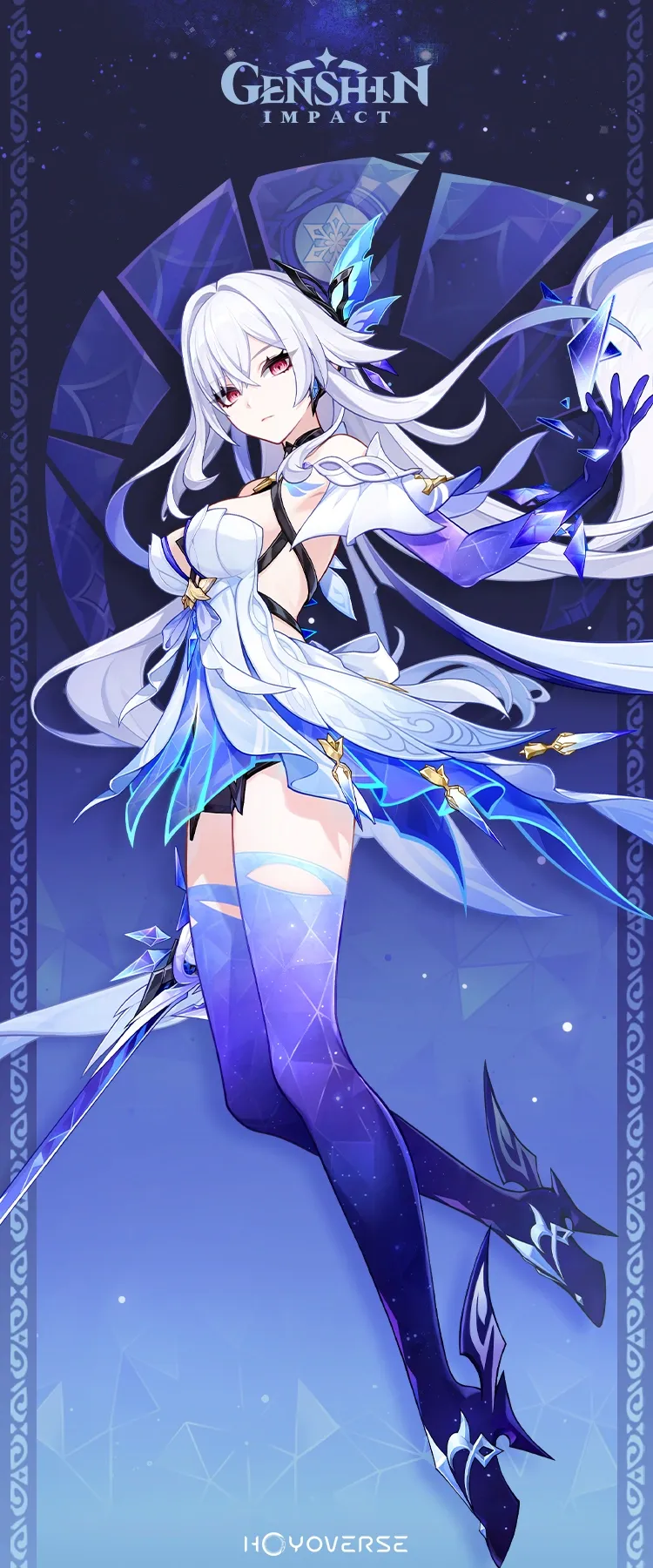 Skirk, Surtalogi, and the Cryo Sovereign question14 min read
Why Skirk and Surtalogi are not part of the Cryo Sovereign's line of succession, and what Version 7.0 establishes about the dead original Sovereign and unknown current successor.
The pre-5.7 fan reading treated Skirk's master as the Cryo Sovereign in disguise. The Skirk Story Quest names him as Surtalogi, one of the Five Sinners of Khaenri'ah, and reframes Skirk's Cryo powers as a disguise over Abyssal power. This essay walks through how that reading falls apart, what Surtalogi actually is, and what the unnamed Cryo seat reads as now.
 Song of the Welkin Moon, read as one story27 min read
The Prelude and ten acts read as one story: three plot strands that braid into a Khaenri'ahn elegy and a Moon Goddess's return, and the older cosmology the chapter uncovers along the way, down to Apep's word that Irminsul is older than the Heavenly Principles.
Song of the Welkin Moon braids three plot strands across a Prelude and ten acts: Rerir's Wild Hunt, Columbina's tie to the Three Moon Goddesses, and the Outlander and Sibling's arrival in Teyvat. This essay reads the chapter as one story, walks its disclosures act by act, and sets out what it reveals about the world's older cosmology.
 The Heavenly Principles' slumber and the Third Descender's curse15 min read
What the sources say about why Teyvat's creator sleeps, from Nahida's bluff to Rhinedottir's story, and how much of the answer is inference.
A spoiler-careful look at why the Heavenly Principles are asleep: what the game has said about their silence since the Cataclysm, the first explanation offered in Version 7.1, and the questions it leaves open.
 The Hexenzirkel, Alice's floating island, and the teacup network10 min read
The Hexenzirkel is Alice's Circle of Witches, a seven-member group whose hidden island above Falcon Coast and matching teacups across several regions form one connected network. Nicole Reeyn, the Memory-Witch, is the member who guides people toward the truth after the world changes, and the essay pieces together what the primary text implies about her nature.
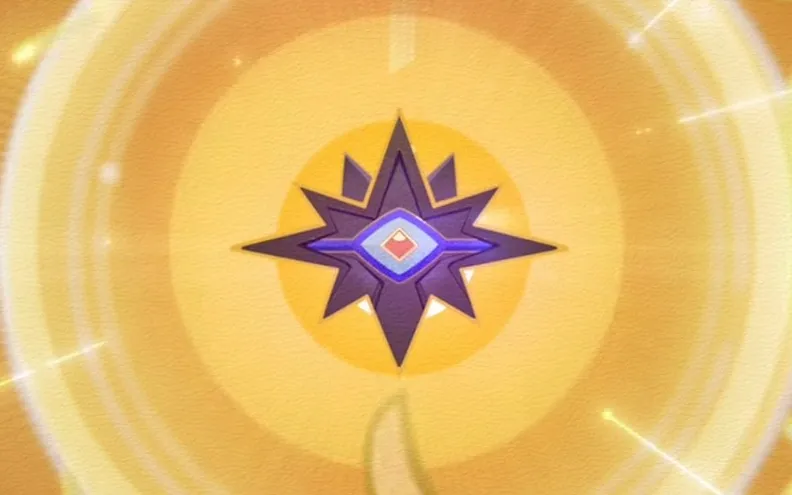 The Seven Pillars of King Deshret7 min read
The Seven Pillars were the retainers of the desert god King Deshret in ancient Sumeru: Heryshaf, Thoth, Sobek, Bennu, Shesepankh, Hermanubis, and Apep, the Dendro Dragon Sovereign who never counted herself among them. Heryshaf, the Goat King, is recorded as their head. King Deshret is a separate god, not a Sovereign, and once shared his throne with two other gods.
- The Sovereign-to-Archon transition18 min read
How the Heavenly Principles' arrival moved the Sovereigns' elemental Authority into the Archon system: the region-by-region substitution, its exceptions, and the reclamation arc Welkin Moon Act IX opens.
The Sovereign-to-Archon transition is two events: the Primordial One's forty-year defeat of the Seven Sovereigns, and the much later Archon War the wounded Heavenly Principles set in motion. This essay walks both events, the region-by-region substitution, how a defeated Sovereign can be reborn in human form, and the Welkin Moon Act IX disclosure that opens the reclamation arc.
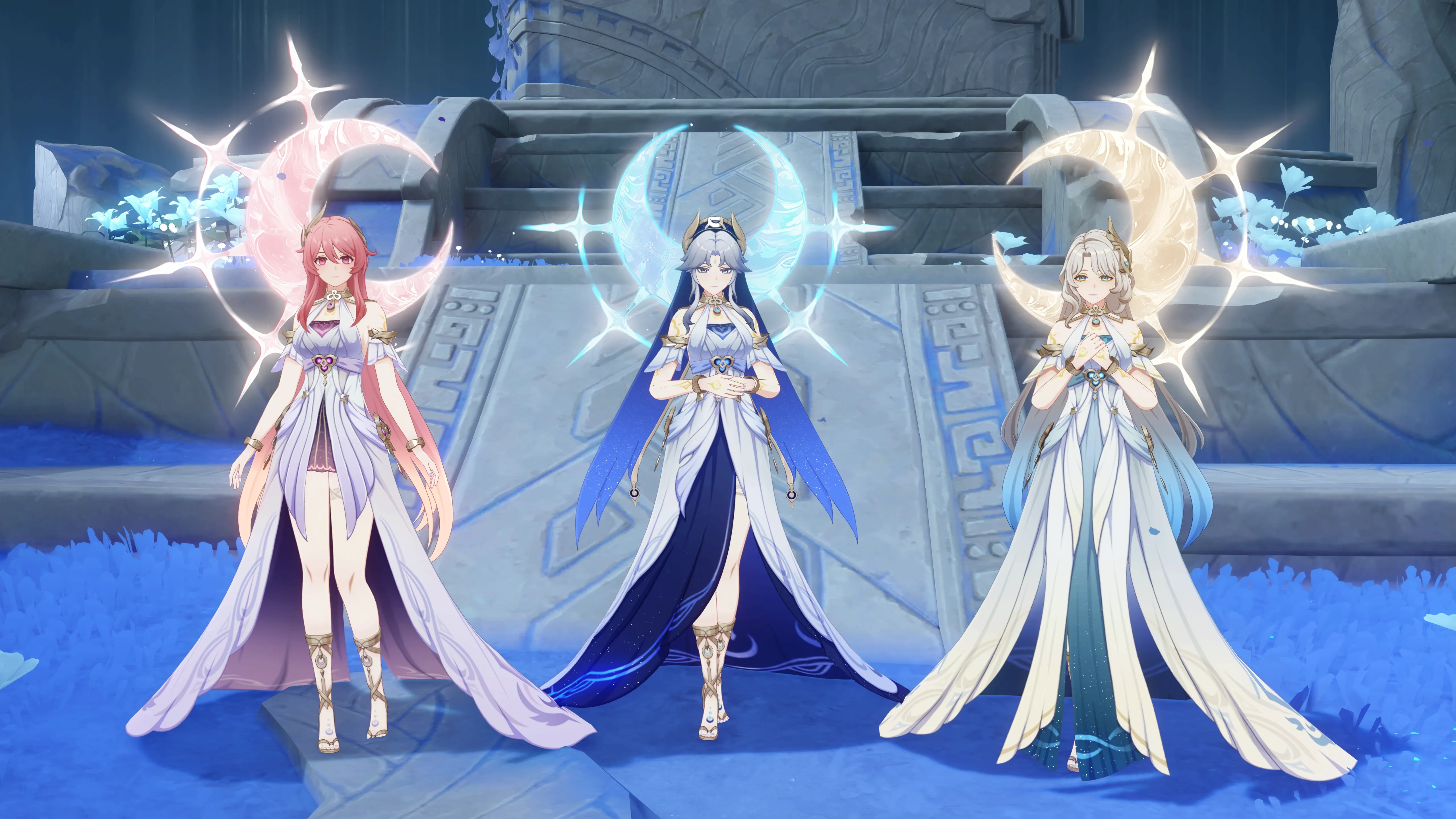 The Three Moon Goddesses, and the moons that were16 min read
Aria, Sonnet, Canon: the three moons Welkin Moon Acts VI, VIII, and IX named, the war that ended them, and the failed-fourth-moon reading their supposed crater is built on.
Aria, Sonnet, and Canon are the Three Moon Goddesses Nibelung raised over Teyvat before the Heavenly Principles arrived. This essay walks the framework Welkin Moon Acts VI, VIII, and IX disclosed, the war that destroyed them, where their power flowed down into the present day, and the failed-fourth-moon reading the wiki carries forward.
 The Tsaritsa's actual plan15 min read
What the Cryo Archon says the Gnosis collection serves, now that Chapter VII lets her speak for herself, and what her plan still withholds.
A spoiler-careful reading of the Tsaritsa's war on the Heavenly Principles and the Gnosis collection behind it, sorting what she and her servants actually say from what canon only implies.
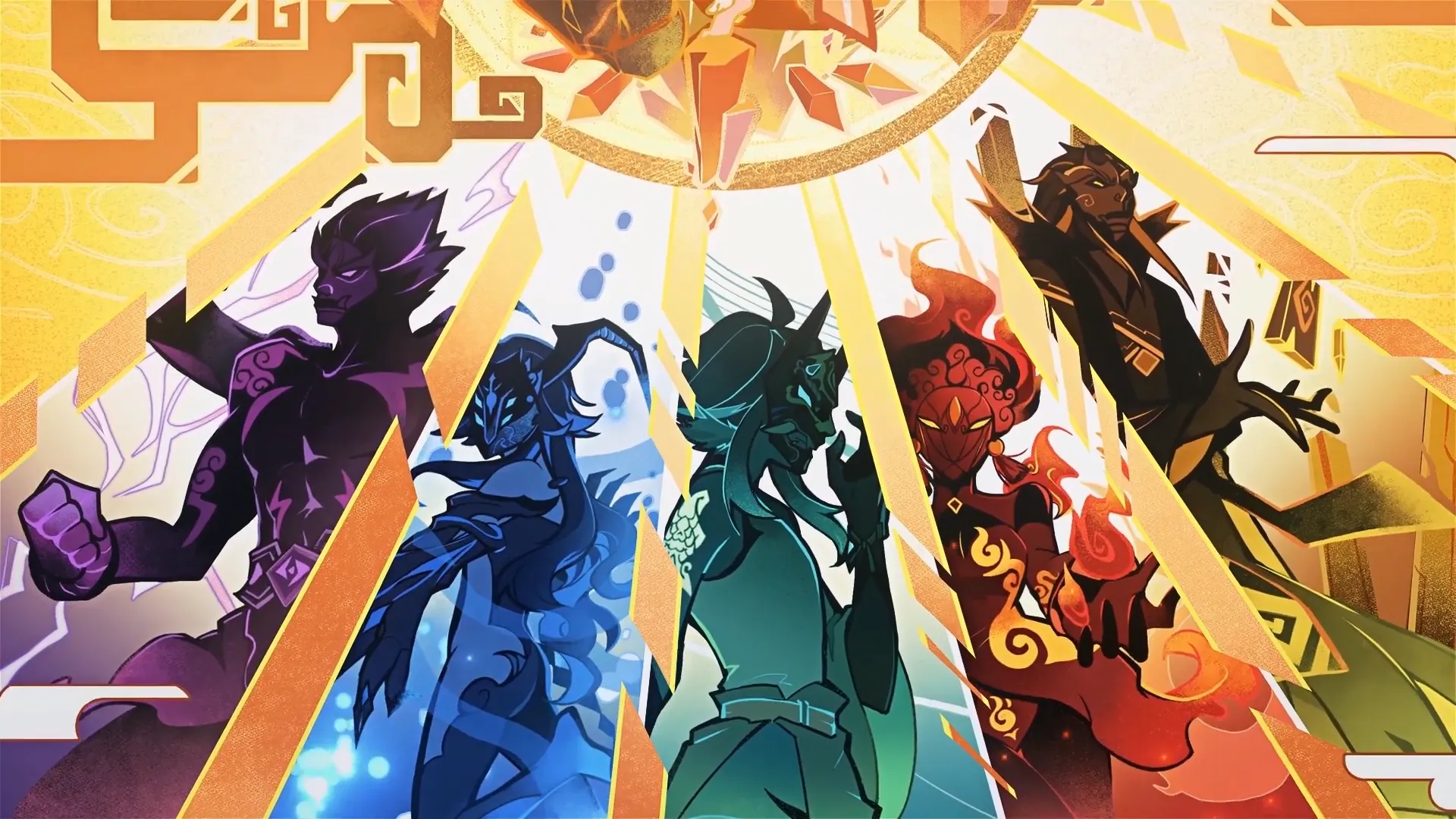 The Yakshas, karmic debt, and what they were summoned to cleanse8 min read
Why the Yakshas are a martial branch of Liyue's Adepti, summoned to cleanse the resentment of gods defeated after the Archon War, and are not Sovereigns from the older war before the Heavenly Principles.
The Yakshas are a martial branch of Liyue's Adepti, not Sovereigns, and they differ from the Sovereigns in group, era and origin. Morax summoned the Five Yakshas (Alatus, Bosacius, Indarias, Bonanus, Menogias) after the Archon War to cleanse the lingering resentment of lesser gods he had defeated, hatred that had taken flesh as demons, plagues, and miasmas. They were never part of the Primordial One's far older war against the Sovereigns. They were brought in after the Archon War to clean up, and the karmic debt of that work destroyed four of the five.
 The missing Pyro Gnosis13 min read
The one Gnosis the Fatui never obtained: where it was last seen, what each witness says became of it, and which readings of its fate the evidence still allows.
A spoiler-careful look at the one Gnosis that never reached Snezhnaya: where it was last seen, what the characters who saw it say, and the competing readings of where it is now.
 The three things called the Loom of Fate9 min read
Three things share the name: a device the Abyss Order built, an old Khaenri'ahn idea about engineering fate, and a speculative reading of Teyvat's deepest rules. Why the wiki keeps them distinct, and what would have to change in the story for the line to collapse.
Three different things share the name 'Loom of Fate' in current canon. One is a real device the Abyss Order built; one is older Khaenri'ahn language about engineering fate, with no machine ever shown; and one is a speculative reading that treats it as Teyvat's underlying rules. The wiki keeps the three apart because primary text never merges them.
 What caused the Cataclysm8 min read
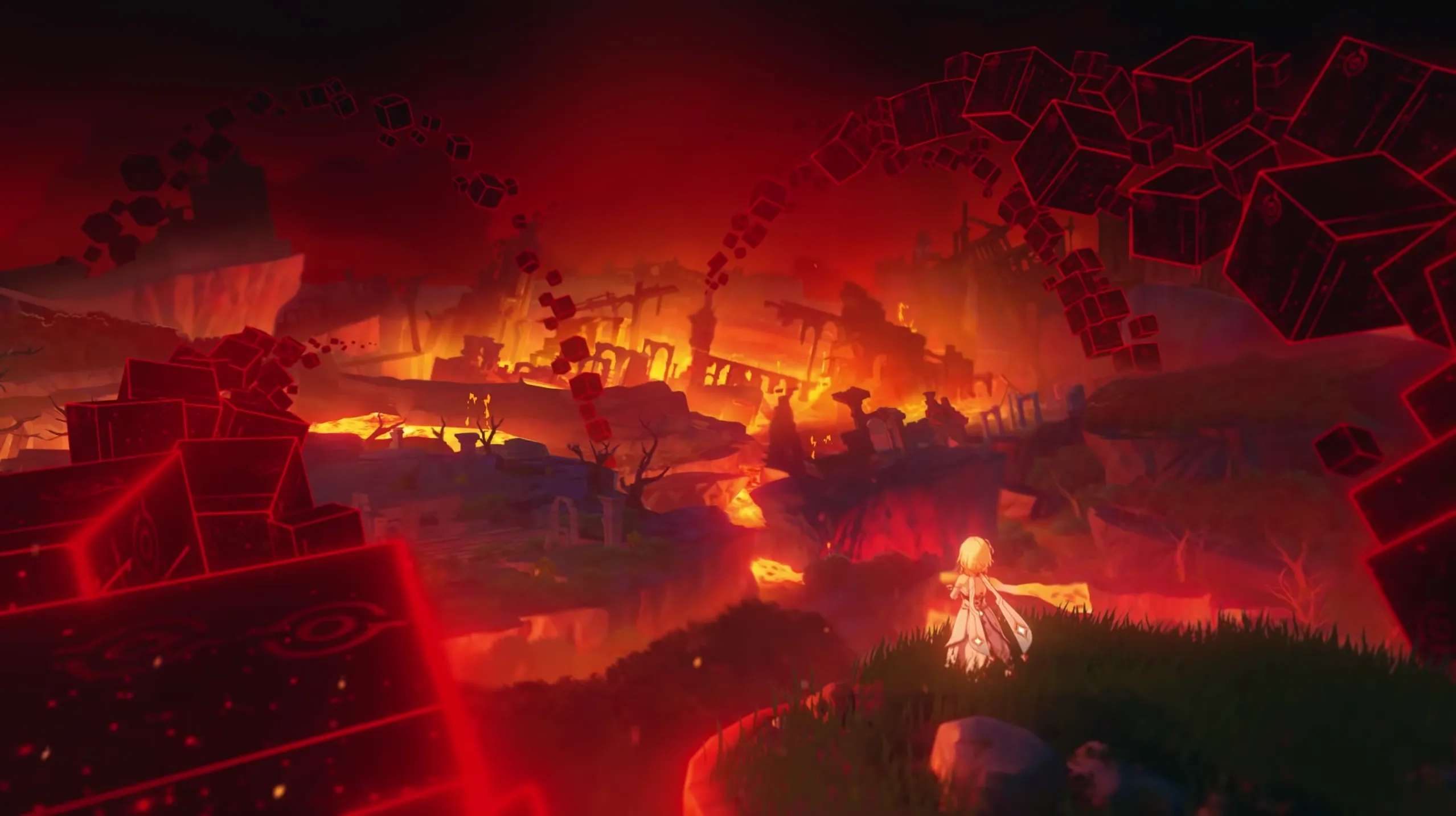
The Cataclysm was the world-scale disaster five hundred years ago that destroyed Khaenri'ah and cursed its survivors. Three causes drove it: Khaenri'ah's godless, machine-building civilization clashing with the Heavenly Principles' order; the Five Sinners' theft of the world-shattering Abyssal power King Irmin had the Traveler's Sibling absorb, which triggered Ronova's curse of immortality; and the Heavenly Principles' direct retaliation, including Egeria's death and the curse of the wilderness that turned people whose ancestry belonged to gods' domains into monsters.
 Who holds each Fatui Harbinger seat now7 min read
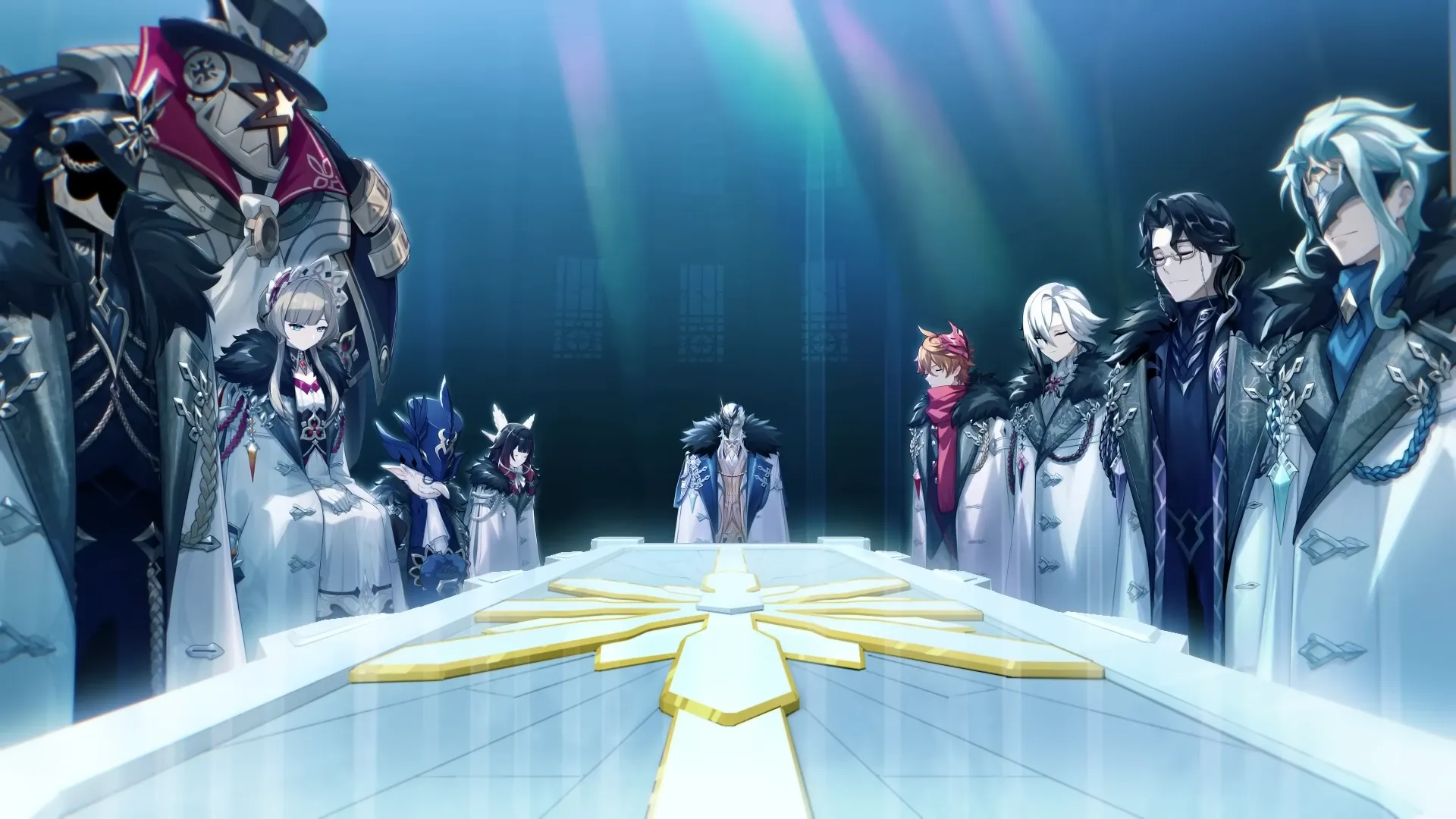
The Eleven Fatui Harbingers read as a single organization rather than eleven separate characters: the unnumbered Director Pierro, the numbered structure beneath him, the five active numbered Harbingers after Sandrone's return, and the seats affected by death, defection, or departure. It tracks the order as a whole rather than the individual arcs the character pages cover.
 Who runs the Akademiya: the six Darshans and their Sages10 min read
The Akademiya runs Sumeru's rainforest-side scholarship through six schools, the Darshans, each led by a Great Sage, with one Sage chosen from among the six also holding the Grand Sage seat at the top. Greater Lord Rukkhadevata founded the arrangement at the Akademiya's beginning. Welkin Moon Act IX names all six current Sages on-screen for the first time, confirming which four replaced the sages purged for corruption after the Sumeru Archon Quest.
- Who the Descenders are, and how sure each identification is18 min read
When canon disclosed each Descender's identity, what the primary sources actually say, and what is still genuinely open.
A source-by-source guide to the known Descender positions, the will criterion, the Saarelainen inference, and the classifications canon still leaves open.
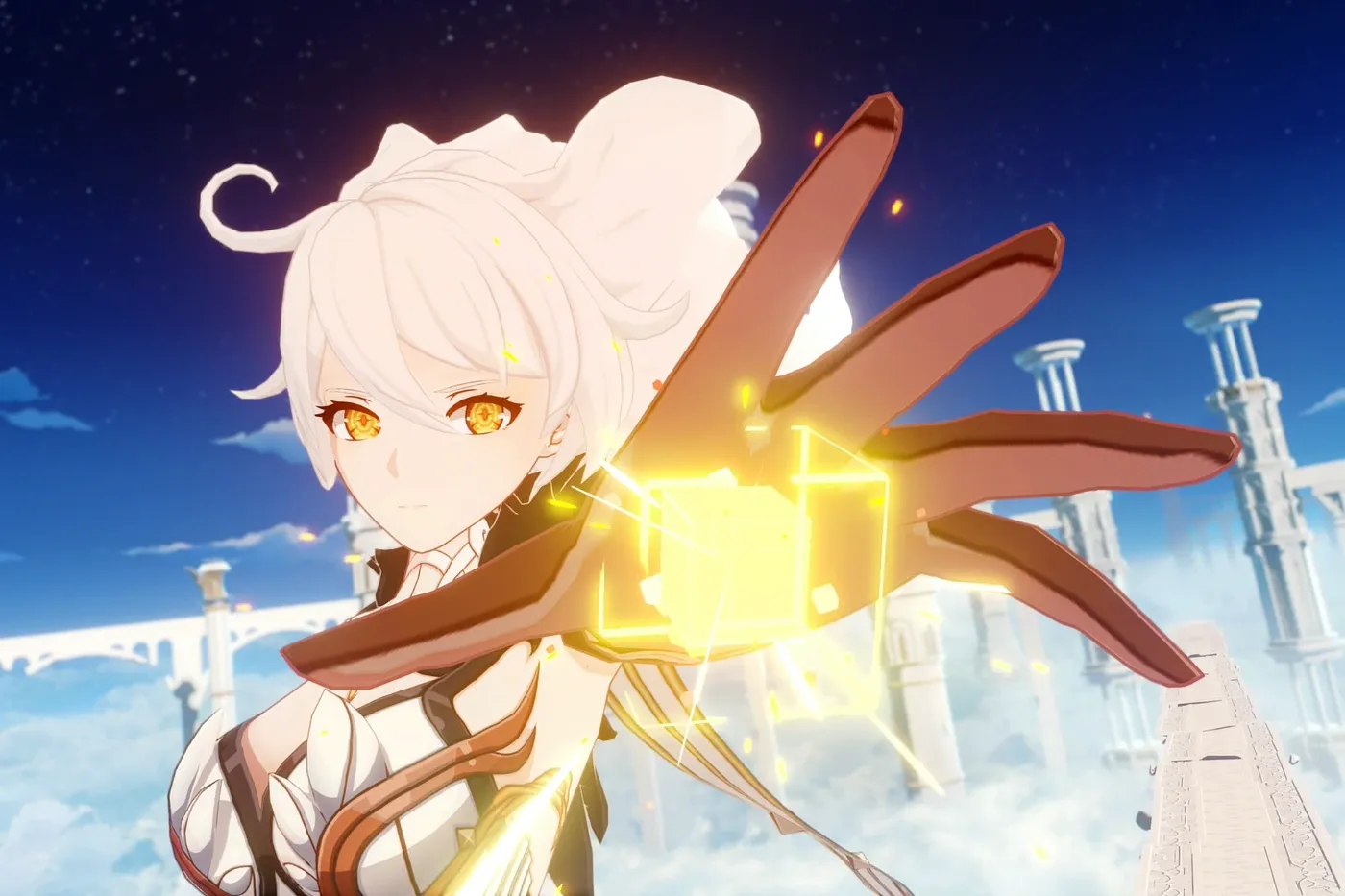 Who the Sustainer is: Asmoday and the Four Shades13 min read
Why the Sustainer of Heavenly Principles is not a power of its own but the role Asmoday, Ruler of Space, holds among the four Shades the Heavenly Principles installed before going dormant.
The silver-haired figure who blocked the Traveler's twin five hundred years ago is Asmoday, the Ruler of Space and Sustainer of Heavenly Principles. The Sustainer is the role she holds among the four Shades, not a separate power standing above them. This essay walks the Four Shades, why the Sustainer is one of them, and what released material does and does not establish now that Asmoday is missing.
 Why the Traveler is the Fourth Descender and their twin is still unclassified8 min read
The player-character Traveler is the named Fourth Descender, while the Sibling remains unclassified. Five unusual system interactions are demonstrated for the Traveler, but they are not universal Descender diagnostics.