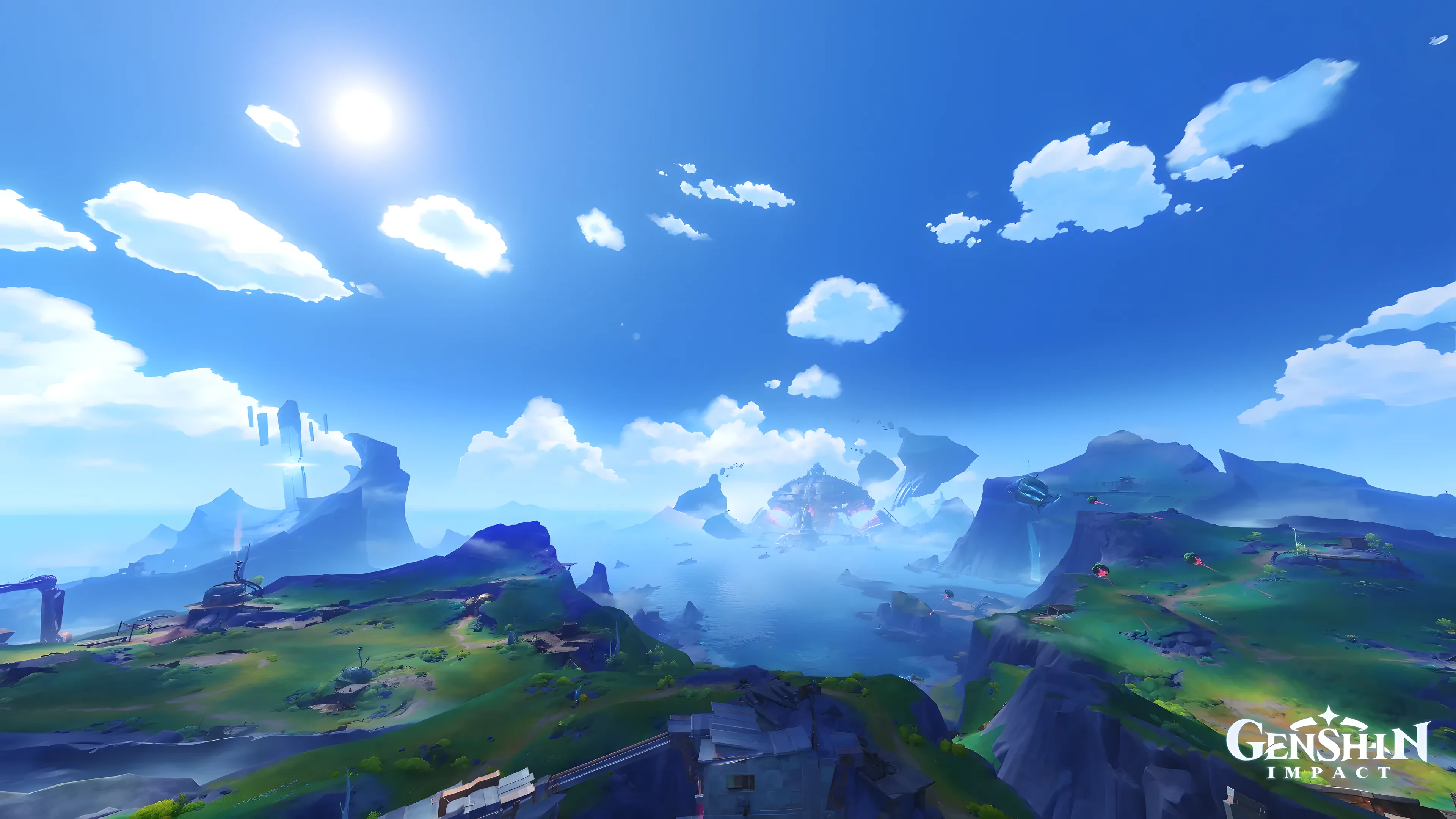
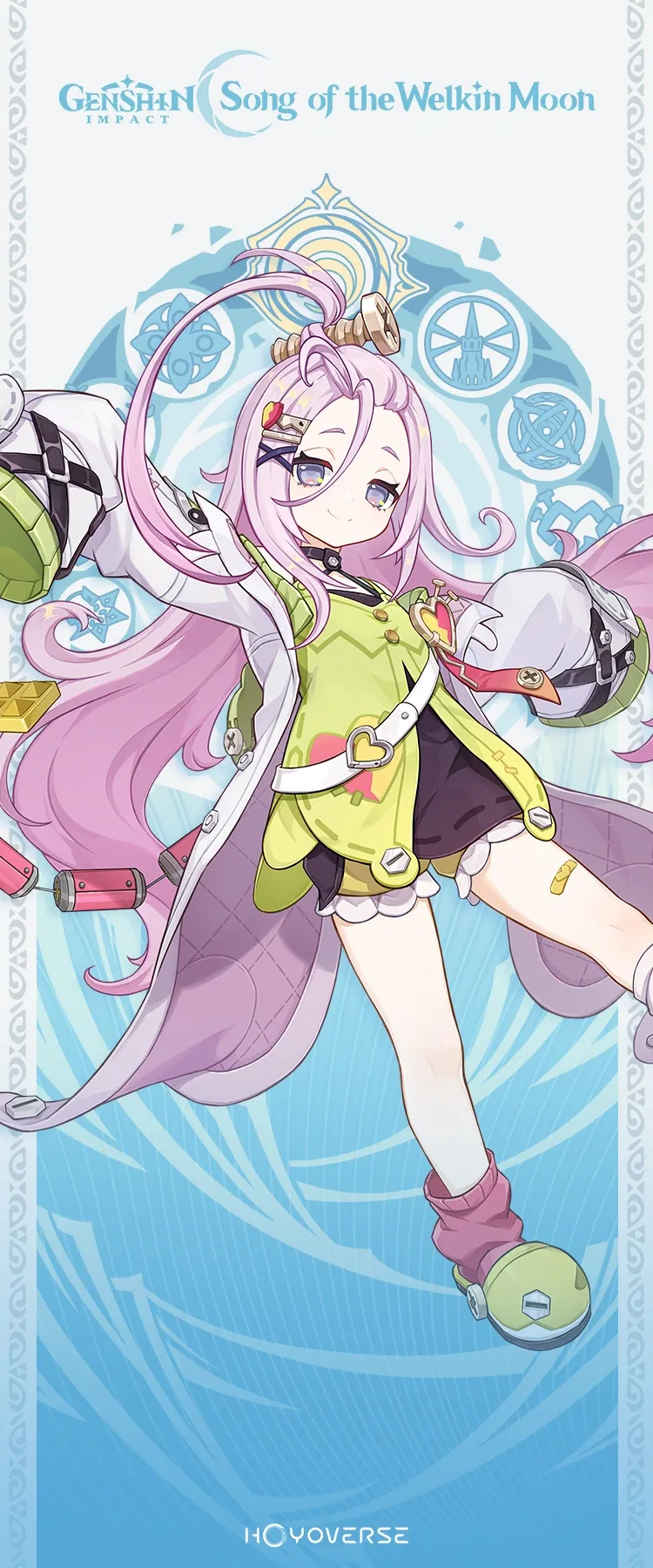
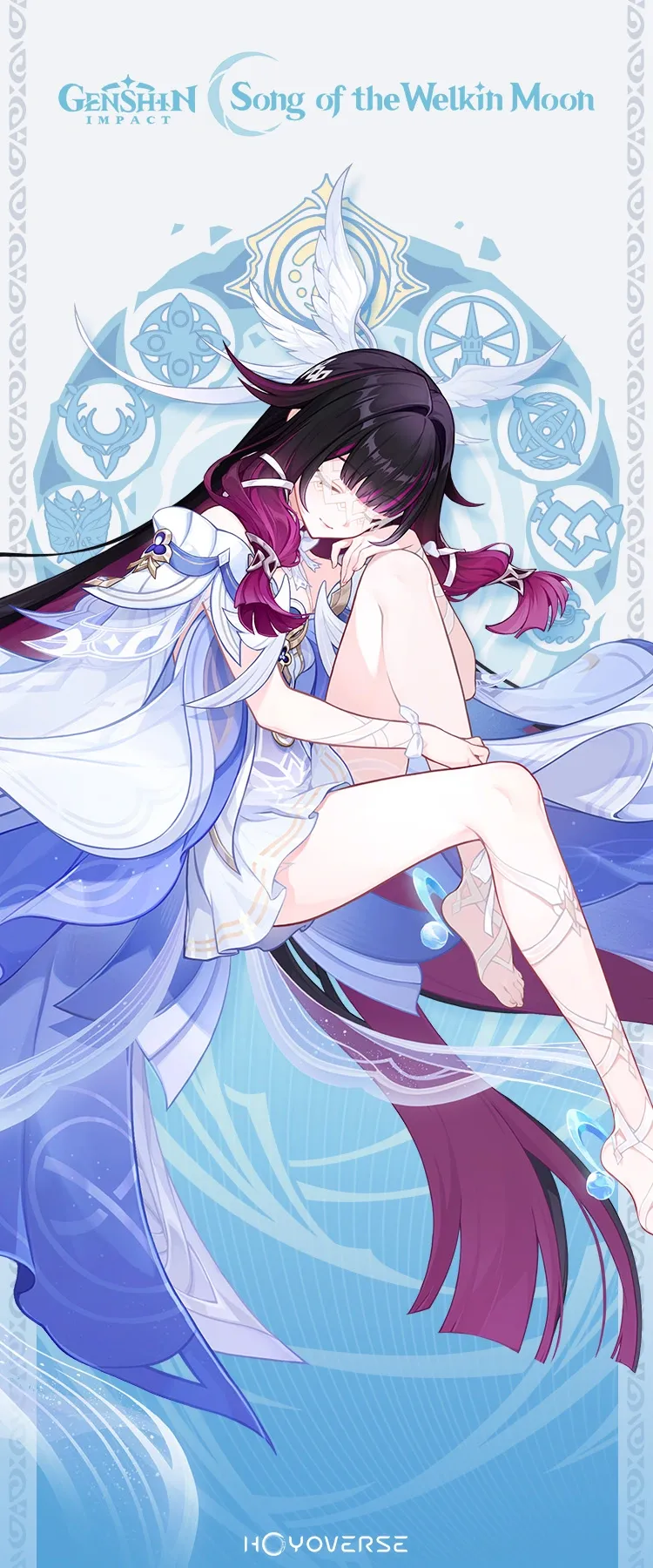
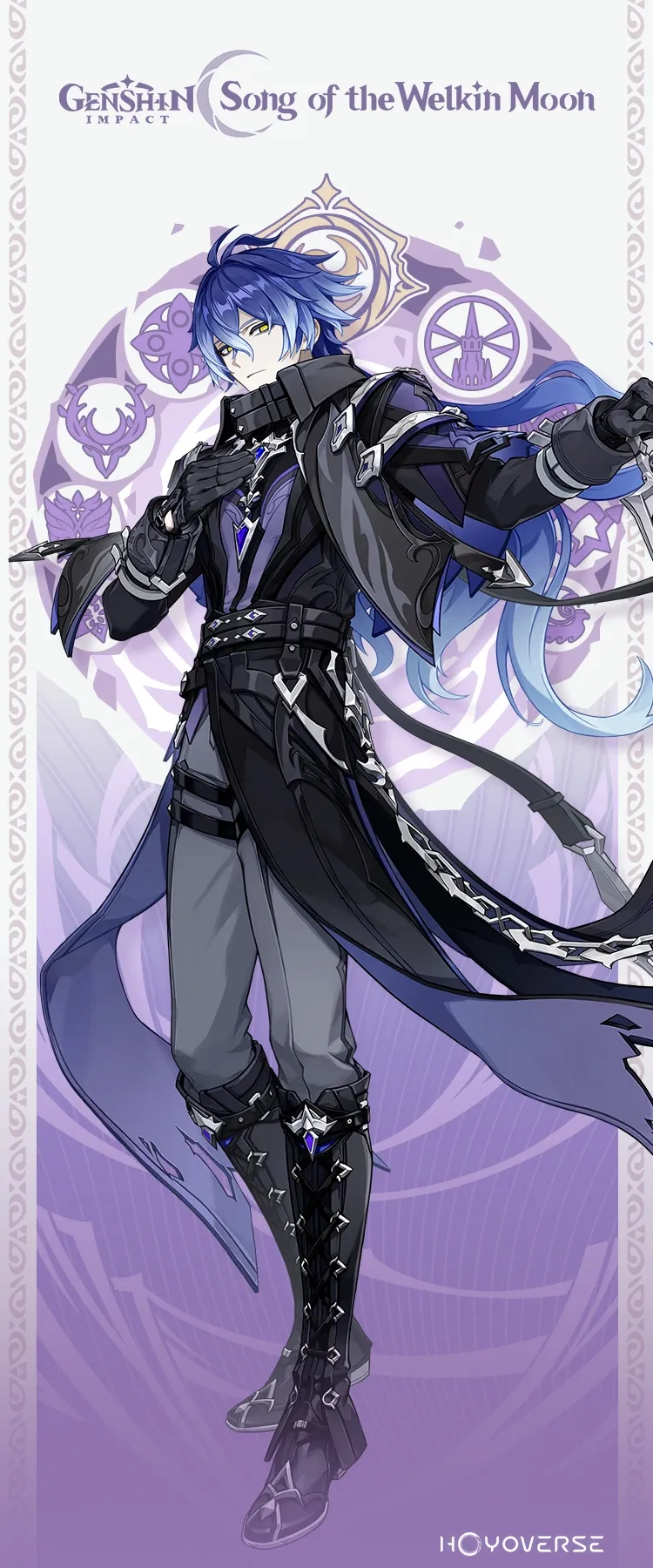
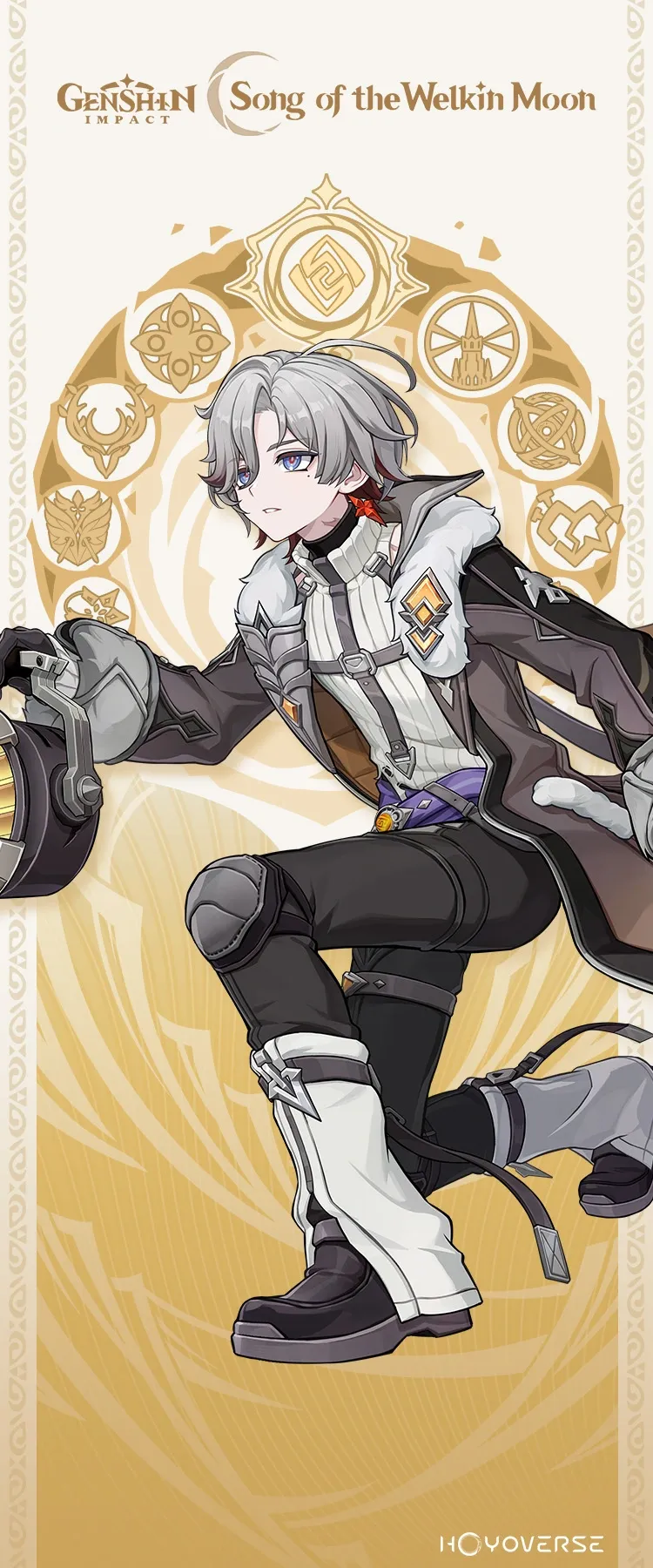
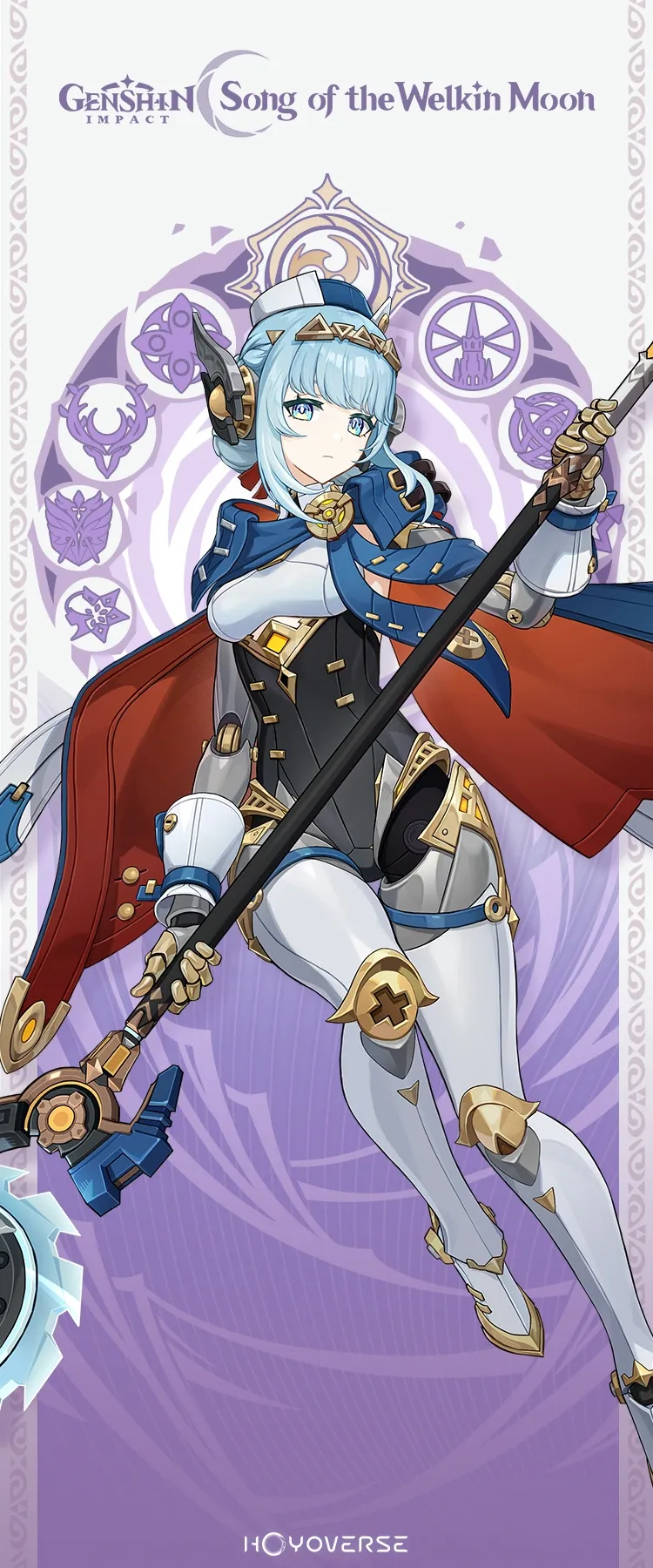
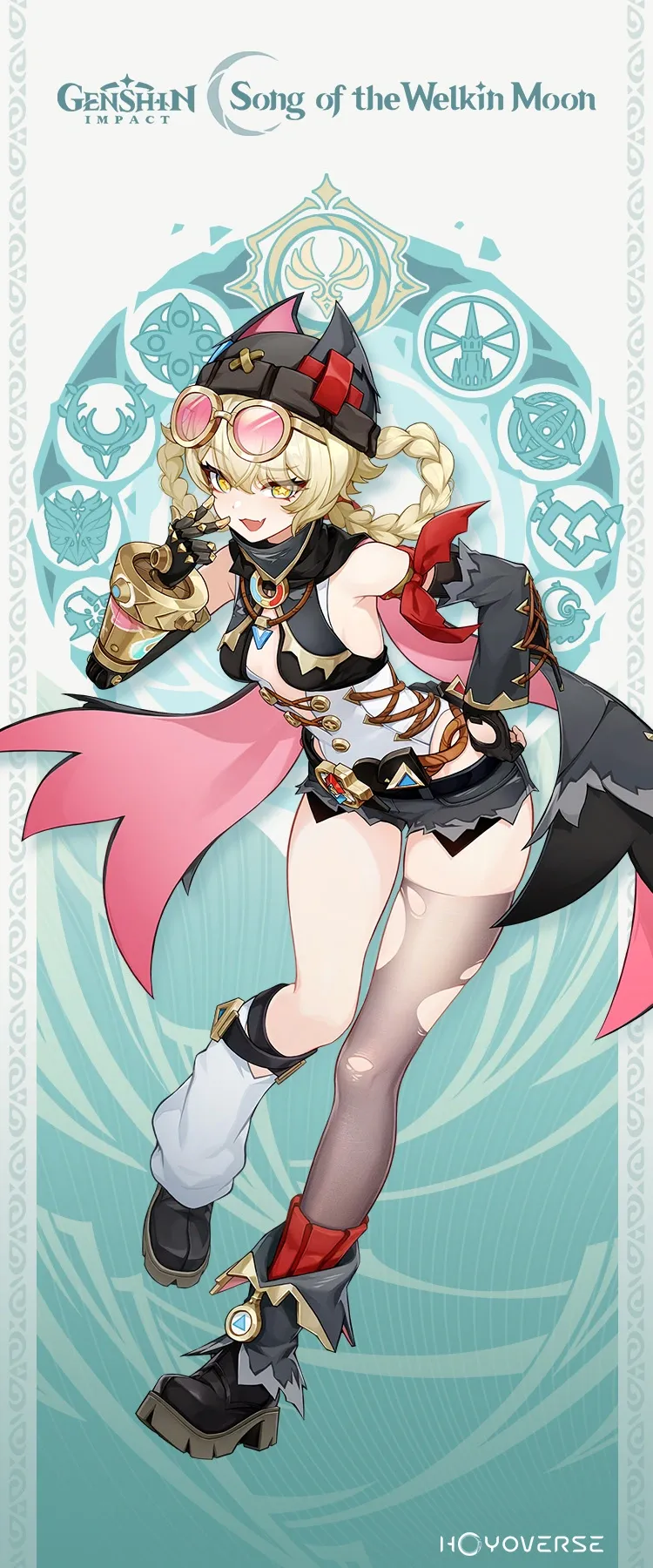
Snezhnaya's southernmost autonomous region and the main setting of 'Song of the Welkin Moon.' Its oldest people, the Frostmoon Scions, worship Columbina under the name Kuutar, and the region has been besieged for centuries by the Wild Hunt. Version 6.7 added Dunanna Pit and made the Frost Moon permanently explorable through the voiced World Quest series 'Moon Gazing.' The idea that Nod-Krai is a failed fourth moon remains an interpretation, not settled canon.
History
Nod-Krai preserves the strongest surviving memory of the Three Moons. Before the Sovereigns and the Heavenly Principles, Teyvat ran on the older system that its Frostmoon Scion traditions remember. The region was once called Nephilheim, and later communities kept stories that others forgot. They have long worshipped Kuutar, the Moon Goddess revealed in the 6.x patches to be the Fatui Harbinger Columbina. The separate claim that Nod-Krai is the remnant of a failed fourth moon is a community interpretation rather than an explicit primary-text statement.
In the post-Cataclysm centuries Nod-Krai was a besieged frontier: formally Snezhnayan, practically autonomous, never folded into Imperial Snezhnayan governance. The Wild Hunt, an Abyssal cavalry-force that issues wave after wave from the Moon Gate in the northern reaches, has attacked Frostmoon Scion settlements, Lightkeeper outposts, and any community within reach for as long as anyone can date. For most of that history its commander was Rerir, one of the Five Sinners of Khaenri'ah. He was a pre-Cataclysm Khaenri'ahn intelligence officer whose particular crime put him among the Sinners with Rhinedottir, Vedrfolnir, Surtalogi, and Hroptatyr, and he used the Wild Hunt for centuries to rebuild his torn body.
That siege is the backdrop. The current Archon Quest arc, "Song of the Welkin Moon," is where the Traveler arrives.
Geography
Nod-Krai is an archipelago plus a coastal mainland strip. Luna VIII expanded its playable footprint beyond the islands:
- Nasha Town, the main port. Working-class, multi-ethnic, fishing-and-shipping economy. The Speranza restaurant is here, along with most of the foreigner traffic.
- Hiisi Island, heart of the Frostmoon Scions. The Statues of the New Moon stand here, dedicated to Kuutar (Columbina). The Moonchanter clergy operates from Hiisi, including the playable Frostmoon Scion Lauma.
- Lempo Isle, a quieter, nature-tied island. The Clink-Clank Krumkake Craftshop (the inventor Drzislav's workshop) sits here and anchors several World Quests.
- Paha Isle, home to the Final Night Cemetery and the Kuuvahki Experimental Design Bureau, the colossal steel structure the Fatui erected there. [19]
- Voidsea Outlook, a port-side observation area.
- Wavechaser Plain, the mainland strip. It contains Amsvartnir (the lyre and forsaken-song site), Favonius Keep (the temporary forward base of Mondstadt's expeditionary force under Varka), the Pillar of Embla (the tower Rotwang raised to reach his "Elysium"; the Cataclysm Egg at its top was destroyed in the late-arc World Quest "The Last Night, the First Light" [20] [10]), and the Wing of Keres.
- Ashveil Peak, site of the weekly boss Lord of the Hidden Depths: Whisperer of Nightmares.
- Kipumaki Cliff, the Wild Hunt's lair.
- Cliffwatch Camp, the Lightkeepers' frontline.
- Special Territory Research Institute, a site run in collaboration with the Sumeru Akademiya, part of the wider entanglement of the Fatui and the Akademiya that defines Nod-Krai's politics today.
- Dunanna Pit, southwest of Misty Shoal, contains the Dunanna Forward Station and its ancient lunar-launch infrastructure. Version 6.7 unlocks a nearby waypoint after Prologue Act III. [2]
- The Frost Moon, reached during Moon Gazing, is treated as a Nod-Krai subregion for exploration despite lying away from Teyvat's surface. Its three playable areas are Lunar Highlands, Moontide Sea, and Dark Side of the Moon. [4] [5]
The aesthetic is diesel-punk Scandinavian, Baltic, and Russian Far North: long polar nights, fishing villages, iron-and-steel industrial work, lyres in the tavern, and a religious sensibility close to the Lutheran and Orthodox traditions, laid over a much older folk cosmology. The inspiration map is closer to Nephilheim than to Snezhnaya proper, and the design language is deliberately distinct from the Imperial Russian framing the rest of Snezhnaya has carried in voicelines and books.
Cosmology
Nod-Krai is the only region still actively practicing the pre-elemental cosmology. The relevant pieces:
- The Three Moons. Pre-Cataclysm Teyvat had three moons. Sonnet's Iridescent Moon and Aria's Eternal Moon were lost, while Canon's Frost Moon survived beyond the false sky. Act VIII drew it back within Teyvat's sky; Luna VIII made its ancient dragon facilities permanently traversable through Moon Gazing.
- Nephilheim, the failed-fourth reading. Ineffa's "Moon Wheel" story and NPC dialogue confirm Nephilheim as an older name for the region. The idea that a fourth moon failed to manifest and condensed into Nod-Krai is a community interpretation; primary text has not stated that origin.
- Kuuvahki. A power older than the seven elements, what Teyvat ran on before the Sovereigns established the elemental system. It comes in polarized and unpolarized variants. The Kuuvahki Experimental Design Bureau on Paha Isle exists to study it, work that sits uncomfortably with the Frostmoon Scion clergy: they see kuuvahki as the Moon Goddess's blessing and treat using it for personal gain, kuuvahki devices included, as blasphemous. [24]
- Lunar Reactions. A family introduced across the Luna arc: Lunar-Charged, Lunar-Bloom, and Lunar-Crystallize. They convert familiar elemental reactions under the required party conditions. Their exact origin relationship to kuuvahki remains incompletely explained.
- Moonsign. A team-bonus mechanic introduced in the Wild Hunt Lurks... climate zone. The higher a party's Moonsign, the slower Abyssal Decay accumulates while exploring contested terrain.
The Three Moons, kuuvahki, Lunar Reactions and Moonsign are not stage dressing. They are the working physics of Nod-Krai, as the seven elements are for the rest of Teyvat. The Frostmoon Scions are correct, in the technical sense, about how their land works.
Factions
Five organized factions share present-day Nod-Krai. None controls the region cleanly, and the present-day arc is partly about which one will, if any.
- The Frostmoon Scions, the original inhabitants. Centered on Hiisi Island, they preserve the lunar mythology under the Moonchanter office. The Frostmoon Scion Lauma is the present-day Moonchanter and the anchor of the Blessings of the Frost Moon World Quest. Her gift for understanding animals comes from the Scion bloodline, which has produced "many among us who could communicate with all living things," and she says that "no matter where I go, I... can never find peace and quiet." [21] [12]
- The Lightkeepers, a centuries-old defensive order and the only force besides the Voynich Guild to engage the Wild Hunt consistently at its source. Their frontline is Cliffwatch Camp, and their oath system, the Oath Lanterns scattered across Nod-Krai, unlocks the Lightkeepers' Oath World Quest chain.
- The Voynich Guild, Nod-Krai-wide private security and the only region-spanning organization that pre-dates the Fatui's arrival.
- The Northern Intelligence Network, an information-brokering arm native to Nod-Krai, semi-cooperative with the Voynich Guild and only sometimes cooperative with the Fatui.
- The Fatui (Palestar Edict), the formal Snezhnayan presence, with heavy Oprichniki and Skirmisher deployment. Il Dottore runs a stronghold here, and the antagonist of Luna VII's Sumeru arc is Dottore himself, from the half of his soul stored at the Northland Bank. [31] [32] The Fatui presence is the public face of Snezhnaya's claim on the region, but neither the Frostmoon Scions nor the Lightkeepers swore oaths to the Tsaritsa or recognize Fatui jurisdiction over Nod-Krai's older religious institutions.
Mondstadt also sent an expeditionary force to the region. Mondstadt's Grand Master, Varka, was stationed at Favonius Keep on the Wavechaser Plain with most of the senior Knights of Favonius. The expedition began as an outward mission in the tradition of the Lionfang Knights and was in practice pulled into defending against the Wild Hunt alongside the Lightkeepers, with Mondstadt knights and Nod-Krai militia fighting from the same line. Varka came home to Mondstadt in Version 6.4, ahead of the returning expedition team, and in Chapter VII Act VI he is at the Knights' headquarters there. [43] [45] Fandom's Knights of Favonius page adds that he still leaves periodically to manage affairs at Favonius Keep. [44]
The Wild Hunt
The defining threat. Welkin Moon Act IV traces it to Rerir: the Wild Hunt came into being as Khaenri'ah fell, when he was torn apart trying to enter a moon gate, which makes it older than the Abyss Order that Chlothar Alberich founded some time after the Cataclysm. [16] [25] It reads as an Abyssal manifestation rather than a willed army.
For most of recorded history its commander was Rerir, "Rächer of Solnari," who shared the Abyssal authority all Five Sinners absorbed during the pre-Cataclysm operation to rescue Vedrfolnir, coordinated by Dainsleif (see Surtalogi). He was banished back through the Moon Gate at the climax of Welkin Moon Act IV, "An Elegy for Faded Moonlight" (Luna II). In its last part, Echoes of Fate, Albedo's alchemical array siphoned Rerir's own power and Durin converted it for Columbina, who restrained him and sent him through a moon gate that Dainsleif held open. [23]
The Wild Hunt did not dissolve.
After Rerir's expulsion from Teyvat, the Abyss made an imitation of the Mondstadt knight Roland to lead the Wild Hunt in his place. That imitation's form expired during Varka's Story Quest, leaving the Hunt leaderless, "with a simple, primal urge to destroy." [16] [17] Rotwang, the exiled Khaenri'ahn monk of the Universitas Magistrorum from the Eclipse Dynasty known as "The Professor" (Rauthvangi, the "undying serpent"; see below), ran a separate Hunt: the one in northern Nod-Krai was his and his disciples' doing rather than Rerir's. Its two great surges came ten years ago and three years ago, and he was laid to rest in The Last Night, the First Light. [16] [18] Neither figure comes from Frostmoon Scion folklore, as an earlier reading held. That the Hunt outlasted Rerir's banishment suggests it is genuinely self-perpetuating: an Abyssal phenomenon rooted in the Moon Gate itself, not a personal army that dies with its commander. The Abyss page anchors this reading.
That self-perpetuating, leaderless quality also sets the Wild Hunt apart from the Abyss Order's Loom of Fate project, led by the Sibling, the deliberate response of Khaenri'ah's survivors to the same Cataclysm. The Traveler's Sibling is the Abyss Order's leader, the Prince or Princess of the Abyss. The rescue of Vedrfolnir before the Cataclysm, the event that made the Five Sinners, drew on the world-shattering Abyssal power King Irmin had induced the Sibling to absorb, and the Loom of Fate page traces where that power went. Rerir kept his one-sixth share through the Wild Hunt's centuries-long siege of Nod-Krai; the other four Sinners went their separate ways after the Cataclysm; the Sibling kept the remaining share, which anchors the Abyss Order's work with the Loom.
The Khaenri'ahn survivors answered the Cataclysm in very different ways. Pierro went to the Fatui under the Tsaritsa, and Rerir to the autonomous Wild Hunt. Dainsleif, the Bough Keeper (another of his titles is "Twilight Sword"), traveled Teyvat with the Traveler's Sibling after the Cataclysm. [28] [29] The Sibling is Khaenri'ahn by adoption rather than birth: born on another world, they were named heir to the throne by Irmin, and they eventually became Prince or Princess of the Abyss Order, the force behind the Loom. [29] [25] Arlecchino belongs to a later generation: a descendant of the Crimson Moon Dynasty, she grew up as Peruere, "an orphan of unknown origin," in the Fatui's House of the Hearth, and was told that Khaenri'ah's secrets date "from before your birth." [26] [27] The Nod-Krai Wild Hunt is the leaderless, self-running end of that range, not the same kind of organized project as the Loom of Fate.
Notable figures
- Columbina (the Third Fatui Harbinger, "Damselette"), also worshipped as Kuutar by the Frostmoon Scions. The identification comes in Song of the Welkin Moon Act I, A Dance of Snowy Tides and Hoarfrost Groves (Version 6.0). In Where the Moon Rises Lauma works out that "our Moon Goddess is actually their missing Harbinger," and in Reunion Beneath the Moonlight Columbina answers to "Kuutar, The Damselette, the Moon Goddess... Pick whichever takes your fancy." [21] [22] Lauma also says Kuutar was born on Hiisi Island "around five hundred years ago"; when the Fatui were founded, and so how her worship lines up with them, is not stated. See Eleven Fatui Harbingers for the full list of Harbingers and The Hexenzirkel for the parallel pre-Cataclysm coven entanglement.
- Varka, Mondstadt's Grand Master, who was stationed at Favonius Keep with most of the senior Knights of Favonius until he came home in Version 6.4. [43] Two Story Quest chapters are set in or anchored on his Nod-Krai expedition: the Lupus Majoris Chapter and the Triumphant Warrior chapter.
- Il Dottore, who runs the Fatui's Nod-Krai stronghold. He returns in Sumeru in Song of the Welkin Moon Acts IX and X (Luna VII). In Act X Pantalone tells him that "The remainder of your soul was split in two, with one half sent to Nod-Krai and the other stored in the most secure vault of the Northland Bank," and Dottore says the half lost in Nod-Krai showed him "where the best testing ground truly lies." [31] [32]
- Dainsleif, present in Nod-Krai across the Luna arc. The Wild Hunt and Five Sinners disclosures largely come through his voicelines and the Bough Keeper: Dainsleif chain.
- Lauma, Frostmoon Scion Moonchanter, primary anchor of the Blessings of the Frost Moon World Quest, playable as of patch 6.0.
- Nicole Reeyn, Lohen, Nefer, Durin, and Zibai, additional playable characters affiliated with or operating in Nod-Krai across patches 6.0-6.6. Nefer is Sumeru-born (Shimti tribe, Aaru Village; an Akademiya scholar who graduated from Vahumana) and runs the Curatorium of Secrets out of Nasha Town. Durin is the Andersdotter-Durin authored by the Hexenzirkel, transformed into synthetic human form by Albedo and folded into Mondstadt rather than Nod-Krai proper, though his screen time in Welkin Moon centres on The Flagship and Lempo Isle (the close of the Starsand Shoal SQ). Full character pages for Lohen and Zibai are still pending.
- Linnea, one of the last Snowland Fae in Nod-Krai and one of the few surviving Augury Birds; her sister Celaeno says, "You can count the number of Augury Birds alive today on one hand." [37] Augury Birds live only somewhat longer than humans, so her rarity does not establish one shared lifespan for all fae. Raised at the Speranza as a contemporary of Aino in the Conch Gang, she journeyed the nations correcting outdated natural-history records and is now Nasha Town's Adventurer's Guild advisor and field-naturalist under the regional branch head Sarin. 5★ Geo Bow (patch 6.5, Luna VI "Augured Homecoming"). She travels with Lumi, a paper-bag-disguised yellow Jack Frost fae cast out of the blue Jack Frost group.
- Prune, the self-styled "Littlest Witch Hunter," raised in Nod-Krai by Mondstadt-native parents and now based in Mondstadt for her witch-hunt campaign against the Hexenzirkel member Alice (Klee's mother). 4★ Anemo Catalyst (patch 6.6, Luna VII Andante). She was a childhood reader at Nasha Town's Mimisbrunnr Books, and the scene of reading Hymns of the Far North Vol. 1, the roadside encounter with Alice, and the Descartes moment in Story 3, where an imaginary friend becomes real, all take place in Nod-Krai.
- Illuga, the youngest squad leader among the Lightkeepers, Ratnik captain of the Nightmare Orioles investigation squad, and adoptive son of the current Lightkeeper Starshyna Nikita. 4★ Geo Polearm (patch 6.3, Luna IV). He leads the Lightkeepers' side of the command across the Nightingale's Song WQ Series, while Nikita deliberately prepares a successor.
- Jahoda, the Curatorium of Secrets' sole official employee and Nefer's front-of-house operative for the Northern Intelligence Network. 4★ Anemo Bow (patch 6.2, Luna III). A former Seahook Gang member, she lost her right arm in the Ratfan vengeance arc and wears the Clanky-Clanky Arm prosthetic that Aino built and maintains. The link between Jahoda and Nefer is the central piece of Nasha Town's clandestine services today.
- Aino, Parent of the Clink-Clank Krumkake Craftshop on Lempo Isle. 4★ Hydro Claymore, the first Hydro Claymore in the game (patch 6.0, Luna I; a free reward via Welkin Moon Act I). Raised as an orphan at Katya's Speranza in Nasha Town, she is the inventor of Ineffa and of the Boom and Blast Kuuvahki Energy Cannon that anchors Nasha Town's civilian defence against the Wild Hunt.
- Flins, Lightkeeper captain and lone guardian of the lighthouse and graveyard on the Final Night Cemetery (Paha Isle). 5★ Electro Polearm (patch 6.0, Luna I). He is one of the last Snowland Fae still in Nod-Krai; most live in Novokitezhgrad, Snezhnograd, and elsewhere in Snezhnaya, while the reason so few remain in Nod-Krai is unknown. Flins suggests some fae may have become unable to survive warmer places after adapting to Snezhnograd's cold, but that is his explanation rather than a settled species-wide cause. As a Lantern Fae he estimates his own age at six or seven centuries, in contrast to the much shorter-lived Augury Birds. His Manifest Flame transformation is a fae power. His patronymic, Chudomirovich, is formed from the name Chudomir, and a memorial at the Final Night Cemetery honours a dead Lightkeeper called "Aarnivalkea" Chudomir, but whether he is Flins's father is unconfirmed. [41] [40] In the story of the Long Night's Oath artifact set, a Lightkeeper warrior's prayer to the departed Belyi Tsar and the fae nobility stirs "a long-dormant phantom," and Fandom links its "ghostly blue wildfire" to Flins. [42]
- Aila (the first Moonchanter, dead 500 years), anchor of the Polkka Beneath the Moon's Oracle WQ Series capstone, recorded as a kuuvahki "lingering image" in the Court of the First Edict on Hiisi Island. Aila killed her adoptive grandmother, the Archpriestess Lovia, after Lovia ordered her to kill Solovei; Lovia had corresponded with Rotwang for years. [38] [39] She then co-founded the Lightkeepers with Solovei, and the two sealed the undying serpent Rauthvangi a second time beneath Kipumaki Cliff, after her older twin sister Alia's sacrifice at the Sampo Mill on the Pillar of Embla had felled him the first time (a thread that ties into the story of Bunker No. 0 and the Reed-Miller in East of the Moon, West of the Sun). [20] [38] She left the sword Moonweaver's Dawn in the sanctum's White Spring for the Traveler to recover, choosing to believe the Traveler is "the hero of this sublunary sphere." [11] A full Aila page is not yet authored.
- The Snezhnayan Armory Palace research team (Professors Anton Zarkovich Karnatsky and V. A. Preobrazhensky, deployed under the Tsaritsa's Imperial Edict on the Strengthening of Order with the 6th Company for site security) is the team behind the disaster caused by moon-shard research in the Nothing Passage gorge on Lempo Isle, anchor of the Colors of Emptiness WQ Series. Karnatsky's stated research goal, "to tear open the veil of the world, igniting the first spark for Her Majesty's wishes," marks the Armory Palace as the Tsaritsa's research arm against the Heavenly Principles, a separate operation from the Fatui Harbingers.
Reputation systems
Silvermoon Hall: Selenic Chronicles is the Nod-Krai Reputation system, built around Columbina in her Damselette codename at Silvermoon Hall, a moon-themed subarea of Hiisi Island. [34] It unlocks once the Archon Quest The Dark Side of Memory in Welkin Moon Act II is complete and runs across three Parts (Part I in Luna I 6.0, Part II in Luna II 6.1, Part III in Luna IV 6.3, which requires True Moon). Each quest opens seven daily resets after the one before it. [33] [35]
The system ties the Damselette parlour to the kuuhenki regulars who frequent it, among them the painter kuuhenki Maalaus, whose painting in The Artist By the Moon's Side (I) Paimon reads as the Frostmoon Scions worshipping Columbina as their goddess. [36] It also leans on Lauma's authority over the Frostmoon Scions' records, cited in Paimon's narration: "Lauma said your birth was recorded by the Frostmoon Scions." That gives the identification of Kuutar with Columbina more grounding in primary text within the wider Welkin Moon disclosures.
The quests become unavailable when Welkin Moon Act V, A Nocturne of the Far North, opens (auto-started on Act IV completion), and available again once True Moon in Act VIII is complete. Each completed quest grants the New Moon's Embrace effect, fixing the party's Moonsign Level at Ascendant Gleam in Nod-Krai until the seventh daily reset. [33]
Luna VIII added two Ancient Moon's Remnants, exploration nodes upgraded with Luna Sigils. The Nuur Stone Circle node tracks Dunanna Pit and Lunar Highlands; the Curtain-Form Blackbody Containment Lab node tracks Moontide Sea and Dark Side of the Moon. They become available after the Frost Moon opens during Moon Gazing, then unlock through Origin of the Sequence and Beneath the Lunar Sea. [2]
From the Luna arc to Version 7.0
The Song of the Welkin Moon Archon Quest chapter has eleven quest segments: a Prelude ("The Journey Home," released in patch 5.8) plus Acts I-X. Acts I-VIII shipped progressively across patches 6.0-6.3 (two acts per patch, through Luna IV), and Acts IX and X shipped together in patch 6.6 (Luna VII):
- Act IX: "As All Falls to Emptiness"
- Act X: "Truth Amongst the Pages of Purana" (it opens under the title "Of Myriad Paths, Flux, and Dissolution") [30]
In a first for the Archon Quest's structure, Luna VII moves the arc back to Sumeru. Nahida has fallen into a slumber, the antagonist is Dottore himself, whose "final data backup" Pantalone placed in the Ley Lines, and Collei, Ibis King Thoth, and the playable Luna-VII character Nicole Reeyn are central. [31] [32] That made the Luna arc a resolution spanning several regions rather than a self-contained Nod-Krai chapter. Version 7.0 then opens Snezhnaya proper through Chapter VII while Nod-Krai remains the distinct borderland setting of Song of the Welkin Moon. [1]
In the late-arc World Quest "The Last Night, the First Light," the Outlander and Illuga fire the Arrow of Terpikeraunas from Piramida at the Cataclysm Egg on top of the Pillar of Embla, destroying the egg and laying the undying Rotwang to rest. The quest never explains what the egg was, and it does not show the Pillar itself destroyed. [10]
Luna VIII does not add another Archon Quest act. Its major regional continuation is Moon Gazing, a voiced World Quest series set after the Frost Moon has returned within the false sky. The chain starts in Dunanna Pit, uses an ancient lunar shuttle to reach the moon, and follows Project Moongazer's attempt to send a warning into deep space. It turns the Frost Moon from a destination in Act VIII into a permanent region with its own history of dragon-built research. [5]
Refuge from the Hallowing (Version 7.2)
When the Holy Soil phenomenon spreads from the Nails of Retribution in Version 7.2, Nod-Krai is spared the worst of it. [47] In the World Quest Companions on the Frost Road, Nefer is "not surprised the Fatui are evacuating Snezhnayans to the less-affected parts of Nod-Krai," but she does not expect to see "the Frostmoon Scions agreeing to work with them." Lauma did not have to talk her order round; the "circumstances" spoke for themselves. "Hiisi Island remains unaffected because the aftershocks of the Hallowing have been absorbed by lands beyond ours," she explains. "But should those lands fall, Nod-Krai will not escape unscathed." Nefer sees a calculation as well, since taking in refugees "allows Snezhnaya to devote more resources to keeping the Hallowing far from Nod-Krai's shores." [46] As a refuge for people from farther away, though, it trails Fontaine. In Archon Quest Chapter VII Act VI, Ineffa notes that it "would also be an ideal destination for refugees," but it "lacks Fontaine's appeal due to several factors, including geography, politics, and public security." [45]
Notable figures
World Quests
- Blessings of the Frost Moon · Patch 6.0
- Colors of Emptiness · Patch 6.0
- East of the Moon, West of the Sun · Patch 6.0
- Echoes of an Unfinished Past · Patch 6.0
- Friends of Moleyvalley · Patch 6.0
- Gift of the Mirage · Patch 6.0
- Lightkeepers' Oath · Patch 6.0
- Polkka Beneath the Moon's Oracle · Patch 6.0
- Silvermoon Hall: Selenic Chronicles · Patch 6.0
- The Bell of Mourning Echoes · Patch 6.0
- The Mirrors, the Maze, and the Tsar · Patch 6.0
- The Power of Research · Patch 6.0
- The Tale of the Gate Stone · Patch 6.0
- The Tale-Telling Heart · Patch 6.0
- Echoes of a Forsaken Song · Patch 6.3
- Nightingale's Song · Patch 6.3
- The Last Night, the First Light · Patch 6.3
- Beneath the Lunar Sea · Patch 6.7
- Moon Gazing · Patch 6.7
- Origin of the Sequence · Patch 6.7